Info@bukitlawangtravel.com

Visiting Wild Orangutans in Sumatra Responsibly
Visiting orangutans in the wild in Sumatra? Learn how ethical trekking, respectful choices, and local guides help protect rainforest habitat and wildlife.

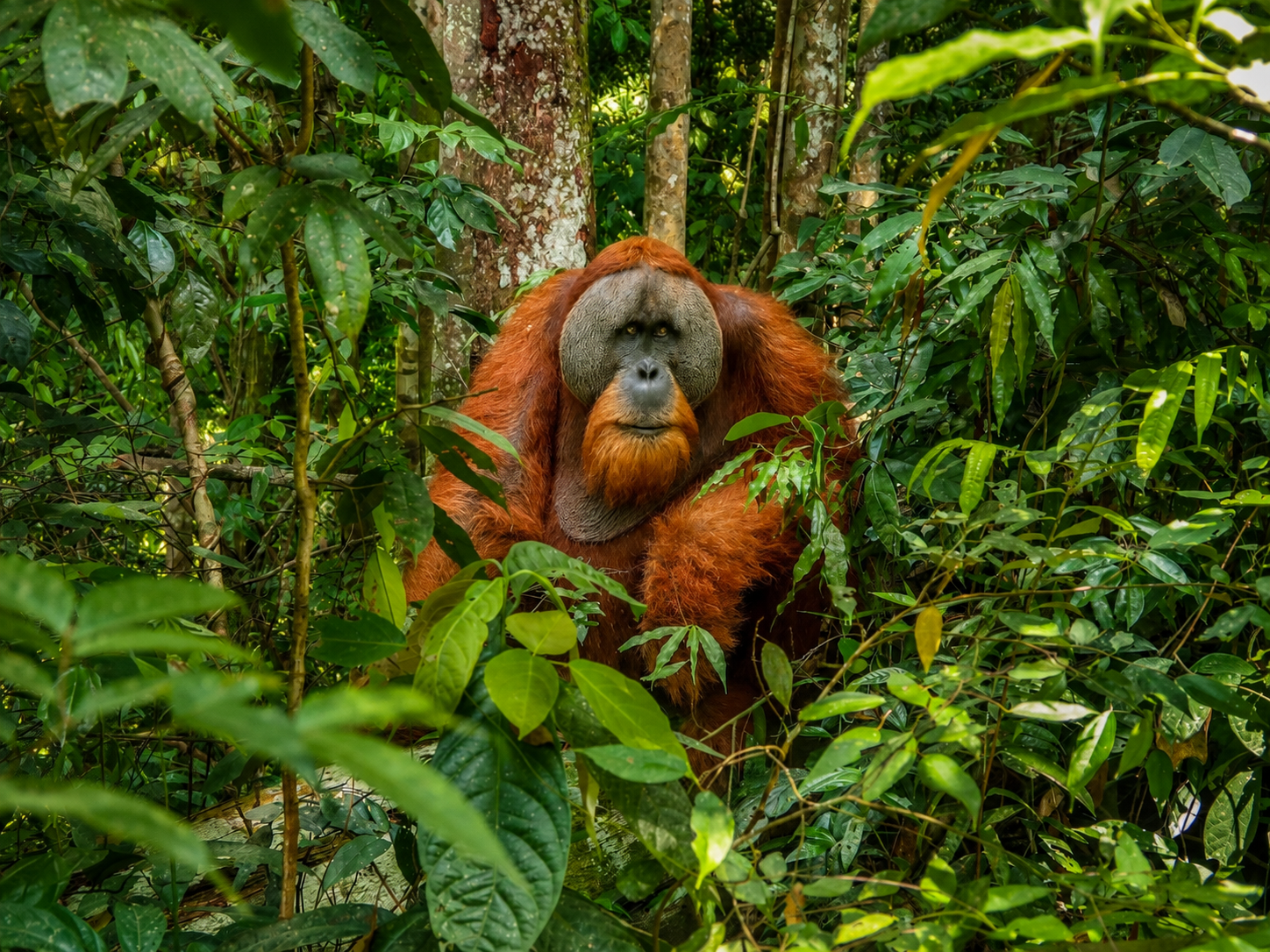
A wild orangutan encounter should never feel like a performance. The most meaningful moments in the Sumatran rainforest are often quiet: a mother moving through the canopy with her baby, a male calling in the distance, or a flash of orange hair high above the trail. Visiting orangutans in the wild through responsible wildlife tourism supports orangutan conservation in Sumatra when travelers choose patience, respectful distance, and locally led experiences over a guaranteed photo.
For visitors, Bukit Lawang offers a rare chance to walk in one of the last places where critically endangered Sumatran orangutans still live free. That opportunity comes with a responsibility. The rainforest is their home, not a wildlife attraction built around our schedules.
Why Wild Orangutan Encounters Need Care
Sumatran orangutans live only on the Indonesian island of Sumatra, with their most significant remaining habitat centered in and around the Leuser Ecosystem. They are highly intelligent, slow-breeding great apes. A female may have only a few offspring during her lifetime, which means every animal matters to the future of the species.
Their biggest challenge is not tourism itself. It is habitat loss and fragmentation, along with poaching and conflict at the forest edge. But poorly managed wildlife tourism can add pressure. When animals are crowded, fed, touched, blocked on the trail, or followed too closely, they may change their natural behavior. Human contact can also expose orangutans to respiratory illnesses that are minor for us but dangerous for them.
Responsible trekking is built around a simple principle: the orangutan’s welfare comes before the visitor’s sighting. A good guide will never treat wildlife as a promise. Some treks bring extraordinary sightings; others reveal gibbons, Thomas’s leaf monkeys, hornbills, giant forest trees, insects, and the sounds of a living jungle. Both are real rainforest experiences.
Responsible Wildlife Tourism in Sumatra Starts With Your Choices
The operator you choose shapes the impact of your visit. Look for locally based teams with trained or certified guides, clear wildlife rules, small groups, and a commitment to working with the surrounding community. Local guides do more than lead the route. They read animal behavior, know when to wait or move on, help guests stay safe in humid forest conditions, and protect the experience from becoming intrusive.
Ethical tourism also means accepting that the forest sets the pace. You may need to pause while an orangutan crosses overhead. You may turn back if rain makes a route unsafe. You may leave an area without the perfect close-up. Those decisions are signs of good guiding, not a disappointing day.
It is also worth asking where your money goes. When travelers book local guides, stay with locally owned accommodation partners, eat at village restaurants, and join community-based activities, visitor spending supports livelihoods connected to keeping the forest valuable. Conservation is stronger when people living near protected areas have fair, practical reasons to protect wildlife and habitat.
The Rules That Protect Orangutans
Before entering the jungle, treat your guide’s briefing as part of the adventure. These standards are not there to make the trek less exciting. They help keep orangutans wild and reduce risk for everyone.
Keep a generous distance from any orangutan, following your guide’s direction at all times. Never touch an animal, even if it approaches. Do not feed orangutans or leave food where they can find it. Food conditioning can change their behavior, draw them toward people, and create conflict.
Stay quiet and avoid sudden movement. A calm group is more likely to observe natural behavior, while noise can disturb wildlife and affect other trekkers. Flash photography should be avoided, and any photo is secondary to the animal’s space. If an orangutan is on or near the trail, give it room and let your guide decide the safest response.
Health matters too. If you have a cough, fever, sore throat, or other contagious symptoms, be honest before your trek. Great apes are biologically close to humans and can be vulnerable to diseases we carry. Rescheduling may feel frustrating, but protecting a critically endangered animal is the right call.
Finally, carry out everything you bring in. Fruit peels, tissues, plastic wrappers, cigarette butts, and discarded water bottles do not belong in the forest. Bring a refillable water bottle where possible and use low-waste snacks packed securely in your day bag.
What a Respectful Jungle Trek Looks Like
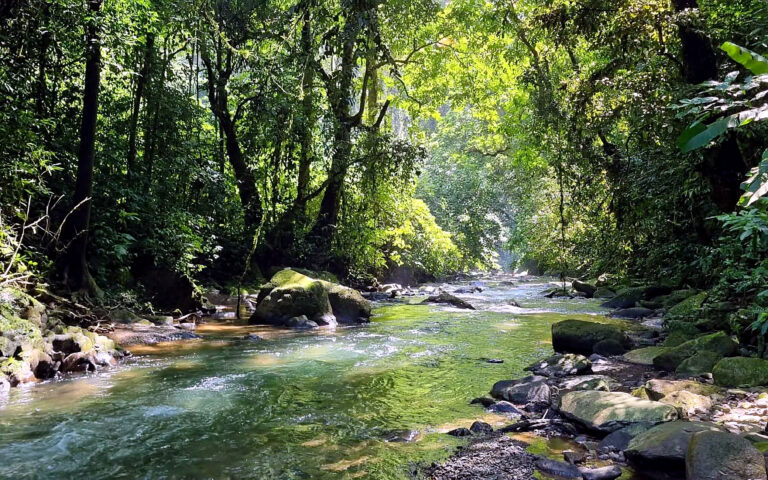
A responsible trek is not rushed from one wildlife spot to another. It combines careful walking, interpretation, safety planning, and time to notice the forest as a whole. Your guide may point out fresh nests, fruiting trees, animal calls, medicinal plants, or the tracks and signs that show how many species share this habitat.
For first-time trekkers, a shorter guided walk can be a thoughtful introduction. It is a good choice for families, travelers with limited time, or anyone unsure about jungle fitness. A longer trek offers more time away from the village and a deeper sense of the rainforest’s changing terrain, weather, and rhythms. Multi-day expeditions can be rewarding for experienced adventure travelers, but they require stronger preparation and a willingness to camp simply and leave no trace.
Choose the duration that fits your ability, not the version that sounds most impressive. Jungle trails can be steep, muddy, hot, and slippery. Good footwear, light long-sleeved clothing, rain protection, insect repellent, and enough water make a real difference. Your guide can advise on the right trek format and what to pack based on the season and your comfort level.
Orangutan Conservation in Sumatra Is Bigger Than One Sighting
Seeing an orangutan is powerful because it makes a distant conservation issue personal. Yet the conservation value of your trip should extend beyond that one moment. Every responsible decision helps reinforce a different model of tourism: one where wildlife remains wild, local knowledge is respected, and forest communities benefit from visitors without sacrificing the ecosystems around them.
That model has trade-offs. Small groups may cost more than crowded tours. Ethical guides may refuse a risky shortcut or end a wildlife encounter earlier than guests would like. Eco-conscious accommodations may ask visitors to conserve water, reduce laundry, or use refill stations. These are reasonable exchanges for travel that leaves a lighter footprint.
There is no ethical way to guarantee an orangutan encounter in a wild forest, and any company that suggests otherwise deserves careful questions. Nature is unpredictable. The reward is that, when you do see an orangutan moving freely through its own habitat, you are witnessing something genuine rather than staged.
Before You Book: Ask Better Questions
A few direct questions can help you choose a trek that matches your values. Ask whether guides are locally trained, how group sizes are managed, what distance rules apply around wildlife, and whether feeding or physical contact is ever allowed. Ask how waste is handled on overnight trips and whether the business creates local jobs or works with community partners.
You can also ask what happens when weather, trail conditions, or animal behavior require a change of plan. Responsible operators will answer clearly. They will prioritize safety and wildlife welfare over a fixed itinerary.
At Bukit Lawang Travel, our local guiding approach is rooted in the belief that a jungle visit should benefit more than the traveler. Come prepared to walk slowly, listen closely, and let the forest lead. The best souvenir is not a closer photo. It is the knowledge that your adventure respected the orangutans, the rainforest, and the people who call this place home.

[…] at a safe distance, and everyone watches without blocking the animal’s route. There is no touching, feeding, or attempt to make the orangutan look toward a […]