Info@bukitlawangtravel.com

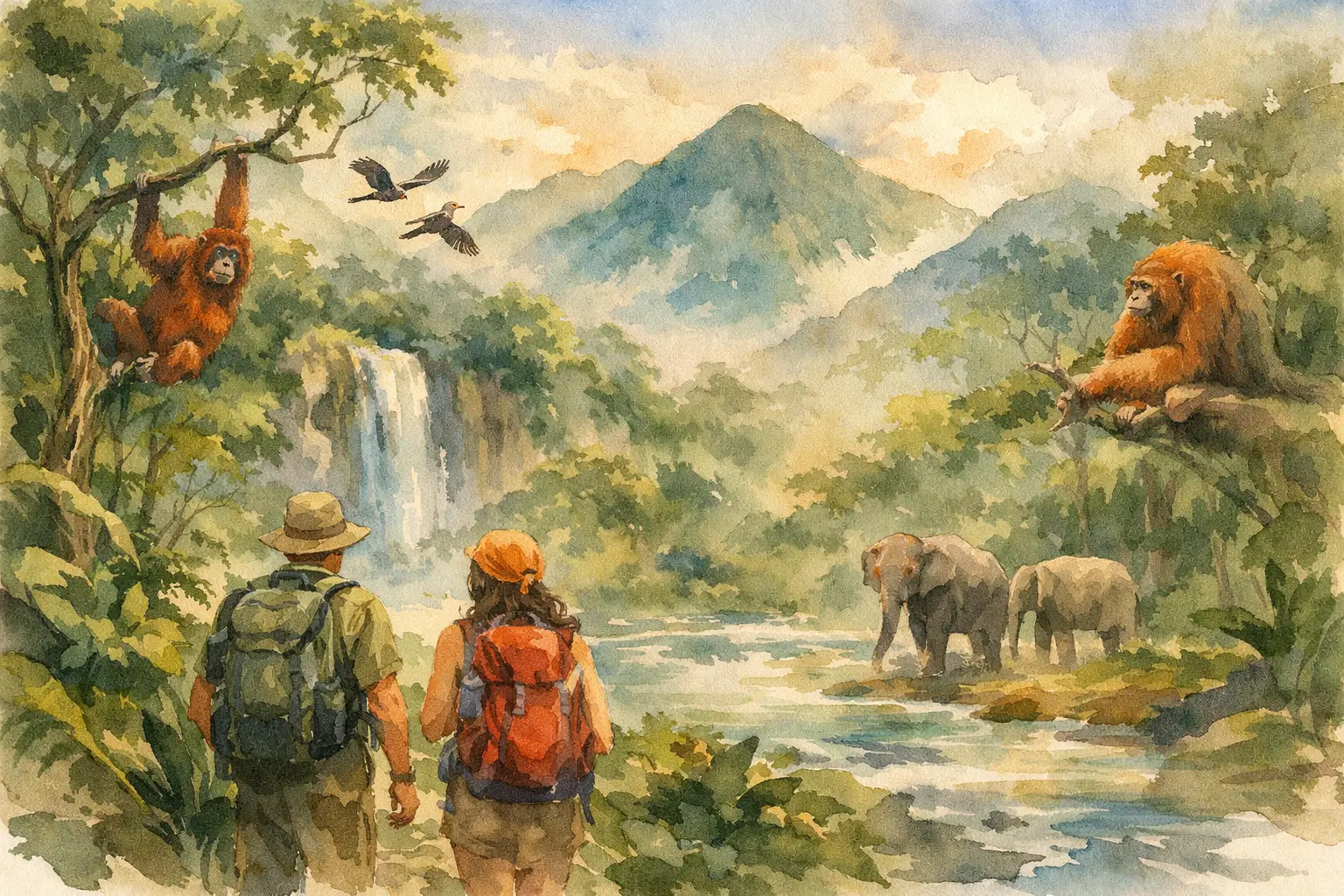
Gunung Leuser Guides for Ethical Jungle Treks
Meet certified Gunung Leuser guides for an ethical, well-planned jungle trek, with wildlife respect, local insight, and the right pace for every traveler.
A rainforest trail can look simple on a map, then change completely after an hour of tropical rain. Roots become slick, streams rise, and the calls overhead are hard to place without someone who knows the forest. That is why Gunung Leuser guides are not an optional extra for travelers hoping to see orangutans responsibly. They are the people who turn a jungle walk into a safer, more respectful, and far more meaningful experience.
In Bukit Lawang, a good guide does more than point toward wildlife. They read trail conditions, understand animal behavior, set a pace that works for the group, and help protect a national park that is home to critically important wildlife and forest communities. For visitors, choosing the right guide is one of the most important decisions of a Sumatra trip.
What Gunung Leuser Guides Actually Do
Gunung Leuser National Park is vast, humid, steep in places, and alive with far more than orangutans. A trained local guide helps guests move through this environment with care. They know which paths are appropriate after rain, where footing requires attention, and when it is better to slow down rather than push ahead.
Just as importantly, guides help create the right conditions for wildlife encounters. Wild orangutans do not perform on schedule. A guide may notice a broken branch, a feeding tree, or movement high in the canopy that an untrained visitor would miss. They can explain whether the group is watching an orangutan, Thomas’s leaf monkey, gibbon, hornbill, or macaque, while making sure the moment stays calm and non-intrusive.
The best guiding is often quiet. It means stopping when an animal appears, keeping voices low, allowing the forest to set the pace, and never treating wildlife like a photo prop. You may come home with fewer close-up pictures than you expected, but with a much more genuine memory of seeing animals behave naturally in their own habitat.
Why Local Knowledge Makes the Difference
Bukit Lawang sits beside one of Southeast Asia’s most important rainforest landscapes. Local guides have grown up with its weather patterns, river routes, village connections, and forest rhythms. That knowledge cannot be replaced by a downloaded trail map.
A locally based guide can explain how tourism has changed Bukit Lawang, why responsible trekking supports families in the village, and what conservation looks like beyond a sign at the park boundary. They can also share the practical details visitors need: when to put on rain gear, how to cross a muddy section safely, and why a particular area should be passed through without lingering.
There is a wider benefit, too. Choosing an established local operator keeps more travel spending in the community through guides, porters, drivers, cooks, guesthouses, and small businesses. Responsible ecotourism is not perfect, and it must be managed carefully, but it can give the forest greater value standing than cleared.
Ethical Wildlife Trekking Is a Standard, Not an Upgrade
Orangutans are wild animals, and their welfare must come before an itinerary or a photograph. Ethical Gunung Leuser guides follow a simple principle: observe, do not interfere.
That means no feeding, touching, calling to, or trying to lure orangutans closer. Food changes animal behavior and can increase the risk of disease transmission. Touching wildlife is never appropriate. A guide should also manage the group around an encounter, keeping a respectful distance, limiting noise, and moving on when the animal’s behavior suggests it needs space.
Be cautious of any trek that promises guaranteed close contact with orangutans. Sightings can never be guaranteed in a wild forest, and a responsible guide will be honest about that. Bukit Lawang is known for excellent opportunities to see orangutans, but nature remains nature. Some days bring several memorable sightings; other days may center on the forest itself, smaller primates, insects, birds, and the experience of walking beneath a living canopy.
Ethical practice also includes what happens off the trail. Choose guides and accommodations that minimize waste, respect local communities, and do not sell wildlife encounters that place animals under pressure. At Bukit Lawang Travel, certified local guides and wildlife-respectful trekking are central to how we welcome guests into the forest.
Choosing the Right Trek Length
The right trek is not necessarily the longest one. It depends on your fitness, available time, comfort with heat and uneven ground, and what you want from the experience.
A three-hour or half-day jungle walk can be a strong choice for families, travelers with young children, or anyone who wants a meaningful introduction without a demanding overnight stay. You still have the chance to learn about the rainforest and look for wildlife, then return to Bukit Lawang for a shower, a comfortable bed, and dinner in the village.
A full-day trek gives the forest more time to reveal itself. It suits active travelers who are happy walking on natural, sometimes muddy trails and want a deeper feel for the national park without camping overnight. This is often the best balance for first-time jungle trekkers.
For guests looking for a real expedition, multi-day treks offer a different rhythm. You travel farther from the village, sleep in the jungle, listen to the forest after dark, and wake to the sounds of birds and primates rather than traffic. These trips require more flexibility and physical readiness. Rain, humidity, insects, and basic camping conditions are part of the experience, not inconveniences your guide can remove.
A night trek is another option for curious travelers, but it should be approached thoughtfully. The jungle changes after sunset, and a guide can help you spot nocturnal insects, frogs, and other small creatures without disturbing them. It is less about chasing dramatic sightings and more about seeing a familiar forest through a different lens.
Questions Worth Asking Before You Book
Before committing to a trek, ask who will guide you, how groups are managed around wildlife, and what the operator’s approach is to feeding and touching animals. Clear answers are a good sign. So is an operator that talks honestly about fitness requirements, weather, and the possibility of changing plans for safety.
Ask what is included in the price. Depending on the trek, this may cover park arrangements, meals, drinking water, camping equipment, porters, and transportation. Knowing the details beforehand helps you compare options fairly rather than selecting only by the lowest advertised rate.
It also helps to ask about group size. Smaller groups can feel more personal and quieter in the forest, although availability and cost may vary. Private guiding can be especially useful for families, photographers, travelers with a specific pace, or guests combining Bukit Lawang with Lake Toba, Berastagi, Medan, or another part of a wider Sumatra journey.
How to Prepare for a Better Day in the Forest
You do not need elite hiking experience, but preparation makes the day more enjoyable. Wear lightweight clothing that you do not mind getting muddy, along with sturdy shoes or trekking sandals with reliable grip. Bring a reusable water bottle, rain protection, insect repellent, sunscreen for time outside the canopy, and any personal medication.
Leave strong perfumes at home, keep snacks packed away, and follow your guide’s instructions around animals. The rainforest is not a controlled attraction. A little patience, appropriate gear, and a willingness to accept mud as part of the adventure go a long way.
Most of all, be honest about your comfort level before the trek begins. A professional guide would rather adjust the route early than see someone exhausted or anxious far from the trailhead. There is no prize for choosing a tougher itinerary than you will enjoy.
The Guide You Remember Is the One Who Put the Forest First
Years after a Bukit Lawang trek, visitors often remember a particular moment: an orangutan moving through the canopy with her young, a gibbon call carrying through the trees, or a guide pausing to explain a tiny creature on the forest floor. Those moments happen because the group moved patiently and with respect.
Choose a guide who knows the jungle, cares for its wildlife, and welcomes you as a guest in a place that is both extraordinary and fragile. Come ready to listen, walk carefully, and let the forest set the terms. That is where the real adventure begins.
[…] Learn more about ethical jungle trekking → North Sumatra Route […]