Prepare · Respect · Explore

Trekking Tips

Practical advice for a comfortable, responsible and unforgettable journey through the tropical rainforest of Bukit Lawang and Gunung Leuser National Park.

Tropical conditionsExpect humidity, sudden rain and warm temperatures.
Natural terrainTrails may be muddy, steep, uneven and slippery.
Responsible travelRespect wildlife, local guides and the rainforest.
Before you enter the jungle

Pack thoughtfully and let the forest set the pace.

Jungle trekking in Bukit Lawang is an authentic rainforest experience. Conditions can change quickly, so comfortable clothing, secure footwear and a light backpack will help you enjoy the trail safely.

Three things to remember

You do not need heavy expedition equipment. Carry only what you genuinely need and protect your belongings from rain and humidity.

01
Choose practical clothingLightweight, breathable and quick-drying materials are best.
02
Prepare for rainKeep valuables and dry clothes inside waterproof bags.
03
Listen to your guideLocal conditions and wildlife behavior can change during the trek.
Ethical jungle trekking

A respectful encounter with a living rainforest.

Wildlife sightings should happen naturally. A responsible trek never asks an animal to change its behavior for a photograph or a closer encounter.

Wildlife and ethical jungle trekking in Bukit Lawang
Wildlife comes firstObserve quietly and allow animals to move freely.
01

Never feed wildlife

Human food can change natural behavior, spread illness and create dangerous dependence.

02

Keep a respectful distance

Do not approach, touch, surround or block an animal's natural route through the forest.

03

Stay calm and quiet

Avoid shouting, imitating animal calls or using loud sounds to attract attention.

04

Follow your guide

Your guide understands current trail conditions, park regulations and wildlife behavior.

05

Leave natural objects behind

Plants, seeds, stones and other forest materials belong to the ecosystem.

06

Take every item home

Carry all packaging, tissues and personal waste out of the forest.

What to wear and carry

Comfort matters more than heavy equipment.

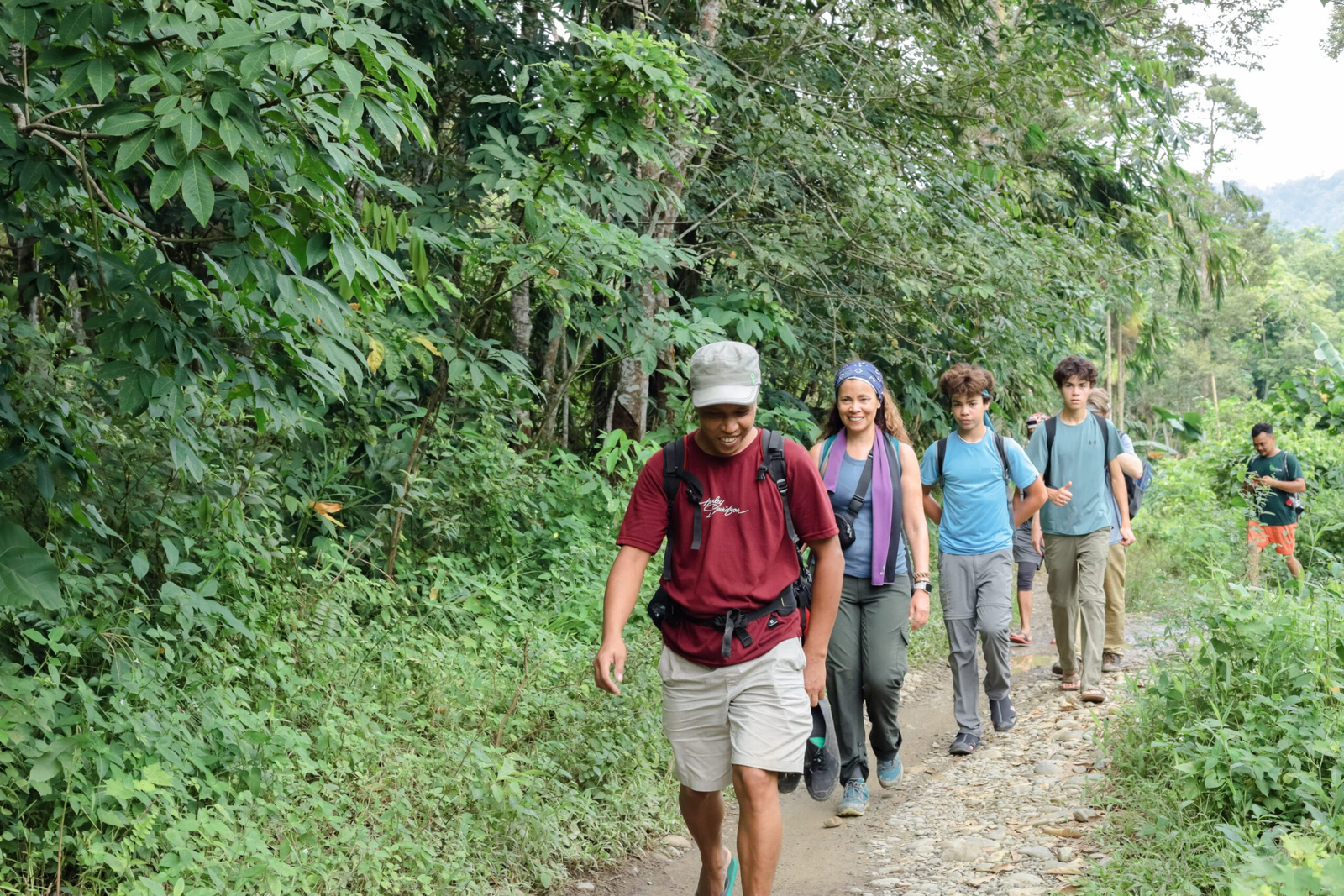
Choose clothing that protects your skin without becoming heavy when wet. Earth-toned colors are practical and less visually disruptive in the forest.

Clothing

Wear breathable, quick-drying clothing suitable for warm and humid conditions.

  • Lightweight long trousers
  • Quick-drying T-shirts
  • Long socks
  • Long sleeves

Footwear

Trails may include mud, roots, rocks, riverbanks and steep sections.

  • Hiking shoes with good grip
  • Comfortable ankle support
  • Previously worn-in footwear
  • Secure water shoes

Backpack

A compact daypack is usually enough for personal belongings and drinking water.

  • Approximately 25–35 liters
  • Comfortable shoulder straps
  • Rain cover or waterproof liner
  • Reusable water bottle

Sun protection

Tropical sunlight can still be strong beneath open sections of the canopy.

  • High-protection sunscreen
  • Lightweight hat
  • Sunglasses
  • Neck cloth or buff

Rain protection

Tropical showers can arrive quickly, even during the drier months.

  • Lightweight rain jacket
  • Waterproof inner bags
  • Dry set of clothing
  • Quick-drying towel

Insect protection

Use suitable repellent and cover exposed skin when necessary.

  • Personal insect repellent
  • Long trousers and socks
  • Long sleeves in the evening
  • Avoid strong perfume
Recommended colors

Neutral earth tones such as beige, brown, olive, muted green and grey work well. Very bright or fluorescent colors may be visually disruptive and can attract some insects.

For overnight treks

Keep one dry set of clothes for camp.

After a humid day on the trail, changing into dry clothing makes the evening more comfortable. Temperatures can feel cooler beside the river and after sunset.

Evening clothing

Pack a dry long-sleeved shirt, long trousers and warm socks.

River and bathing items

Bring swimwear, a quick-drying towel and secure sandals.

Personal essentials

Bring a headlamp, toilet paper, personal hygiene items and necessary medication.

Eco-conscious hygiene

Use products sparingly. Even biodegradable soap should not be used directly in rivers or natural water sources.

Eco-conscious jungle trekking and responsible hygiene in Bukit Lawang
Health, electronics and safety

Protect what matters and follow local guidance.

High humidity, rain and natural terrain require simple preparation. Your guide will provide instructions based on the conditions encountered during your trek.

Electronics

A backpack rain cover alone may not fully protect cameras and phones.

  • Use sealed waterproof bags
  • Carry a compact power bank
  • Protect spare batteries
  • Use a camera strap

Personal medical kit

Bring medication suitable for you and enough regular prescription medicine.

  • Oral rehydration salts
  • Plasters and wound care
  • Personal allergy medication
  • Prescribed medication
Medical needs differ between travelers. Ask a doctor or travel-health professional for personal advice. Do not take antibiotics unless prescribed for you.

On the trail

The trail can be muddy, slippery and physically demanding.

  • Stay with your guide
  • Inform your guide if unwell
  • Do not rush on steep sections
  • Keep both hands available

Before departure

Share relevant information so the trek can be planned responsibly.

  • Mention allergies or medical conditions
  • Check travel insurance
  • Protect identification
  • Confirm trek difficulty
Clothing 10 items
Footwear 3 items
Backpack and hydration 4 items
Personal protection 4 items
Campsite essentials 7 items
Electronics 5 items
Health and documents 7 items
For shorter adventures

Packing list for Bukit Lawang day tours

Day tours require less equipment, but rain protection, drinking water and comfortable footwear remain important.

Clothing

  1. Breathable clothing: Lightweight, quick-drying materials.
  2. Long sleeves and trousers: Useful for sun, vegetation and insects.
  3. Swimwear: Recommended for river activities.
  4. Rain jacket: Tropical rain may arrive unexpectedly.
  5. Hat and sunglasses: Helpful during open sections.
  6. Walking shoes: Choose footwear with secure grip.

Equipment

  1. Comfortable daypack: Large enough for personal essentials.
  2. Reusable water bottle: Stay hydrated and reduce plastic waste.
  3. Basic first-aid items: Include personal medication and wound care.
  4. Insect repellent: Apply according to instructions.
  5. Sunscreen: Use suitable high-SPF protection.

Personal items

  1. Small snack: Bring something suitable for extra energy.
  2. Camera or smartphone: Protect it inside a waterproof bag.
  3. Power bank: Useful during longer day tours.
  4. Cash: ATM access can be limited.
  5. Travel insurance: Check that your activities are covered.
Environmental responsibility

Leave the rainforest as you found it.

Every visitor can help protect the natural beauty and biodiversity of the Leuser rainforest. Small, respectful choices create a more positive journey for wildlife, guides, local communities and future travelers.

Pack out your wasteCarry tissues, wrappers and personal waste back to the village.
Do not feed animalsFeeding changes natural behavior and can spread disease.
Protect water sourcesKeep soaps, shampoos and chemicals away from rivers and streams.
Respect the forestDo not remove plants, seeds, stones or other natural materials.
Your rainforest journey begins here

Prepare well. Travel responsibly. Experience the wild.

Contact our local Bukit Lawang team for help choosing the right trek and preparing for your rainforest adventure.

Need Help? Chat with us