Lake Toba & Samosir — 2026 Travel Guide
Travel guide updated July 2026

Lake Toba & Samosir

Enter a vast volcanic caldera where deep-blue water, Batak Toba heritage, highland roads and quiet villages create one of North Sumatra’s most meaningful journeys.

UNESCO Global Geopark Batak Toba culture Samosir Island Waterfalls & viewpoints
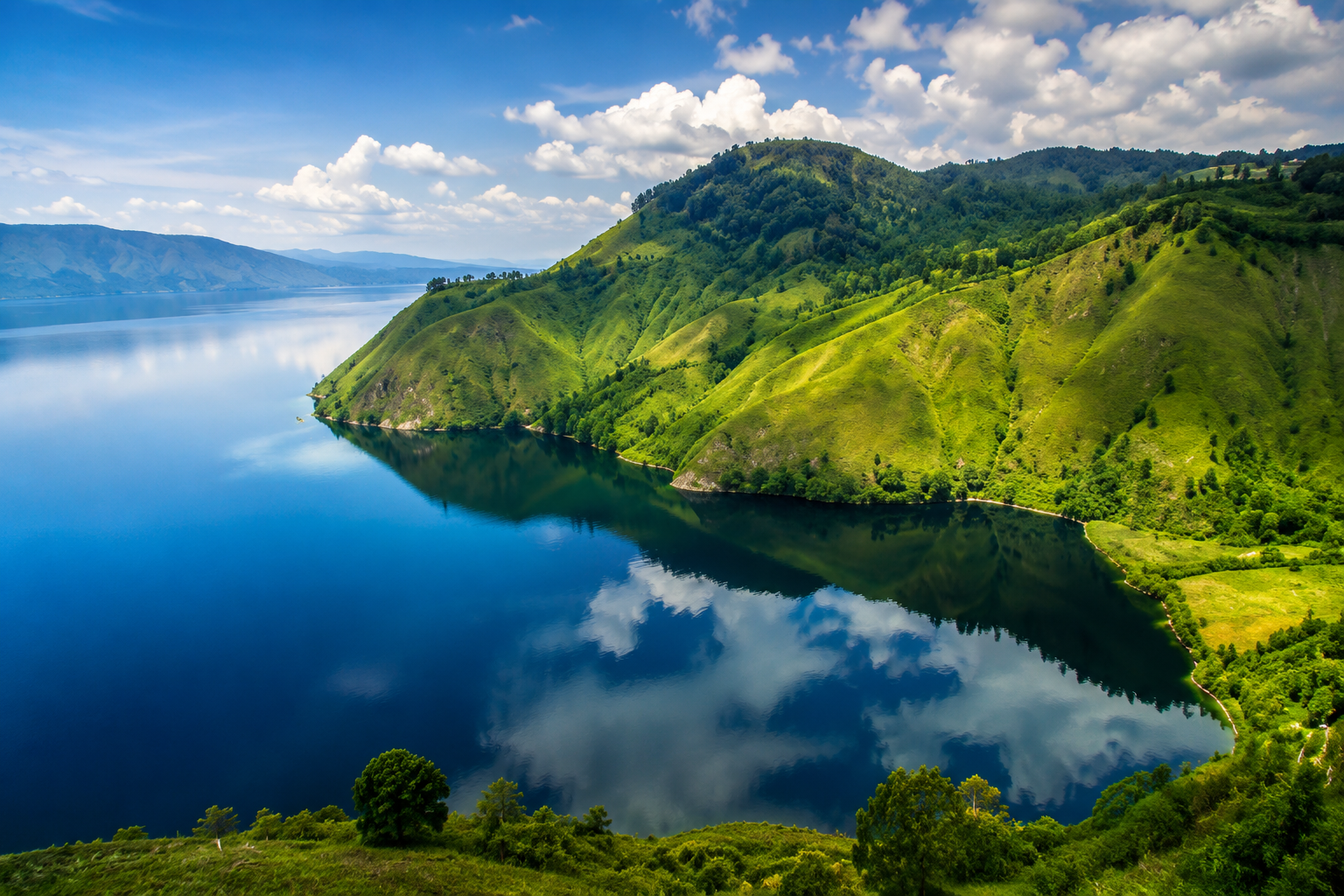
Lake Toba and the volcanic highlands of North Sumatra
Gateway option 1 Kualanamu / Medan Combine with Bukit Lawang or Berastagi by private road journey.
Gateway option 2 Silangit Airport Closer access to Balige and the southern Lake Toba area.
Main crossing Ajibata → Ambarita Vehicle ferry route with online reservation available.
Island base Tuk Tuk & Ambarita Lakeside stays, restaurants and cultural access.
Wider journey Pangururan & Tele Hot springs, highland roads, viewpoints and western Samosir.

The Caldera Journey

Geological scale becomes cultural intimacy.

Lake Toba is famous for its size, but the strongest experience is found in the details: Gorga carvings, ulos weaving, old villages, family stories, lakeside mornings and roads that rise toward the caldera rim.

Slow travel changes the lake from a scenic stop into a journey through landscape, memory and living Batak culture.

Toba Caldera UNESCO Global Geopark

Earth history, community and culture belong together.

The geopark was designated in 2020 and remains listed by UNESCO in 2026. Its significance is geological, ecological and cultural: caldera walls, forests, lake systems, traditional architecture and community knowledge form one connected landscape.

Important correction: older tourism texts often say that the Toba eruption almost caused human extinction. UNESCO’s current explanation notes that the earlier “genetic bottleneck” theory has since been dismissed.
01

Super-eruption landscape

The caldera was shaped approximately 75,000 years ago by one of the most powerful volcanic events known in Earth’s history.

02

Batak architecture

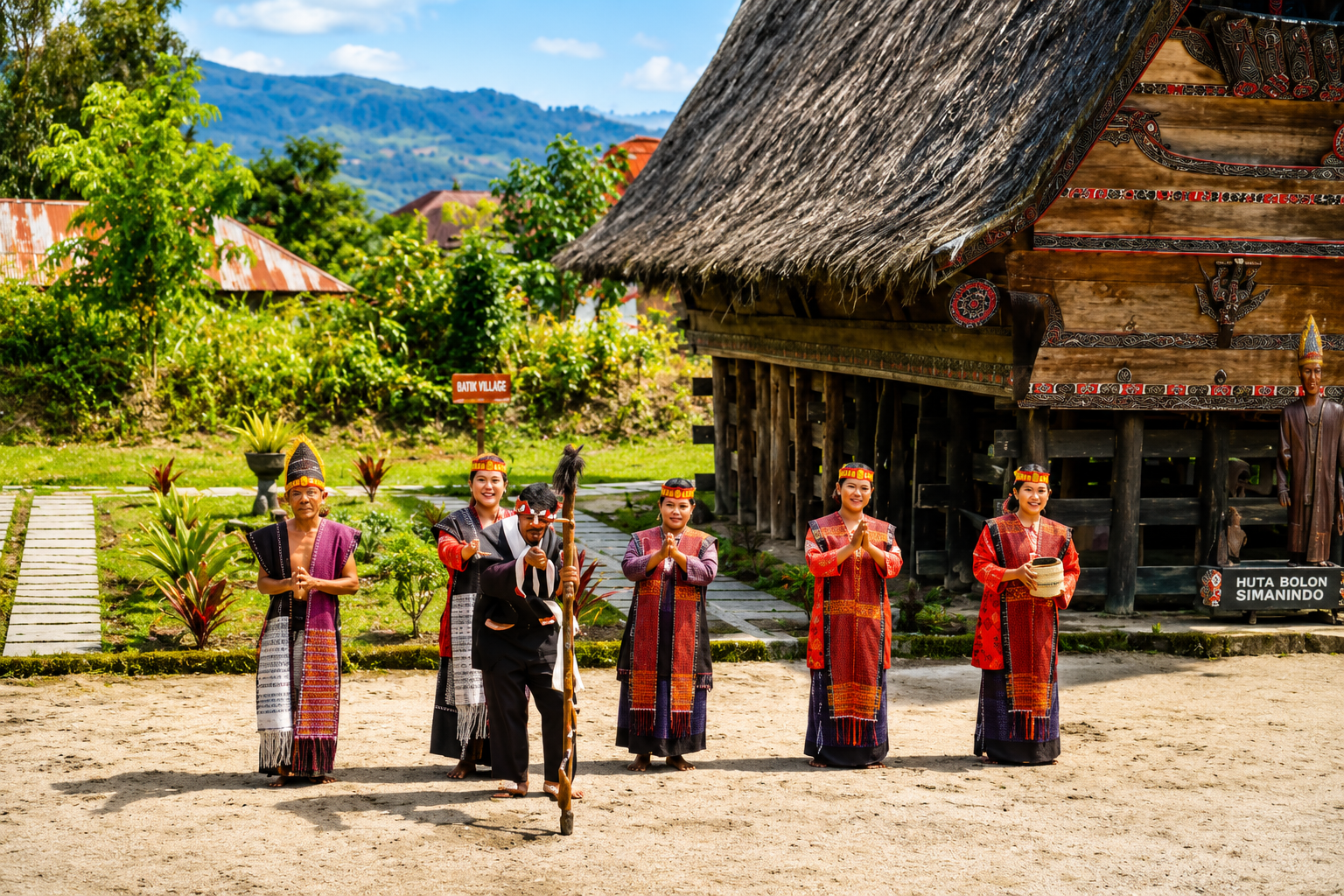
Traditional houses use boat-like forms, elevated wooden construction and symbolic Gorga carving in red, black and white.

03

Ulos & living heritage

Handwoven ulos cloth remains part of ceremonies, family identity and modern craft, rather than being only a souvenir.

04

Highland ecology

Forests, endemic plants, farmland and water systems support local livelihoods across the wider caldera region.

Two Ways to Experience Samosir

Begin with culture. Continue into the landscape.

Tuk Tuk is a convenient base, but Samosir becomes more rewarding when you travel beyond the peninsula into villages, hills and the western side of the island.

01 · Batak Toba Heritage

Villages, stories and traditional architecture

Visit Huta Siallagan in Ambarita, the King Sidabutar tomb complex in Tomok and the Huta Bolon Museum in Simanindo. Add ulos weaving and local conversation rather than treating the sites as quick photo stops.

Huta Siallagan Tomok Simanindo Ulos weaving Gorga carving Sigale-gale
Travel well Use a local guide when you want context beyond dates and legends.
02 · Island Landscape

Hills, hot springs and the caldera road

Continue toward Pangururan, the Aek Rangat hot-spring area, Holbung’s open hills, Tele viewpoint and quieter villages where the scale of the lake becomes easier to understand.

Pangururan Aek Rangat Bukit Holbung Tele viewpoint Sidihoni Parbaba
Best method Private car or scooter only for confident riders familiar with highland roads.
Scenic Lake Toba and Samosir journey in North Sumatra
From the caldera rim to the quiet roads of Samosir Lake Toba Journey

Signature Experiences

Six layers of the Lake Toba journey

The best itinerary combines culture, geology, road travel, food and quiet lakeside time instead of visiting only the most famous stops.

01

Huta Siallagan

Explore the historic village space in Ambarita and learn how stone structures, houses and oral traditions are interpreted locally.

Cultural context matters
02

Simanindo & Huta Bolon

See traditional houses and community-based cultural preservation on the northern side of Samosir.

Check performance times
03

Caldera viewpoints

Tele, Holbung, Hutaginjang and other elevated places reveal different angles of the lake’s enormous volcanic basin.

Weather changes visibility
04

Sipiso-Piso Waterfall

Located near the northern edge of the lake, the waterfall is best combined with Karo Highlands or a scenic northern route.

Not on Samosir Island
05

Lake activities

Kayaking, paddle boarding, swimming and boat trips are possible in selected areas when weather and local safety conditions allow.

Use local safety advice
06

Roads less travelled

Add Balige, Bakkara, Muara or quieter lakeside villages when you have more than three nights and want a broader caldera journey.

Private planning recommended
04

Suggested Journey

Four days without rushing the lake

This is a flexible planning example. Arrival airport, weather, ferry operations and the direction of your wider Sumatra journey should determine the final route.

01
Arrival & crossing

Medan or Silangit to Samosir

Travel to Parapat or Ajibata, complete the ferry crossing and settle into a lakeside base around Tuk Tuk or Ambarita.

Confirm ferry · avoid a tight arrival · lakeside evening
02
Culture day

Ambarita, Tomok and Batak stories

Explore Huta Siallagan, the Tomok area and ulos or village traditions with enough time for local food and conversation.

Respect sacred places · ask before portraits · use local guides
03
Island road

Pangururan, hot springs and open hills

Follow the western route toward Aek Rangat, Holbung or another viewpoint, adapting the day to weather and road conditions.

Highland roads · changing weather · flexible stops
04
Return or continue

Cross to the mainland and travel onward

Continue toward Medan, Silangit, Balige, Berastagi or another North Sumatra destination with a confirmed transport plan.

Allow ferry buffer · do not risk a same-day tight flight

Travel Desk · 2026 Update

Confirm the crossing before driving to the port.

Lake Toba has several ferry routes and different boat types. Vehicle ferries, passenger boats and local hotel-area services should not be treated as one interchangeable timetable.

Ajibata–Ambarita vehicle ferry

Online booking and a crossing of about 45 minutes.

ASDP reported in May 2026 that KMP Ihan Batak and KMP Pora-Pora were serving this important Samosir route with an approximate crossing time of 45 minutes.

8–12 trips ASDP operated this daily range from 07:30 during the May 2026 long weekend. This was a holiday operating plan—not a permanent timetable. Always check the live schedule.
01

Choose the correct port pair

Ajibata–Ambarita is useful for vehicles and wider island travel. Passenger boats from the Parapat area may serve different landing points around Tuk Tuk.

02

Book with accurate identity data

For online vehicle-ferry reservations, enter passenger and vehicle details correctly and carry the matching identification.

03

Holiday periods become busy

ASDP recorded high use of the Ajibata–Ambarita route in early 2026. Reserve ahead and arrive before the stated check-in time.

04

Weather and operations can change

Keep buffer time before flights or long road transfers. Never rely only on a schedule screenshot from an older travel date.

Getting There & Choosing a Base

The best gateway depends on the rest of your Sumatra journey.

Lake Toba can be approached from Medan, Silangit, Berastagi, Bukit Lawang or the western side of North Sumatra. One route does not suit every itinerary.

From Medan / KNO Approximately 4–5 hours by road to Parapat in normal conditions.
From Silangit / DTB Closer access to Balige and the southern lake area; road time varies by destination.
Tuk Tuk Most convenient for restaurants, guesthouses and first-time Samosir visitors.
Pangururan Useful for hot springs, western Samosir and wider road exploration.
Balige / mainland A strong alternative for airport access, museums and southern Lake Toba journeys.
01

Best general season

Indonesia’s official tourism guidance recommends May to September for generally clearer weather and more comfortable outdoor travel.

02

Cooler highland climate

Bring a light jacket for mornings, evenings, high viewpoints and wet-weather travel even when daytime temperatures feel warm.

03

Cash & mobile signal

Carry rupiah for small villages, parking, boats and local food. Connectivity can weaken away from main settlements.

04

Road conditions

Samosir and caldera-rim roads can be steep, winding or affected by rain. Use an experienced local driver when needed.

05

Swimming & water sports

Use local advice on depth, weather and safe access. Lake conditions and facilities differ significantly from one location to another.

06

Hotel choice

Choose by location and travel style rather than relying on an old list of hotel names. Availability and property quality can change.

Taste Batak Toba

Andaliman, freshwater fish and highland flavour

Ask about ingredients before ordering. Some traditional Batak dishes contain pork, blood or raw fish, while many restaurants also offer chicken, fish and vegetarian alternatives.

Arsik Fish cooked with turmeric, aromatics and distinctive andaliman spice.
Naniura Batak-style fish cured with citrus and spices; choose a trusted kitchen.
Mie gomak Thick noodles often served with a rich, spiced sauce.
Saksang A ceremonial spiced meat dish; ingredients vary and should be confirmed.
Andaliman A fragrant local spice with a citrus-like aroma and gentle numbing quality.
Lake fish Grilled or cooked freshwater fish is widely available around the lake.

Travel With Cultural Respect

Batak culture is living heritage—not decoration.

Meaningful tourism supports local families, protects the lake and approaches houses, tombs, textiles and ceremonies with respect.

1
Ask before photographing people or ceremonies Close portraits and ritual moments require permission, not assumption.
2
Follow guidance at tombs and sacred sites Do not climb, sit on or handle cultural structures without explicit permission.
3
Buy textiles with understanding Ask about the meaning, maker and appropriate use of ulos rather than treating every cloth as identical.
4
Protect Lake Toba’s water Reduce single-use plastic, take rubbish away and avoid detergents or products entering the lake.
5
Use local guides, drivers and family businesses Local spending keeps tourism value within the communities that maintain the destination.

Helpful Before Booking

Frequently asked questions

How many nights should we stay at Lake Toba?
Three nights is a useful minimum for Samosir. Four or five nights allow a wider island road journey, cultural visits and more flexibility around transport and weather.
Is Tuk Tuk the best place to stay?
Tuk Tuk is the easiest first-time base because it has many restaurants and accommodation options. Pangururan, Balige and quieter Samosir areas may suit travellers seeking road access or a more local atmosphere.
Should we fly to Medan or Silangit?
Choose Medan when combining Lake Toba with Bukit Lawang, Tangkahan or a wider North Sumatra road journey. Choose Silangit when the lake is the main priority and the live flight schedule fits your route.
Do we need to book the Ajibata–Ambarita ferry online?
Online reservation is available through the Toba Ferizy system and is recommended, especially with a vehicle or during busy periods. Confirm the current process before departure.
Can we take a passenger boat directly to Tuk Tuk?
Passenger services commonly operate from the Parapat area to landing points around Tuk Tuk, but routes and times vary. Confirm the current service with your hotel, operator or port before travelling.
Is Sipiso-Piso Waterfall on Samosir?
No. It is on the mainland near the northern side of Lake Toba and is often combined with Berastagi, Tongging or a northern scenic route.
Can Lake Toba be combined with Bukit Lawang?
Yes. A private multi-day route can combine rainforest trekking, Berastagi and Lake Toba. Travel times are substantial, so each destination should receive enough nights.

From rainforest trails to the calm of the caldera.

Send your dates, number of guests, arrival airport and preferred destinations. We can help arrange a private Lake Toba and Samosir journey or combine it with Bukit Lawang and Berastagi.

English & German: +49 1624 798 611 Indonesia: +62 8527 0407 280 info@bukitlawangtravel.com

Travel information reviewed 29 July 2026 using UNESCO, Indonesia Travel and ASDP sources. Reconfirm live flights, ferries, fares, weather, access and opening hours before travel.

Need Help? Chat with us