Info@bukitlawangtravel.com

The Leuser Ecosystem and Bukit Lawang River
Plan a responsible visit to the Leuser Ecosystem and Bukit Lawang River, with practical advice on wildlife, river safety, and local travel choices wisely.

A jungle trek in Bukit Lawang is never only about finding an orangutan. The Leuser Ecosystem and Bukit Lawang River are part of one living landscape, where forest, water, wildlife, farms, and village life affect one another every day. When you understand that connection, your adventure becomes more meaningful – and your choices as a visitor can support the people working to protect it.
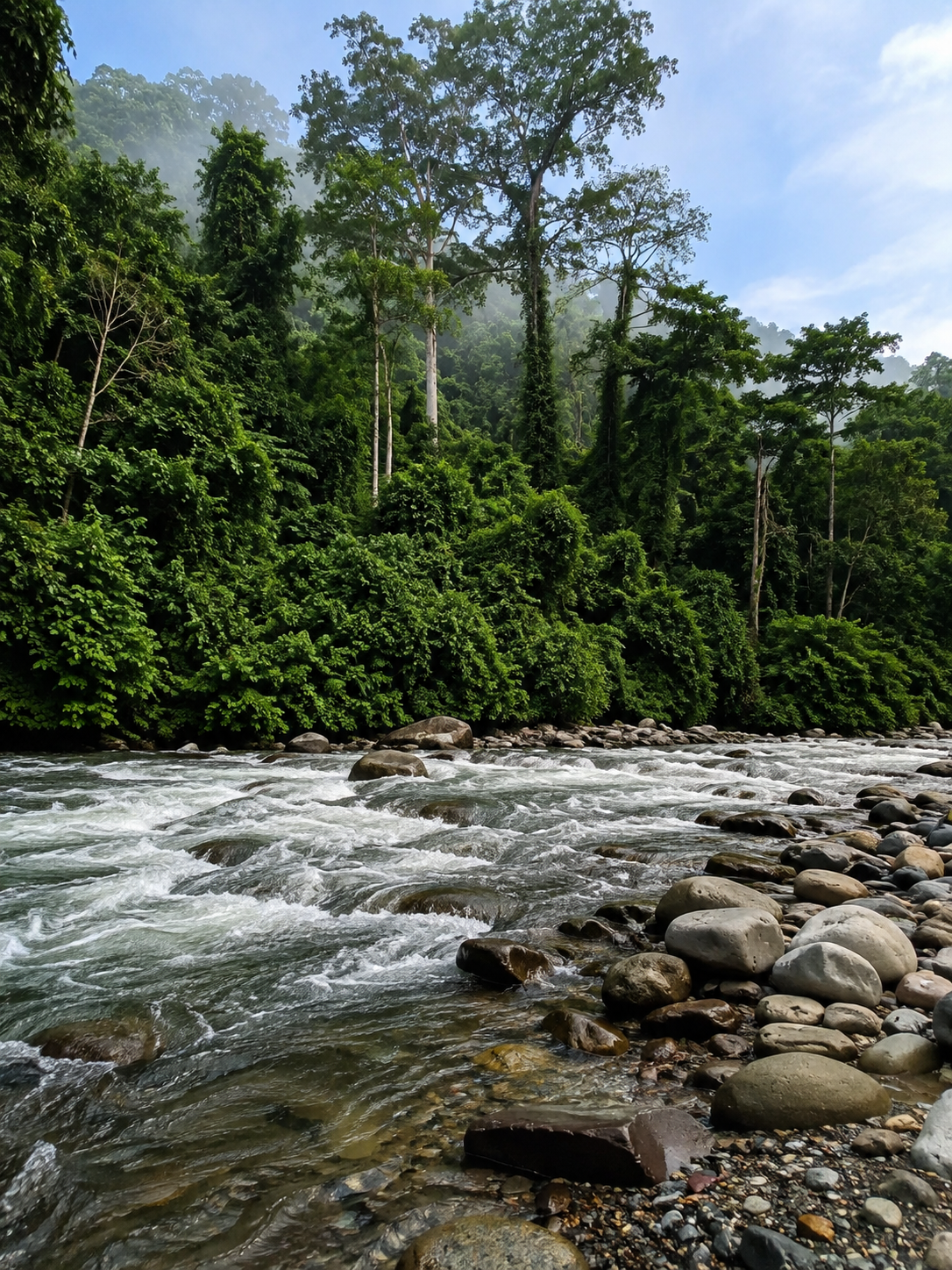
Bukit Lawang sits beside the Bahorok River, often called the Bukit Lawang River by visitors. Its rushing water is the first thing many travelers notice after arriving: children playing near the banks, suspension bridges crossing the current, and rainforest-covered slopes rising beyond the village. Just behind this lively gateway begins one of Southeast Asia’s most important rainforest regions.
What Makes the Leuser Ecosystem So Important?
The Leuser Ecosystem is far bigger than Gunung Leuser National Park alone. It is a wide, connected forest landscape spanning parts of Aceh and North Sumatra, with lowland rainforest, mountain forest, peatlands, rivers, and watersheds. This variety creates habitat for an extraordinary range of life, including Sumatran orangutans, elephants, tigers, rhinos, gibbons, hornbills, and countless insects, reptiles, plants, and fungi.
Its value is not limited to rare animals. Healthy forests capture rainfall, hold soil in place, feed rivers, and help regulate water supplies for communities downstream. When forest cover is fragmented or cleared, wildlife loses safe routes between feeding areas and the risk of erosion and destructive flooding can increase.
For travelers, the scale can be hard to grasp from a trail. You may spend a few hours walking beneath towering trees, listening for gibbon calls and watching leaf monkeys move through the canopy. Yet that small section of forest depends on connections that continue far beyond the route you walk. A responsible visit recognizes that the rainforest is not a backdrop. It is an interconnected home.
The Bukit Lawang River Is More Than a Place to Cool Off
The Bahorok River gives Bukit Lawang much of its character. It brings cool air to the village, supports daily life, and offers a memorable way to finish a jungle trek. On suitable days and with experienced local supervision, tubing or rafting can be a fun, high-energy addition to a rainforest trip.
But this is a powerful mountain river, not a swimming pool. Its level and current can change quickly after heavy rain upstream, even when the weather in the village seems calm. Local guides watch conditions closely and may change, postpone, or cancel river activities when safety calls for it. That is good judgment, not a missed adventure.
Visitors can also help protect the river in simple, practical ways. Bring a refillable water bottle, avoid leaving snack packaging on trails or riverbanks, and choose accommodation and operators that manage waste responsibly. Do not use soap, shampoo, or other products in the river. What washes away from one person does not disappear – it enters the water shared by the village and the forest.
The river also carries a serious history. Bukit Lawang has experienced devastating flash flooding, a reminder that life beside a rainforest river requires respect for weather, terrain, and local knowledge. Stay alert to guide instructions, keep valuables packed for wet conditions, and never enter or cross the river independently during rain or high water.
Wildlife Encounters Need Clear Boundaries
Seeing a wild orangutan in the forest can be one of the great moments of a Sumatra journey. It can also be an encounter that depends on visitor behavior. Orangutans are critically endangered, intelligent wild animals. Their welfare must come before photographs, close views, or a fixed itinerary.
Ethical trekking means keeping a respectful distance, staying quiet when guides ask, and allowing animals to choose where they move. A guide may change the route or pause the group if an orangutan is feeding, traveling, or caring for a young infant. That flexibility is part of real wildlife observation.
Feeding wildlife is never responsible. It changes natural behavior, can increase conflict, and may expose animals to human illness. For the same reason, guests who are sick, especially with a cough, fever, or stomach illness, should postpone close wildlife trekking. Great apes are vulnerable to many human respiratory diseases.
A good guide does more than point out animals. Certified local guides read the forest: fresh movement in the canopy, fruiting trees, weather shifts, steep ground, and the behavior that tells them when to give wildlife more space. Their knowledge helps make the experience safer for guests and less disruptive for the animals.
Choosing a Trek That Fits the Forest and You
Longer is not automatically better. A three-hour family-friendly walk can be a wonderful first encounter with the jungle, particularly for travelers with younger children, limited time, or little hiking experience. A night trek reveals a completely different forest rhythm, with frogs, insects, and nocturnal sounds taking over after dark.
For people who want a deeper challenge, multi-day expeditions offer more time away from the village and a stronger sense of the rainforest’s changing terrain. Expect mud, humidity, climbs, and basic camp conditions. In return, you have time to slow down, notice small details, and experience the forest without treating it as a checklist.
The right choice depends on your fitness, comfort with heat, travel schedule, and reason for visiting. Be honest when discussing your ability level. A carefully matched trek is more enjoyable than an ambitious itinerary that leaves you exhausted or unable to appreciate the place around you.
Bring lightweight long sleeves, a rain layer, sturdy shoes with grip, insect protection, and a dry bag for electronics. Pack only what you need. Heavy bags make steep trails harder, while disposable items create unnecessary waste. Your guide can advise on the conditions and equipment that suit your selected route.
How Tourism Can Benefit Bukit Lawang
Conservation is strongest when local communities have a meaningful role in it. In Bukit Lawang, locally guided travel can create income for guides, drivers, cooks, small guesthouses, food stalls, craftspeople, and families whose knowledge makes a visit possible. Spending thoughtfully in the village helps ensure that the economic value of the forest is felt by the people living closest to it.
This does not mean every tourism choice is automatically sustainable. Ask practical questions. Are guides properly trained? Is wildlife feeding prohibited? Are group sizes managed? Does the operator hire locally and work with local accommodation, transport, and food providers? Clear answers matter more than vague environmental promises.
At Bukit Lawang Travel, certified local guides lead treks with wildlife-respectful practices and local knowledge at the center. The goal is not to guarantee a staged animal encounter. It is to help guests experience the forest responsibly while supporting the community that welcomes them.
Consider adding time beyond the trek as well. A village walk, cooking class, cave visit, or a longer route toward Lake Toba or Berastagi can spread your travel spending across more local businesses and reduce the pressure to rush through Bukit Lawang in a single day.
Visit With Curiosity, Leave With Care
The best memories from the Leuser region are often not the ones you planned: a sudden burst of wings in the canopy, the sound of rain on a camp tarp, a guide recognizing a call you would have missed, or the river’s cold water after a humid trail. These moments feel special because the forest is still alive on its own terms.
Come prepared for unpredictability. Wildlife sightings cannot be promised, rain can reshape a route, and river plans may change for safety. That uncertainty is not a flaw in the experience. It is the reality of traveling in a wild landscape.
Choose your adventure with care, listen to the people who know this place best, and leave the riverbank and forest trail cleaner than you found them. The Leuser Ecosystem will remain far more important than any single visit – and that is exactly why every respectful visit matters.