Info@bukitlawangtravel.com

Sumatra Cooking Class With True Local Flavor
Join a Sumatra cooking class in Bukit Lawang to cook regional dishes, meet local hosts, and bring practical Indonesian flavors home with real confidence.
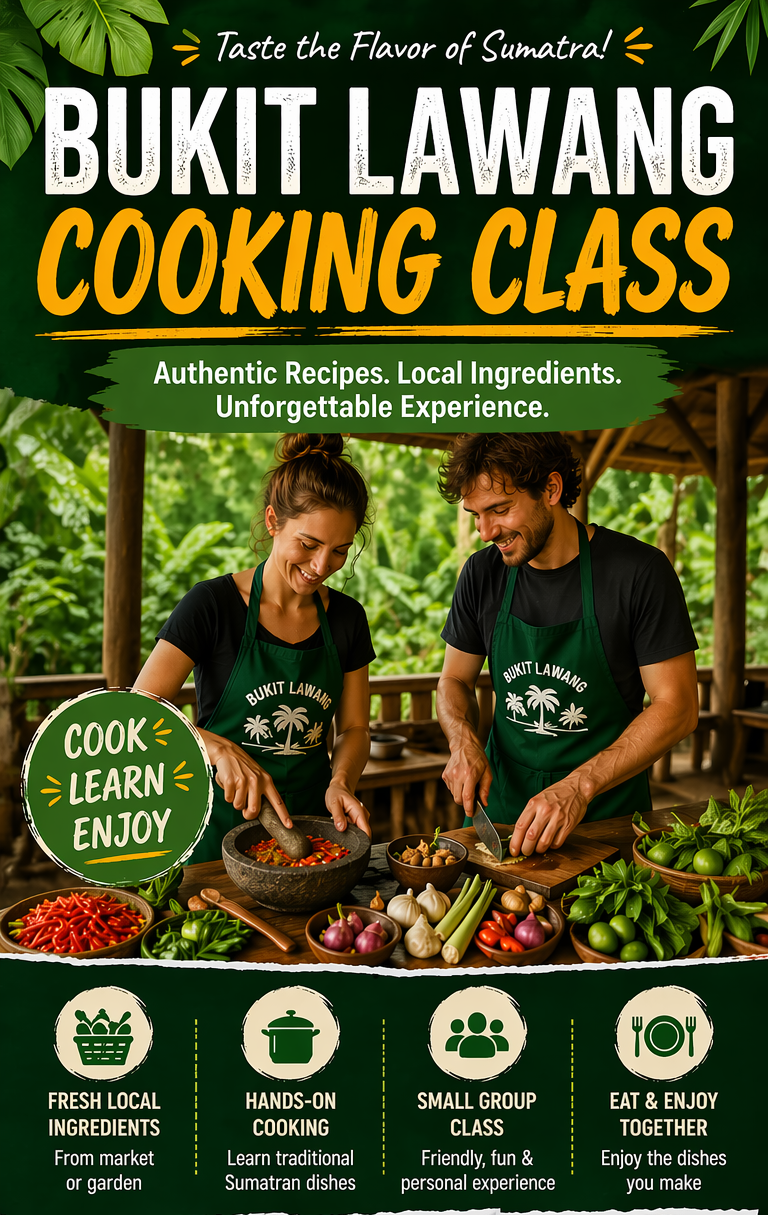
The scent of toasted spice paste, fresh lemongrass, and coconut milk can tell you more about a place than a restaurant menu ever could. A Sumatra cooking class in Bukit Lawang offers a hands-on way to understand North Sumatra beyond the jungle trail: through the ingredients local families buy, the dishes they serve, and the stories shared around the stove.
After time in Gunung Leuser National Park looking for orangutans with a certified local guide, cooking together is a welcome change of pace. It is practical, social, and rooted in everyday life. You will leave with more than photographs of a beautiful meal. You will understand how to make it, adapt it at home, and recognize the care that goes into Sumatra’s distinctive food culture.
What Makes a Sumatra Cooking Class Different?
Indonesian food is wonderfully diverse, and Sumatra has a culinary identity all its own. The island is known for confident spice blends, rich coconut-based sauces, fresh herbs, chili, turmeric, ginger, and aromatic leaves. Dishes can be deeply flavorful without being complicated once you understand the order of cooking and the purpose of each ingredient.
A local class is not simply a demonstration where guests watch from a distance. You may help choose produce, peel and chop aromatics, grind spices, stir sauces, and taste as you go. The experience turns unfamiliar ingredients into something approachable.
In Bukit Lawang, the setting matters too. This is a village on the edge of rainforest, where travel supports real families and small local businesses. A cooking activity creates an opportunity to spend time with residents outside the tourism routine, while your visit contributes directly to the community hosting you.
From Market Ingredients to the Dinner Table
Many cooking classes begin with the ingredients. Depending on the format and timing, this may include a visit to a local market or an introduction to the herbs, vegetables, and spices used in the kitchen. It is a useful starting point because Indonesian recipes often rely on fresh components that are best understood by sight, smell, and taste.
You may encounter galangal, a fragrant root with a peppery, citrus-like character; candlenuts, which add body to sauces; kaffir lime leaves; turmeric; torch ginger flower; fresh chilies; and coconut in several forms. A local host can explain which substitutions work when you return to the United States and which ingredients are worth seeking out at an Asian grocery store.
The class usually moves into preparing a bumbu, the Indonesian word often used for a blended or ground seasoning paste. This is where the foundation of many dishes begins. Garlic, shallots, chili, turmeric, ginger, and other spices are crushed or blended, then gently cooked until their raw edge disappears and their fragrance fills the kitchen.
That process rewards patience. Turning up the heat may seem like a faster route, but spice paste can catch quickly and become bitter. Learning to cook it slowly is one of the small details that makes a recipe feel authentic rather than merely spicy.
Dishes You Might Prepare
The exact menu depends on the season, your host, dietary needs, and what is available locally. A well-planned class may include a main dish, a vegetable side, sambal, rice, and a sweet snack or drink.
You might make a coconut-rich chicken or vegetable curry, fried tempeh, fresh sambal, sautéed greens, or a regional dish influenced by the food traditions of North Sumatra. Rendang, the famous slow-cooked Minangkabau beef dish from West Sumatra, may be discussed as part of the island’s food heritage, though preparing it properly takes much longer than a typical class allows.
Vegetarian and vegan travelers can still have an excellent experience. Indonesia has a strong tradition of cooking with tofu, tempeh, vegetables, coconut, and legumes. The key is to tell your host about dietary requirements in advance. Fish sauce, shrimp paste, egg, and chicken stock can appear in recipes that may initially seem plant-based, so clear communication helps everyone plan a meal you can enjoy comfortably.
A Good Fit Before or After Your Jungle Trek
A cooking class is especially well suited to a rest day in Bukit Lawang. After a multi-day jungle expedition, a slower village-based activity gives tired legs time to recover while keeping your trip meaningful. It also works well before a trek, when you want to settle in, meet local people, and begin your Sumatra adventure with something relaxed and welcoming.
Families often enjoy the shared, practical nature of cooking. Younger travelers can help with washing vegetables, mixing ingredients, or assembling simple dishes, while adults take on more of the knife work and cooking. For couples and friend groups, it is a memorable alternative to another evening meal out.
The trade-off is time. If you have only one full day in Bukit Lawang and your main goal is to see orangutans responsibly, prioritize your guided jungle trek. A cooking class is best added when your itinerary has breathing room. Travelers combining Bukit Lawang with Lake Toba, Berastagi, or Medan often find that an extra night makes the experience feel far less rushed.
How to Get the Most From the Experience
Come curious rather than trying to reproduce every step perfectly. Home kitchens in the United States may not have a stone mortar, banana leaves, a wok burner, or access to every fresh Indonesian herb. That does not make the lesson less useful. Ask your host which flavors are essential, which tools can be replaced, and how to adjust heat for your own kitchen.
It also helps to ask about the food’s local context. Is this dish made for everyday lunch, celebrations, religious holidays, or visiting family? Which ingredients come from nearby farms? How has the recipe changed between generations? These conversations are often what transform a good meal into a lasting travel memory.
Bring a way to record notes, whether that is a small notebook or your phone. Take photos of ingredient labels and preparation stages, but remember to be present, too. The point is not to create a flawless recipe archive. It is to share a table, learn from local knowledge, and enjoy food made together.
If you have allergies, mention them at booking and repeat them when you arrive. Peanut, shellfish, dairy, gluten, and chili concerns should be discussed clearly. Local hosts are often happy to accommodate requests when they have enough notice, but last-minute changes can be difficult when ingredients have already been purchased.
Responsible Travel Has a Place at the Table
Choosing locally led activities is one practical way to travel with greater care. The money spent on a class stays close to the people who provide the experience, from cooks and market vendors to drivers and family-run accommodations. It also helps broaden the benefits of tourism beyond the rainforest itself.
Bukit Lawang Travel sees food experiences as part of a responsible, community-centered visit to the area. Ethical wildlife trekking remains at the heart of many journeys here, but responsible travel is also about how you spend your time beyond the trail. Sharing a meal, learning a recipe, and listening to local hosts are meaningful ways to connect with the village that makes your jungle adventure possible.
A cooking class should never be treated as a staged performance. The best ones feel personal and relaxed, with room for imperfect chopping, extra sambal, questions about family recipes, and plenty of tasting. Respect the kitchen, follow your host’s guidance, and arrive ready to learn rather than judge a meal by what you expect from a restaurant.
Bring a Taste of Sumatra Home
The most valuable souvenir from a Sumatra cooking class may be a new instinct in your kitchen. Perhaps you will cook onions and spices a little more slowly, use coconut milk with more confidence, or make sambal to brighten a simple rice bowl. Those small habits can bring the warmth of Bukit Lawang back to your table long after the rainforest sounds have faded.
Leave room in your itinerary for an experience like this. A day spent cooking with local hosts can be just as revealing as a day spent traveling farther, and it gives the flavors of Sumatra a place in your memory that lasts.
[…] you are joining a cooking class or village activity later in the day, visiting the market first can add context. A local guide can […]