Info@bukitlawangtravel.com

Wildlife Photography in Sumatra and Bird Watching
Plan Wildlife Photography Sumatra and Bird Watching Sumatra with ethical field tips, seasonal insight, camera advice, and respectful jungle guiding today.

A hornbill crossing the canopy can be gone before you lift your camera. An orangutan may sit quietly in the leaves for twenty unhurried minutes. That contrast is what makes wildlife photography in Sumatra and bird watching in Sumatra so rewarding: this is not a wildlife park with scheduled sightings. It is a living rainforest, and patience is part of the adventure.
Around Bukit Lawang and Gunung Leuser National Park, the best encounters come from moving carefully, listening closely, and giving animals the space to behave naturally. A locally certified guide helps you do exactly that. They read the forest’s sounds, tracks, fruiting trees, and changing weather while helping you travel safely and respectfully.
Wildlife Photography in Sumatra Starts With Patience
The rainforest is visually rich but technically demanding. Light changes quickly under the canopy, vines and branches complicate your composition, and many animals remain high above the trail. Instead of chasing a long species list, approach each walk with a few realistic goals: observe well, photograph thoughtfully, and leave the animal undisturbed.
Orangutans are often the species travelers hope to see, but they are far from the only subject. Thomas’s langurs move through the trees with striking black-and-white coloring, long-tailed macaques may appear near forest edges, and the deep calls of siamangs can carry through the jungle. Butterflies, tree frogs, insects, monitor lizards, and brilliantly patterned fungi offer excellent close-up subjects when larger wildlife stays hidden.
For photography, behavior matters more than proximity. An orangutan feeding, building a nest, or moving calmly through the canopy tells a stronger story than a tightly cropped portrait made by pushing too close. Keep a respectful distance, follow your guide’s instructions, and use your lens rather than your feet to fill the frame. This is especially vital around primates, which can be vulnerable to human disease as well as stress from crowding.
Never feed wildlife, call out to it, block its path, or ask a guide to create a sighting. Responsible guides do not manipulate animals for photographs. The quiet moments you earn naturally are the ones you will remember most clearly.
Bird Watching in Sumatra: Listen Before You Look
Many of Sumatra’s birds announce themselves before they appear. The morning begins with layered calls from the canopy, while movement in the mid-level forest may reveal a broadbill, babbler, or drongo. A guide who knows local calls can narrow down where to look, saving you from scanning every leaf at once.
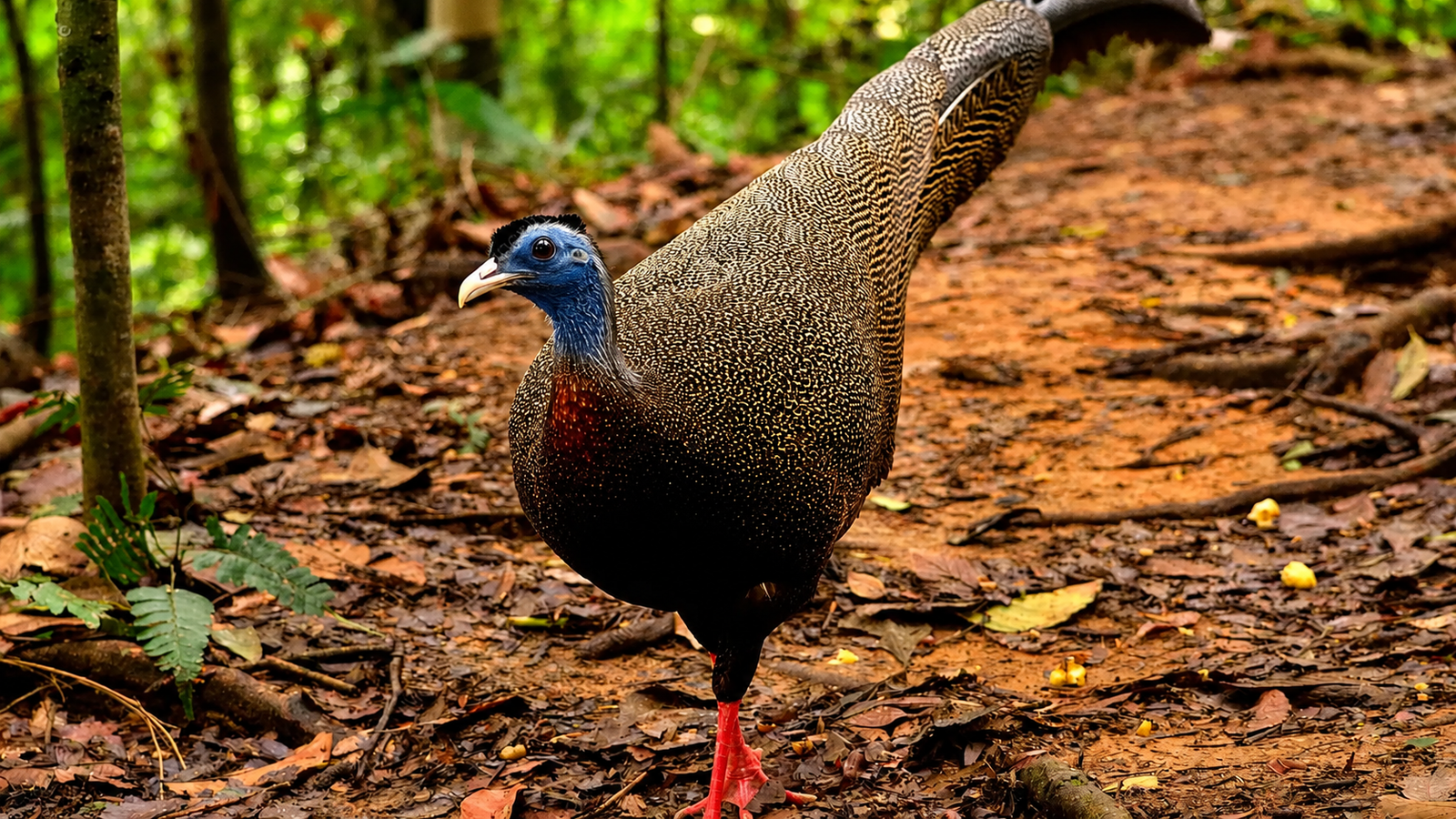
Hornbills are among the rainforest’s most exciting birds to watch. Their large silhouettes, distinctive wingbeats, and fruit-focused movements can make them easier to spot than smaller species, though a clear view is never guaranteed. Kingfishers may appear around rivers and forest openings, while raptors such as crested serpent eagles can sometimes be seen circling above a break in the canopy.
Birding here rewards a slower pace. Stop often. Let your eyes adjust. Look for a shape, then wait for movement rather than constantly sweeping with binoculars. The first hour or two after sunrise is often productive because birds are actively feeding and calling, but rainforests do not run on a strict timetable. A shower can quiet the forest briefly, then bring it back to life.
If you use bird-call playback, treat it with great restraint or skip it entirely. Repeated playback can distract birds from feeding, defending territory, or caring for young. Listening to the real soundscape is not only gentler on wildlife, it is a more meaningful way to experience the forest.
Choose the Right Trek for Your Camera and Interests
A short guided jungle walk can be an excellent choice for travelers who want wildlife viewing without carrying photography equipment all day. It gives you time to learn how the forest works, practice shooting in low light, and see whether you enjoy the humidity, uneven paths, and slow pace of rainforest observation.
A full-day trek offers more time for waiting at promising areas and for noticing the smaller details that rushed visitors miss. Multi-day jungle expeditions add the experience of sleeping in or near the forest environment, early-morning wildlife activity, and a deeper sense of distance from the village. They are best for travelers comfortable with basic conditions, wet weather, and carrying only what they need.
For serious bird watchers, tell your guide what you hope to see before the trek begins. A guide cannot promise a rare species, but knowing your priorities can shape the pace and route. For photographers, be equally honest about your equipment and ability. A long telephoto lens may be valuable for canopy wildlife, but it also adds weight on steep, muddy trails. Sometimes a lighter camera and a versatile lens lead to better days in the field.
Bukit Lawang Travel can help match the trek length to your experience, whether you are planning a family-friendly introduction, a night trek, or a longer jungle expedition. The best format is the one that lets you stay present, safe, and respectful of the forest.
Camera Gear That Works in a Humid Rainforest
You do not need a huge kit to make memorable images in Sumatra. In fact, carrying too much can make a jungle trek harder and leave you less ready when wildlife appears. Prioritize gear you can protect from moisture and access quickly.
A practical field kit includes:
- A camera with a versatile zoom lens, ideally reaching into a moderate telephoto range
- Binoculars for bird watching, preferably compact enough to carry comfortably
- A rain cover or dry bag for camera gear and electronics
- Microfiber cloths and a small towel for moisture, sweat, and lens cleaning
- Spare batteries, since battery life can drop with heavy screen use and damp conditions
A fast shutter speed helps with birds and moving primates, but the dim canopy may require a higher ISO than you usually use. That is normal. A slightly grainy image of natural behavior is better than a blurry image caused by settings that are too conservative. Shoot in bursts when an animal is moving, and check your exposure when a bright sky sits behind a dark subject.
Flash is rarely appropriate for rainforest wildlife, particularly nocturnal animals. It can startle an animal and spoil the moment for everyone nearby. At night, use a red-light setting when practical, keep beams low, and let your guide lead the way.
Timing Your Sumatra Wildlife Trip
Sumatra’s rainforest can receive rain in every month, so there is no completely dry season to rely on. Weather also varies by region, elevation, and year. Rather than planning around a promise of perfect conditions, prepare for wet trails, warm temperatures, and sudden showers whenever you travel.
For bird activity and softer photography light, early mornings are usually the most valuable part of the day. Late afternoon can also be beautiful, especially near rivers or forest edges, although the canopy becomes dark quickly. Night treks reveal a different world, including insects, frogs, spiders, and other nocturnal life, but they are not designed for long-lens wildlife photography.
Fruit availability influences where many animals feed, and that changes over time. A local guide may know that a particular trail has been active recently, but wild animals remain wild. A responsible operator will never guarantee orangutan, hornbill, or rare-bird sightings. The forest is not less successful when it keeps some of its secrets.
Respect Is the Best Field Technique
Ethical wildlife watching protects both the animals and the future of travel in Sumatra. Stay on routes advised by your guide, keep your voice low, carry out every piece of trash, and avoid wearing strong scents. If you are ill, especially with a respiratory infection, postpone close primate-focused activities. That small decision can help protect endangered animals from illnesses they have little defense against.
Keep space between your group and wildlife, and let the animal decide whether to remain visible. If it changes direction, shows signs of agitation, or is caring for a young animal, your guide may move the group away. That is not a missed photo opportunity. It is the standard responsible travelers should expect.
The most powerful photograph from Sumatra may not be the closest one. It may be an orangutan framed by the forest it depends on, a hornbill disappearing into morning mist, or a guide pausing the group so the jungle can continue on its own terms. Bring your curiosity, protect your gear from the rain, and allow enough time for the forest to set the pace.
[…] Travelers interested in birds and nature photography can also explore wildlife photography and bird watching in Sumatra . […]
[…] bring better photography conditions. Brighter breaks in the canopy and lower humidity can help with wildlife photography , although rainforest photography always requires […]