Info@bukitlawangtravel.com

Orangutan Viewing Rules for a Better Jungle Trek
Follow orangutan viewing rules in Bukit Lawang for a safer, more respectful jungle trek that protects wildlife, guides, and the rainforest on every trail.
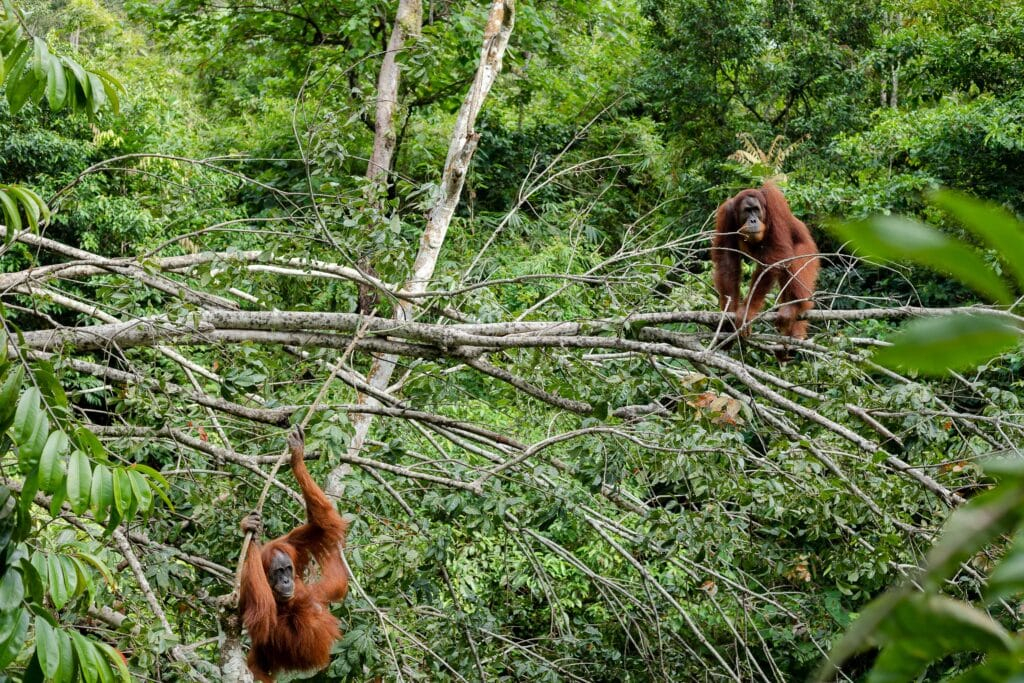
A wild orangutan may appear quietly: a rustle above the trail, a long arm moving through leaves, then a watchful face high in the canopy. That moment is why people travel to Bukit Lawang, but it also comes with responsibility. Orangutan viewing rules protect an animal that shares much of our DNA, is vulnerable to human disease, and needs the forest to remain its home long after visitors have gone.
A respectful sighting is not about getting the closest photo or holding an orangutan’s attention. It is about giving the animal space, following your certified local guide, and accepting that the best wildlife encounter happens on the orangutan’s terms.
Why Orangutan Viewing Rules Matter
Gunung Leuser’s rainforest is not a zoo. Orangutans choose where to travel, feed, rest, and build their nests. Some may move calmly through the trees while others keep their distance or disappear before you get a clear view. All of those outcomes are normal, and all deserve respect.
The biggest concern is disease transmission. Orangutans can be affected by respiratory illnesses that humans carry, including infections that may feel mild to us. Close contact also changes natural behavior. An orangutan that learns people mean food, attention, or an easy route can become stressed, dependent, or more likely to approach future visitors.
Responsible trekking also protects the wider forest. The same habits that help orangutans – staying on appropriate routes, carrying out trash, and keeping noise low – reduce disturbance for gibbons, Thomas’s leaf monkeys, hornbills, insects, and countless plants that make this ecosystem extraordinary.
The Essential Orangutan Viewing Rules
Your guide will make decisions based on the terrain, the animal’s behavior, weather, and current national park guidance. These core principles should shape every encounter.
Keep a generous distance
Stay at least 10 meters, or about 33 feet, from orangutans whenever the situation allows. More distance is better when an animal has a young infant, is feeding, appears unsettled, or comes down to the ground. Never move closer simply because an orangutan is facing away or seems relaxed.
Distance can be harder to judge in thick forest, especially if the animal is above the path. Your guide may ask the group to stop, step back, or take another route. Follow that instruction immediately. It is not a missed opportunity. It is how you avoid crowding an animal with nowhere comfortable to go.
Never touch, feed, or call to an orangutan
Do not offer fruit, snacks, water, or any other food. Do not reach out, try to pose beside an orangutan, imitate its sounds, or throw an object to get its attention. Even a well-meant action can teach wildlife to associate people with food.
Keep all food packed away during a sighting. The smell of bananas, sweet drinks, or trail snacks can attract curious animals. If an orangutan approaches the trail, stay calm and let your guide manage the situation. Do not run, wave your arms, or try to protect your bag by pulling it toward the animal.
Stay quiet and let the forest lead
A low voice is usually enough for communicating with your group. Turn off music, avoid shouting across the trail, and keep phone sounds muted. Quiet guests are more likely to notice the smaller details of the rainforest: a branch bending overhead, a distant call, or the soft sound of fruit falling through leaves.
Photography should be quiet, too. Skip flash, do not use a drone, and resist the urge to move around for a better angle. Take a few thoughtful photos from where you are, then put the camera down. Watching the animal’s natural movement is often more memorable than chasing a perfect image.
Do not trek if you are sick
If you have a cough, fever, sore throat, cold symptoms, or a possible contagious illness, tell your operator before the trek. The right decision may be to postpone, choose a village activity, or adjust your itinerary. This can feel disappointing after traveling far, but it is one of the most meaningful ways a visitor can protect orangutans.
Depending on current health guidance and conditions in the park, your guide may ask guests to wear a mask during wildlife encounters. Bring one with you and be ready to use it. Responsible travel sometimes means changing a plan for the good of the place you came to see.
Read the Orangutan’s Behavior
Orangutans are powerful wild animals, not performers. They may look calm while still signaling that they need more space. Your guide is trained to read the situation, but visitors should also pay attention.
If an orangutan changes direction to avoid the group, becomes vocal, shakes branches, fixes its gaze on people, or descends toward the trail, give it room. A mother with an infant deserves especially wide space. She is balancing feeding, travel, and protection of her young in a busy forest.
Male orangutans also require caution. Adult males can be very large, and their long calls may carry for great distances through the jungle. Hearing one is a remarkable experience, but it is not an invitation to search for him off-trail. Your group should remain together and follow the guide’s route.
Respect the Guide’s Decisions
A certified local guide does more than point out wildlife. They understand seasonal fruiting patterns, terrain changes, animal behavior, and the practical safety decisions needed in a living rainforest. They may ask the group to wait silently, leave a viewing area early, or continue without stopping if the animal is too close.
This is where ethical travel can feel different from a checklist-style tour. Wildlife cannot be scheduled. A three-hour family-friendly walk may bring a beautiful orangutan sighting, while a longer jungle trek may bring only fleeting movement in the canopy. Neither experience is a guarantee, and neither should involve pushing animals into view.
At Bukit Lawang Travel, local guides help guests experience the forest with care, not pressure. Their knowledge turns a sighting into more than a photo: you may learn what an orangutan is eating, how it moves through the canopy, or why a particular tree supports so much life.
Prepare Before You Enter the Forest
Good preparation makes it easier to follow orangutan viewing rules once the trek begins. Wear neutral, comfortable clothing and sturdy shoes with traction. Pack drinking water in a reusable bottle, rain protection, insect repellent, and a small daypack that closes securely.
Avoid strong perfumes and do not leave food wrappers, tissues, or plastic behind. Bring any waste back with you, including fruit peels. Organic waste may seem harmless, but leaving it on trails can alter animal feeding behavior and attract wildlife to places where people gather.
For a family trek, talk with children before setting off. Explain that seeing an orangutan means standing still, speaking softly, and listening to the guide. Children often become wonderful wildlife observers when they understand that quiet patience is part of the adventure.
What to Do During an Unexpected Close Encounter
Occasionally, an orangutan may come closer than planned, especially on a narrow trail or near a fruiting tree. The answer is not to panic. Stay with your group, avoid sudden movements, and do exactly what your guide says.
Do not crouch near the animal for a selfie, stare directly at it, or try to pass it without guidance. Your guide may ask everyone to step back and wait, allowing the orangutan to choose its own path. Patience protects both people and wildlife.
If you are carrying food, keep it secured and do not hand anything over. An animal that receives food once may approach another traveler later, creating a risk for everyone. The kindest response is to make human presence uninteresting and predictable.
A Better Sighting Is One That Leaves No Trace
The goal of an ethical orangutan trek is simple: the forest should continue as naturally as possible after your group moves on. That means no feeding, no touching, no crowding, no litter, and no demands that wildlife perform for a camera.
You may return from Bukit Lawang with muddy boots, a few imperfect photos, and a story about the moment an orangutan disappeared into the trees. That is not less than a close encounter. It is proof that you met a wild animal with the respect it deserves – and helped keep its rainforest home wild.