Info@bukitlawangtravel.com

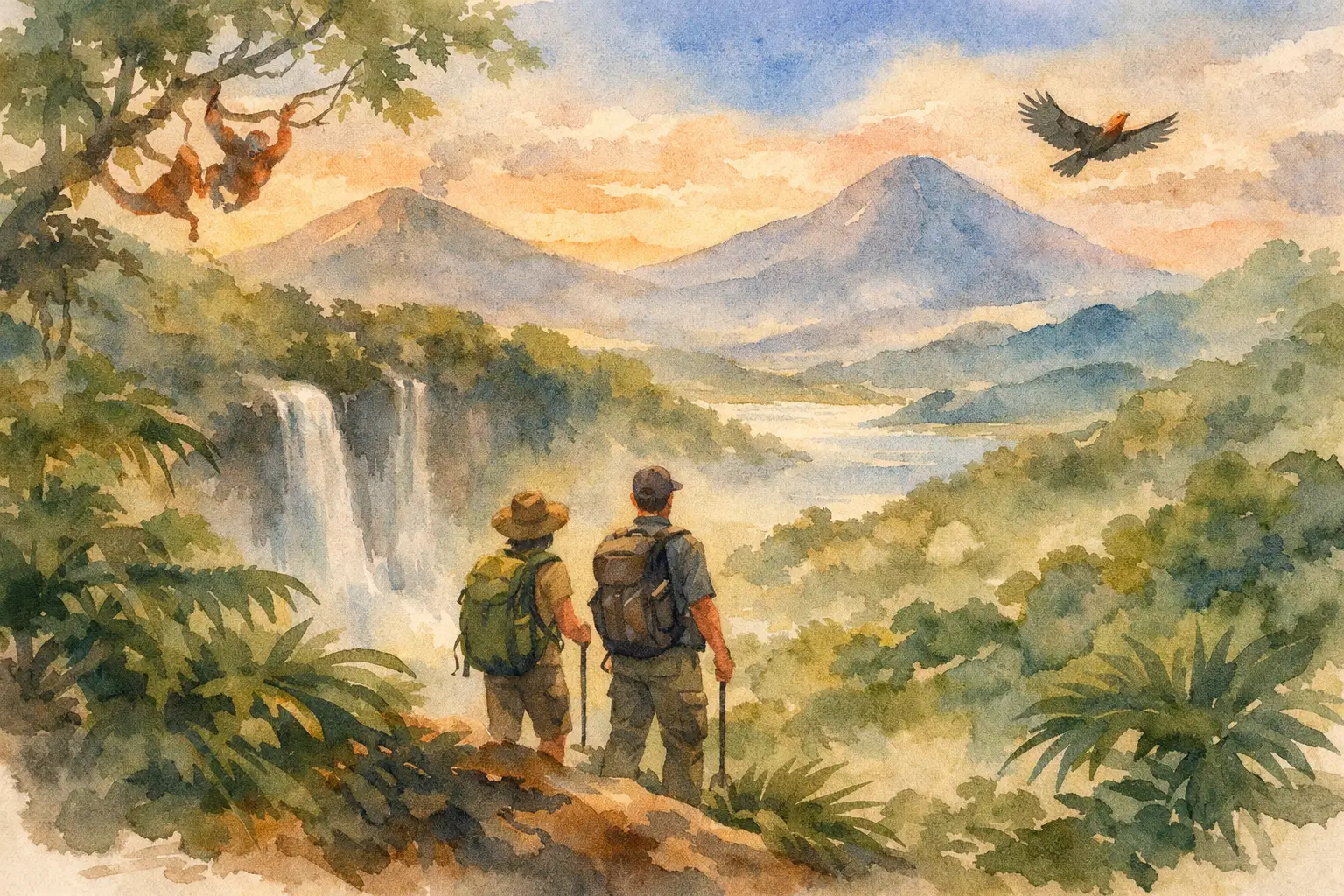
A Sumatra Trekking Adventure That Matters
Plan a responsible Sumatra trekking adventure in Bukit Lawang, from short orangutan walks to multi-day jungle routes led by certified local guides safely.
The first sound that stops most visitors in the rainforest is not an orangutan call. It is the forest itself: cicadas humming through the canopy, leaves shifting high overhead, and the steady rush of the Bohorok River below. A Sumatra trekking adventure in Bukit Lawang puts you inside one of the planet’s most important remaining rainforest landscapes, with the chance to see wildlife in its natural home rather than behind a barrier.
That experience carries responsibility. Gunung Leuser National Park is home to critically endangered Sumatran orangutans, along with gibbons, Thomas’s leaf monkeys, hornbills, monitor lizards, and countless smaller creatures. The best trek is not the one that gets closest to an animal. It is the one that leaves room for wild behavior, supports local livelihoods, and gives you a real sense of the forest.
What a Sumatra Trekking Adventure Looks Like
Bukit Lawang is a riverside village on the edge of Gunung Leuser National Park in North Sumatra. For many travelers, it is the starting point for an ethical orangutan trekking experience. Trails can rise quickly from the village into dense lowland rainforest, where roots, vines, muddy slopes, and narrow ridgelines make even a short distance feel like a true adventure.
No two days in the jungle are the same. You may spend an hour watching an orangutan build a nest in the treetops, then turn a corner and find a troop of playful macaques moving through the branches. On another day, the forest may feel quiet until a guide points out a camouflaged stick insect, a giant squirrel, or fresh tracks in the soil.
Wildlife sightings can never be guaranteed, and that is part of what makes a responsible trek meaningful. Certified local guides know how to read the forest, choose appropriate routes, and help guests understand what they are seeing without disturbing it. They also know when to move on, especially if an animal appears stressed, is feeding, or has a young baby nearby.
Choose the Right Trek for Your Travel Style
The right route depends less on fitness labels and more on how you want to spend your time. Rainforest terrain is humid, uneven, and often slippery. A traveler who enjoys a steady walk but has never hiked in tropical conditions may have a better experience on a shorter guided trek than on an ambitious overnight expedition.
Short treks for first-time visitors and families
A three-hour or half-day trek is a strong choice if you have limited time, are traveling with children, or want an introduction to the jungle before committing to more challenging terrain. These routes can still offer excellent wildlife opportunities, while leaving time to relax in Bukit Lawang, join a village walk, or enjoy the river.
Short treks are not “less real.” They are simply paced differently. A thoughtful guide can turn a few hours in the forest into a memorable experience by slowing down, spotting details, and explaining how the ecosystem works.
Full-day and overnight jungle treks
A full-day trek gives you more time to move deeper into the rainforest and settle into its rhythm. You will likely climb more, sweat more, and earn your rest by the river. It suits travelers who are comfortable walking on natural trails and want a fuller sense of the park beyond the village edge.
An overnight trek adds the magic of a jungle camp. After dark, the soundtrack changes. Frogs, insects, and distant calls take over, while your guides prepare a simple meal and make camp in an approved area. Conditions are basic, but that is the point: you are sleeping close to the forest, not trying to recreate a hotel room inside it.
Multi-day expeditions for experienced adventurers
For travelers with stronger fitness and more time, multi-day routes can reach more remote areas and combine demanding hiking with river crossings, jungle camping, and long days outdoors. These trips require a flexible mindset. Heavy rain can change trail conditions, and the group’s pace may need to adjust for safety.
A longer expedition is rewarding, but it is not automatically better for everyone. If your main goal is a responsible wildlife encounter, a well-led one- or two-day trek may be ideal. If you want physical challenge and deep immersion, a multi-day route may be the right fit.
Ethical Orangutan Encounters Start With Distance
Orangutans are not attractions. They are intelligent wild animals whose survival depends on protected habitat and respectful human behavior. In Bukit Lawang, ethical trekking means observing from a safe distance, following your guide’s instructions, and never asking for a closer photo.
Do not feed, touch, call to, or block the path of any wildlife. Food changes animal behavior and can spread disease. Visitors who feel unwell should be especially careful about joining a trek near great apes, since orangutans can be vulnerable to human respiratory illnesses.
Photography should be quiet and patient. Avoid flash, keep your voice low, and let the animal decide where it goes. The photo may be less predictable than a staged encounter, but the memory is far better: an orangutan moving freely through its own forest, with no need for human interference.
Responsible tourism also reaches beyond the trail. Choosing locally owned services, eating at village businesses, staying with eco-conscious accommodation partners, and traveling with certified local guides helps visitor spending remain in Bukit Lawang. That support creates practical reasons for conservation to benefit the community living beside the park.
Prepare for Heat, Rain, and Real Trail Conditions
The jungle does not require expensive expedition gear, but smart preparation makes a major difference. Wear lightweight, quick-drying clothing that covers your shoulders and legs. Sturdy trail shoes with grip are useful, although shoes may get wet or muddy. Bring a reusable water bottle, rain protection, sunscreen, insect repellent, a small personal first-aid kit, and any medications you need.
Keep electronics in a dry bag or waterproof pouch. Humidity and rain are part of the experience, and river travel at the end of some routes can mean a proper splash. Pack light enough that you can move comfortably, but do not depend on your guide to carry unnecessary personal items.
Physical preparation helps, too. Before your trip, take regular walks, practice stairs or hills, and get used to moving in warm weather if possible. Tell your guide about injuries, allergies, medical concerns, or worries about steep terrain before departure. A good trek is not a test of toughness. It is a shared plan that matches the group’s ability and the day’s conditions.
Build a Bigger North Sumatra Journey
Bukit Lawang can be the centerpiece of a wider Sumatra trip. After the humidity of the rainforest, many visitors continue to the cool highlands around Berastagi or spend time around Lake Toba, one of the world’s largest volcanic lakes. Village activities, cooking experiences, cave exploration, rafting, and nature walks can add variety without losing the local connection that makes the region special.
Allow enough time for transport. North Sumatra is large, roads can be slow, and travel days are part of the journey rather than a gap between destinations. Starting with transport from Medan arranged in advance can remove uncertainty after a long flight and help you arrive in Bukit Lawang ready to rest before trekking.
At Bukit Lawang Travel, our family-run team helps guests choose routes that fit their time, confidence, and travel plans, while keeping wildlife respect at the center of every jungle experience.
Bring curiosity, not a checklist. The rainforest will not perform on command, but with patient observation, thoughtful guiding, and a willingness to travel lightly, it can give you something much rarer than a perfect photo: a genuine connection to a living forest worth protecting.