Info@bukitlawangtravel.com
Free Luggage Storage for Jungle Trekking Tours
Free luggage storage for trekking tours lets you travel lighter in Bukit Lawang. Pack trail essentials, leave the rest behind, and keep valuables with you.

A jungle trek is far more enjoyable when your shoulders are carrying water, a rain jacket, and a sense of adventure – not a full travel backpack. Free Luggage Storage for Trekking Tour guests makes that possible. If you are joining an overnight jungle trekking tour with Green Travelodge or one of our partner tour operators, you can leave your main luggage at the property free of charge while you spend the night in the rainforest.
This simple service gives you the freedom to pack for the trail, not for every stage of your Indonesia trip. Bring what you need into the jungle and collect the rest when you return.
Why Leave Your Main Luggage Behind?
Bukit Lawang jungle trekking is a real rainforest experience. Trails can be steep, humid, muddy after rain, and narrow in places. On a multi-day trek, every unnecessary kilogram becomes more noticeable as the day goes on.
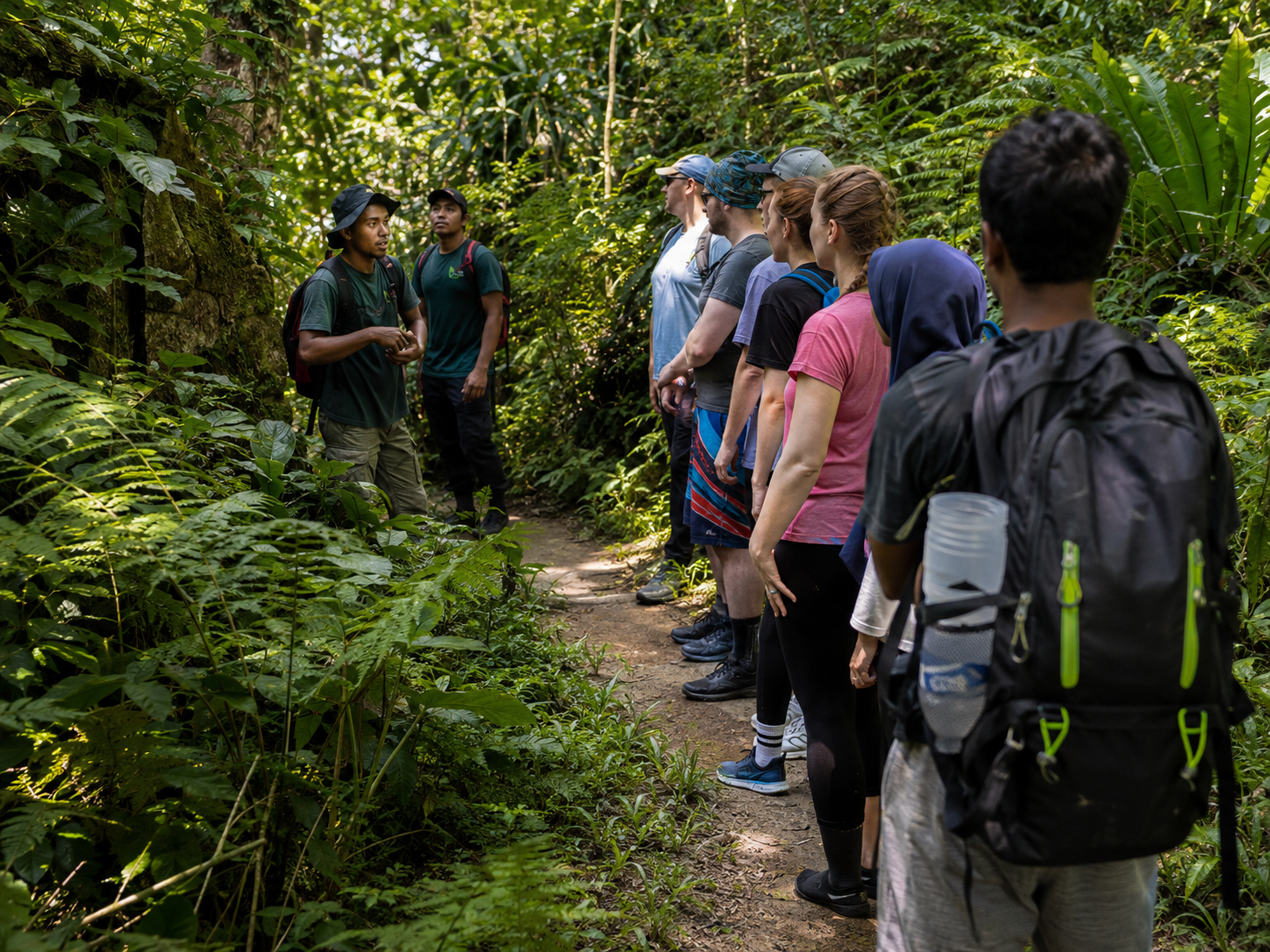
Your guide will carry essential shared equipment for the trip, while you should carry your own personal basics. A small daypack is usually enough. By storing larger suitcases, travel packs, extra clothing, and non-trekking items at the lodge, you can move more comfortably and stay focused on the forest around you.
Traveling light also makes practical sense at the jungle camp. Overnight camps are simple and designed for rest, meals, and time by the river after a day of hiking. There is no advantage to bringing items you will not use. Fewer belongings in your pack mean less to manage in rain, sand, and humid conditions.
Free Luggage Storage for Jungle Trekking Guests
Guests booked on an overnight trek through Green Travelodge or an eligible partner operator may store luggage at the property at no extra cost. This is intended for the period when you are in the jungle, from departure on the trek until you return to Bukit Lawang.
The arrangement is especially useful for travelers arriving from Medan, Lake Toba, Berastagi, or elsewhere in Sumatra with a larger backpack or rolling suitcase. You do not need to reorganize your whole trip around one night or several nights in the forest. Leave behind the items you will not need, enjoy the trek with a lighter pack, then pick up your luggage before continuing your travels.
If you are joining a day trek, storage needs may be different, depending on your accommodation and onward transport plans. Ask your tour contact in advance if you would like to confirm what is possible for your specific booking. Guests traveling with another operator should also check eligibility before arrival rather than assuming the service applies automatically.
What to Pack for an Overnight Jungle Trek
The best trekking bag is small enough to carry comfortably but large enough to protect your essentials from rain and humidity. Your guide can advise on the expected conditions and trek length, but most guests should bring the following:
- A refillable water bottle and any personal snacks you need
- Lightweight rain protection and a change of dry clothes
- Comfortable trekking clothing, swimwear, and a small towel for river time
- Insect repellent, sunscreen, personal medication, and basic toiletries
- A headlamp or flashlight for evening use
- Your camera or phone, ideally with a waterproof pouch or dry bag
Quick-drying clothing is more useful than heavy cotton, especially on multi-day routes. Closed-toe shoes with grip are generally the better choice for uneven trails, although conditions and personal comfort vary. Avoid packing more than you can comfortably carry for several hours.
Your trek includes a locally guided experience, not a luggage-hauling challenge. Thoughtful packing leaves more room for water, rain protection, and the small comforts that matter most at camp.
What to Leave at the Property
Store the items that make sense for the rest of your trip but have no purpose in the jungle. This may include your large suitcase or backpack, extra outfits, city shoes, books, souvenirs, spare toiletries, and electronics you do not need during the trek.
It is also wise to leave behind clothing that you would be unhappy getting damp, dusty, or stained. Jungle trekking is rewarding precisely because it is not a polished resort activity. Rain can arrive quickly, river crossings may be part of the route, and camp conditions are naturally simple.
Before handing over your bag, take a moment to separate your trekking kit from everything else. This is easiest to do the evening before departure, rather than rushing in the morning. Use packing cubes or separate dry bags if you have them, and keep your return travel clothes near the top of your stored luggage so they are easy to find afterward.
Keep All Valuables With You
Free storage is for your larger travel luggage and nonessential belongings. Please keep all valuables with you during the trek. This includes your passport, cash, bank cards, travel documents, medication, phone, camera, jewelry, and any small item that would be difficult or stressful to replace.
Carrying valuables with you gives you direct control over them throughout the journey. Put these items in a secure, waterproof pouch inside your daypack rather than loose pockets. In a tropical rainforest, protection from water is just as important as security.
There is a balance to consider. You may want a camera to capture the forest, but large professional equipment can be heavy and harder to protect in wet conditions. Bring what you can carry and safeguard comfortably. Wildlife sightings cannot be planned, and responsible trekking always comes before getting the perfect photo.
Responsible Trekking Starts With Good Preparation
Packing light supports a safer, more respectful jungle experience. It helps you stay steady on the trail, reduces the temptation to leave items behind at camp, and makes it easier to follow your certified local guide. It also keeps your attention where it belongs: on the sounds of the forest, the river, and the possibility of seeing orangutans in their natural habitat.
Ethical wildlife trekking means observing animals without crowding, feeding, touching, or disrupting them. Your preparation plays a small but real role in that approach. When your bag is manageable and your essentials are organized, you are better able to move calmly, listen to guidance, and enjoy a low-impact visit to Gunung Leuser National Park.
At Bukit Lawang Travel, we believe practical details are part of a meaningful adventure. Storing your larger luggage free of charge may seem like a small convenience, but it removes one of the most common worries for first-time overnight trekkers. You can step into the jungle with what you need, leave the rest behind, and return to a comfortable change of clothes waiting for you.
A Simple Plan Before You Depart
When you arrive for your trek, separate your jungle bag from your main luggage, confirm the storage arrangement with the property or your tour contact, and make sure your valuables are with you. Check that your passport, cash, medicines, and phone are protected from rain before you leave.
Then take a final look at your pack. If an item will not help you stay hydrated, dry, comfortable, or prepared in the forest, it can probably stay behind. A lighter bag leaves more energy for the trail and more space for the kind of rainforest memories that stay with you long after the trek ends.