Info@bukitlawangtravel.com

Bukit Lawang Travel for an Ethical Jungle Trip
Plan Bukit Lawang travel with ethical orangutan trekking, local guides, transport tips, and the right jungle adventure for your time in Sumatra today.

Bukit Lawang · North Sumatra
Where the rainforest
still feels wild.
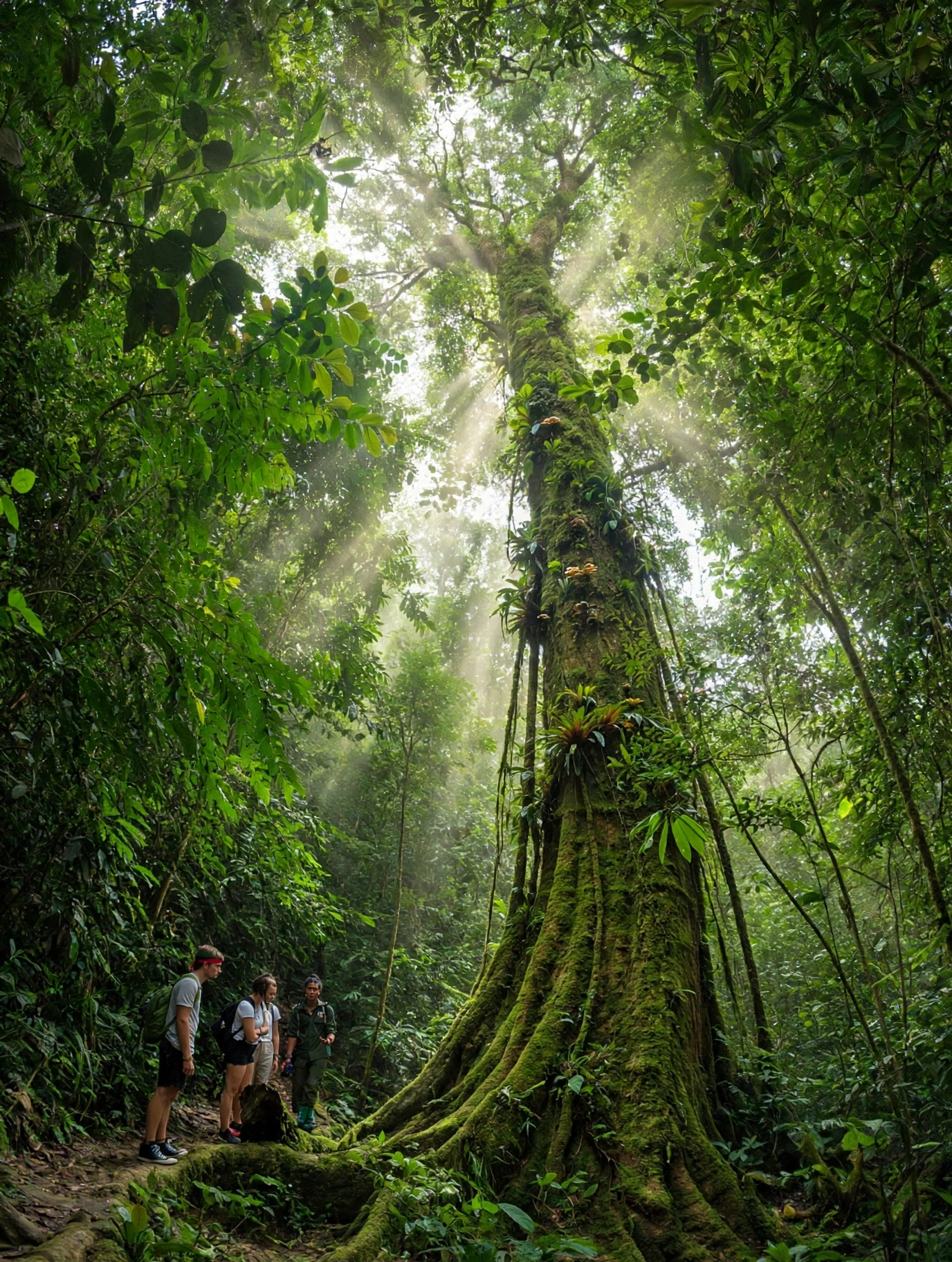
Walk beneath the canopy of Gunung Leuser National Park, discover orangutans in their natural environment and experience Bukit Lawang with local guides who believe wildlife should be respected—not staged.
01 · THE EXPERIENCE
Not a wildlife show. A real rainforest experience.
A wild orangutan moving through the canopy is unforgettable. But the best Bukit Lawang travel experiences are not built around getting as close as possible.
They are built around patience, respectful distance, skilled local guiding and the understanding that the rainforest is the animals' home—not a stage.
Bukit Lawang sits at the edge of Gunung Leuser National Park in North Sumatra, one of the world's most important remaining habitats for the critically endangered Sumatran orangutan.
A visit can therefore become much more than a quick wildlife stop. Walk beneath towering trees, listen to gibbons calling across the valley and discover a landscape shaped by wildlife and the people who live beside the forest.
“
The most memorable wildlife encounters are not necessarily the closest ones. They are the moments when you can watch an animal behaving naturally in a living forest.
02 · WHY COME HERE
What makes Bukit Lawang worth the journey
This is not a polished resort destination. It is a riverside village where rainforest, local life and adventure meet.
01
Gunung Leuser National Park
Explore one of Sumatra's most important rainforest landscapes, home to orangutans, monkeys, gibbons, hornbills, reptiles, insects and extraordinary tropical plants.
02
Real local village life
Jungle paths begin close to family-run guesthouses, restaurants, cafés, small shops and communities whose livelihoods are closely connected to responsible tourism.
03
More than orangutans
Add village walks, cave exploration, rafting, cooking experiences or continue your journey through North Sumatra toward Berastagi and Lake Toba.
03 · CHOOSE YOUR ADVENTURE
Find the jungle experience that suits you
Longer does not automatically mean better. Choose according to your time, fitness, comfort level and how you want to experience the rainforest.
3 Hours
Short Jungle Trek
A genuine introduction to the rainforest for travelers with limited time, younger children or anyone who prefers a shorter experience before returning to the village.
First-time visitors
Half / Full Day
Deeper Day Trek
More time gives guides the opportunity to follow wildlife signs and explore further into the forest while still returning to comfortable accommodation in the evening.
Active travelers
2 Days / 1 Night
Overnight Jungle Trek
Sleep at a simple jungle camp, share freshly prepared food with your trekking team and wake up surrounded by rainforest sounds before continuing your adventure.
Adventure seekers
3–7 Days
Multi-Day Expedition
For travelers who genuinely enjoy hiking and are comfortable with simple camping conditions, humidity, mud and changing jungle trails.
Experienced hikers
After Dark
Night Jungle Trek
Discover frogs, insects, spiders and the smaller nocturnal side of the forest during a quiet guided walk after sunset.
Nature lovers
04 · RESPONSIBLE WILDLIFE
Ethical orangutan trekking is non-negotiable
Seeing an orangutan in the wild is a privilege. Travelers have a role in protecting that privilege.
Wildlife sightings can never honestly be guaranteed. A responsible guide reads the forest, adapts the route to conditions and puts animal welfare ahead of a photograph.
If you are unwell before trekking, tell your operator. Because orangutans are closely related to humans, protecting them from human illness is an important part of responsible tourism.
01
Keep a respectful distance
Never pressure your guide to approach an orangutan simply for a closer photograph.
02
Never touch or feed wildlife
Feeding can change natural behavior and increase the risk of disease transmission.
03
Keep voices low
Quiet groups create less pressure on animals and support more natural wildlife encounters.
04
Leave no trace
Carry out everything you take into the jungle and avoid unnecessary single-use plastics.
05
Follow your local guide
Certified guides understand seasonal trail conditions, wildlife behavior and the rainforest environment.
05 · PLAN YOUR STAY
Give Bukit Lawang enough time
A little extra time makes your rainforest experience more relaxed and easier to organise.
Getting here from Medan
Most international visitors begin their journey in Medan. From there, the road journey to Bukit Lawang takes several hours depending on traffic and weather.
A pre-arranged private transfer is often the most comfortable option after a long flight, particularly for families or travelers carrying trekking equipment.
How many nights?
If possible, allow at least two nights in Bukit Lawang. Arriving and trekking immediately the next morning leaves little flexibility for delays or rest.
Three nights gives you a calmer itinerary: arrival, jungle experience and another day for relaxing, village activities or onward travel.
Where to stay
Accommodation ranges from simple locally owned guesthouses to more comfortable nature-focused properties.
Choose accommodation with good cleanliness, mosquito protection, clear communication and strong local connections.
Internet & communication
Mobile signal can be variable in Bukit Lawang and naturally becomes more limited once you enter the rainforest.
Tell friends or family about your trekking plans before entering the jungle, especially for overnight expeditions.
06 · JUNGLE ESSENTIALS
Pack light. Pack smart.
Expensive expedition equipment is not necessary, but good basics make jungle trekking much more comfortable.
Humidity, rain, slippery ground and tropical heat mean practical clothing and reliable footwear matter more than carrying too much.
✓
Lightweight long trousers
✓
Shoes with reliable grip
✓
Small daypack
✓
Rain protection
✓
Refillable water bottle
✓
Insect repellent
✓
Sunscreen
✓
Dry bag for electronics
✓
Dry change of clothes
✓
Personal medication
✓
Headlamp for overnight trips
✓
Biodegradable toiletries
07 · LOCAL IMPACT
Make your trip benefit the people who live here
Community-based tourism becomes meaningful when your choices intentionally support the people living beside the rainforest.
Local guides bring knowledge that cannot be copied from a map: seasonal trails, animal behavior, village history and the quiet signals of the forest.
Stay locally
Choose locally owned accommodation whenever possible.
Eat locally
Support family restaurants, cafés and village businesses.
Trek with local guides
Certified local guides create employment connected
to protecting the forest.
Stay a little longer
Extra nights and local activities spread the benefit
of tourism beyond one jungle trek.
08 · KEEP EXPLORING
Prepare for more than one jungle walk
First-time trekking
Bukit Lawang for Beginners
Find a comfortable balance between adventure, time and trekking experience on your first visit.
Responsible wildlifeEthical Orangutan Trekking
Learn more about respectful wildlife encounters and responsible behavior inside the rainforest.
Travel planningIndonesia Entry Information
Check useful travel and entry information before beginning your journey to North Sumatra.
BUKIT LAWANG TRAVEL
Come with curiosity.
Come with curiosity.
Leave room for the unexpected.
The rainforest does not perform on command. Prepare for mud, rain, wildlife, river sounds and moments you could never plan in advance. That unpredictability is what makes Bukit Lawang unforgettable.