Info@bukitlawangtravel.com

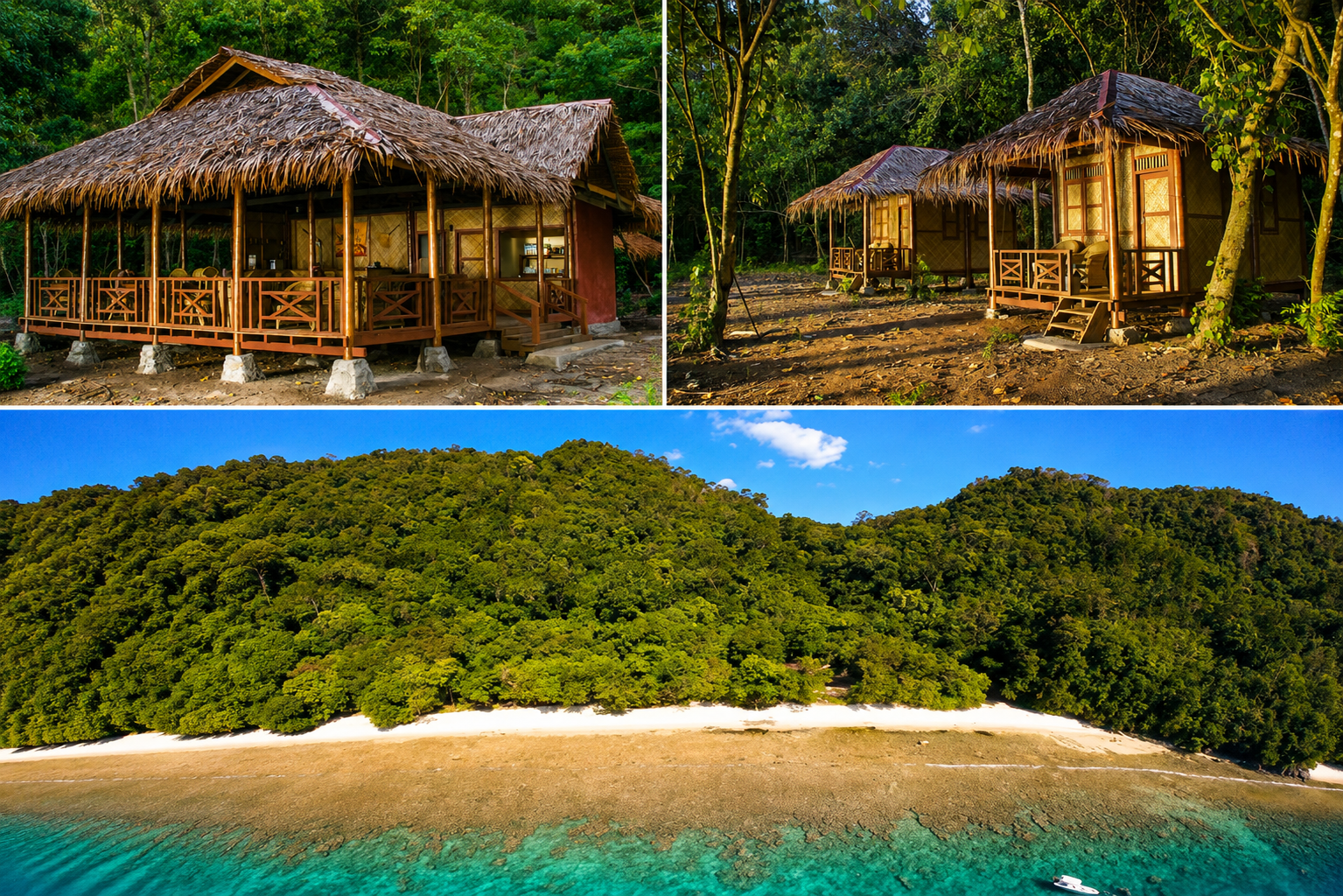
Rimba Ecolodge Rainforest and Reefs, West Sumatra
Rimba Ecolodge brings rainforest, coral reefs, and community-led conservation together on West Sumatra’s coast for a responsible, family-friendly stay.

West Sumatra · Rainforest Meets the Indian Ocean
Rimba Ecolodge
Snorkel above coral reefs in the morning, listen for gibbons after dark and experience a remote coastal stay where tourism, conservation and local communities meet.
Rainforest & Reef
Two ecosystems in one stay
Boat Access Only
A genuinely remote coastal setting
Locally Rooted
Community employment & support
Slow Travel
Nature first, not resort polish
Island feeling without leaving Sumatra
Where Rainforest Meets Reef
A true island-feeling escape does not always require leaving Sumatra.
Rimba Ecolodge brings rainforest and reefs together on the coast of West Sumatra, creating the unusual chance to snorkel with marine life and listen for gibbons in nearby forest.
For travelers arriving from Kerinci's cooler highlands, the change in landscape can be dramatic: volcanic slopes and cloud forest give way to turquoise water, sheltered coastline and a quiet bay.
There are no beach clubs, no busy roads and very little phone signal. The setting naturally encourages a slower style of travel.
The journey is part of the experience
Getting to Rimba Ecolodge
Rimba is located in Muaro Duo Bay on a forested peninsula south of Padang and is reached by road followed by boat.
Starting Point
Padang
Begin in the capital of West Sumatra.
→
Around 45 Minutes
Teluk Bungus
Travel south by road toward the coastal departure point.
→
Around 45 Minutes
Muaro Duo Bay
Continue by boat past small islands and coastal scenery.
Offline
Pack Before You Leave Padang
The lodge's water-only access means personal essentials should be organised before departure. Internet and mobile service may be unreliable or nearly absent. Read more about internet and SIM cards in Sumatra . For many travelers, disconnecting is part of the appeal.
Built around the environment
A Small Lodge Made for Nature, Not Crowds
Rimba means undisturbed primary rainforest in Indonesian, and the lodge is designed to remain connected to its natural setting.
Bungalows use local materials including bamboo, rattan and palm, with construction work supporting craftspeople from nearby communities such as Sungai Pinang and Sungai Pisang.
Different bungalow layouts can suit couples, solo travelers and small groups. Larger accommodation such as Kalao can also provide more space for families.
Natural Materials
Bamboo, rattan and palm are part of the lodge design.
Sea Breeze
Rooms rely on the natural coastal environment.
Mosquito Nets
Provided for sleeping in an open natural setting.
Small Scale
Designed around nature rather than large crowds.
Know before you stay
This Is a Real Ecolodge, Not a Conventional Resort
Rooms and shared spaces remain open to the surrounding environment. Insects, crabs, birds and forest sounds can become part of everyday life. Travelers who require sealed rooms, constant Wi-Fi or resort-style climate control may prefer a different type of accommodation. For guests comfortable with a little wildness, that openness can become one of the most memorable parts of the stay.
The reason behind the place
The Conservation Story Behind the Beach
Rimba's appeal is not only its scenery. The project connects tourism with conservation work and economic opportunities for communities around Muaro Duo Bay.
Tourism supports work connected to construction, hospitality, guiding, transport and food supply.
Associated community work has included school supplies and educational initiatives.
Projects have included village waste management, composting and plastic-related initiatives.
Muaro Duo Bay has benefited from protection against overfishing and destructive fishing practices.
Responsible travel is more than an eco label.
Look at who benefits from your stay, how wildlife is treated, and whether tourism helps preserve the landscape rather than simply increasing pressure on it.
Forest meets Indian Ocean
Snorkeling Just Offshore
One of the greatest attractions is how accessible the marine environment can be from the lodge.
A coral reef lies offshore in the sheltered inlet. In suitable conditions, the shallow water can make snorkeling approachable for beginners and children.
Green turtles and hawksbill turtles are regularly observed in the bay, alongside reef fish, crabs and other marine life.
Equipment and canoes have traditionally been available for guests, though current inclusions should always be confirmed before booking.
Coral Reef
Located close to the lodge
Turtles
Green and hawksbill turtles may be seen
Canoeing
Explore quiet sections of coastline
Calm Moments
Conditions vary with weather and sea state
Do not chase, touch or surround marine wildlife.
Never stand on coral or damage the reef for a photograph.
The same principles that guide an ethical orangutan trek also apply in the ocean.
Beyond the waterline
Wildlife Around the Lodge
Rimba is unusual because a beach stay can also offer a window into functioning rainforest habitat.
Monkeys & Gibbons
Long-tailed macaques, silvery lutungs and Sumatran surili have been observed in the area, while siamang and black-handed gibbons live in the nearby hills.
Hornbills & Eagles
Oriental pied hornbills, kingfishers, sea eagles, herons and other forest and coastal birds add another layer to the experience.
Forest Life
Camera traps have recorded animals including wild boar and porcupines, while Rafflesia has been found close to a small mangrove area.
No need to fill every hour
Made for Slow Travelers
Rimba works particularly well for travelers who are comfortable allowing nature to set the rhythm.
Days can be active or almost completely unplanned. Snorkel, paddle, walk through forest or simply spend time beside the bay.
Snorkeling
Canoeing
Forest Walks
Village Visits
Waterfall Visits
Bird Photography
Travelers interested in birds and nature photography can also explore wildlife photography and bird watching in Sumatra .
Nature supplies the entertainment
A Different Kind of Family Stay
Families may enjoy Rimba because the surroundings provide plenty to observe without scheduled entertainment. Children can watch hermit crabs, look into the reef, paddle in calm conditions with supervision and spend time exploring the natural environment.
The open setting also requires parents to remain attentive around water, boats, wildlife and uneven natural ground.
Rain can arrive in any season. A flexible attitude helps turn a change of plan into part of the experience rather than a disappointment.
Meals
Simple, Shared & Local
Meals are generally served family-style at fixed times in a shared dining space, using local ingredients and Indonesian dishes. Families with younger children may want to bring a few familiar snacks from Padang in case dining times differ from their normal routine.
Is Rimba right for you?
Nature Over Polish
Rimba Ecolodge is best suited to travelers who value wild surroundings, local connection and simple comfort more than luxury-resort facilities.
Couples Seeking Quiet
Nature-Loving Families
Birders
Snorkelers
Slow Travelers
Rainforest Travelers
Before departure
Plan a Stay That Leaves a Positive Footprint
Before traveling, confirm current arrangements directly with the lodge. Remote destinations work best when expectations are clear before the boat leaves.
Boat Schedule
Room Availability
Dietary Needs
Current Prices
Equipment Inclusions
Weather Conditions
Pack lightly, bring reusable bottles and reef-conscious essentials, and carry out items that cannot be responsibly disposed of locally.
Rainforest · Reef · Community
Sometimes the Best Places Ask You to Slow Down
At sunset, the Indian Ocean and the evening forest chorus offer a simple reminder that meaningful travel does not need to be crowded or polished. A stay can support a healthier reef, standing forest and a local community connected to the landscape it calls home.
Discover Rimba Ecolodge ↑