Info@bukitlawangtravel.com

Sumatra Ecotourism for Travelers Who Care
Plan Sumatra ecotourism with ethical wildlife encounters, local guides, low-impact stays, and smart tips for a rainforest trip that benefits communities.

The first sound many visitors notice in the Sumatran rainforest is not an orangutan. It is the layered morning chorus of cicadas, birds and leaves moving high above the trail. Then, if conditions are right, a guide may quietly point toward a flash of orange in the canopy.
That moment feels special precisely because it is not staged. Sumatra ecotourism is at its best when wildlife remains wild, local communities benefit from tourism, and the rainforest is treated as more than a backdrop for photographs.
For travelers looking for a nature-based journey with real purpose, Sumatra offers an extraordinary combination of ancient rainforest, endangered wildlife, living village culture, volcanic landscapes and warm local hospitality. But responsible travel also requires something from visitors: patience, respect and a willingness to let nature set the pace.
What Should Sumatra Ecotourism Really Mean?
The word ecotourism is used widely in travel marketing, but in a place as ecologically important as Sumatra, it should mean more than simply visiting a natural area.
Responsible tourism should reduce unnecessary pressure on wildlife, support local livelihoods and help visitors understand why the rainforest needs long-term protection.
Gunung Leuser National Park in North Sumatra is part of one of Southeast Asia's most important rainforest landscapes. The wider Leuser Ecosystem provides habitat for Sumatran orangutans, elephants, gibbons, hornbills, macaques and an extraordinary diversity of plants, reptiles and insects.
A jungle trek is not a zoo visit.
Wildlife sightings depend on weather, fruiting seasons, trail conditions and simple luck. That uncertainty is not a disadvantage. It is part of what makes a genuine rainforest encounter meaningful.
Ethical wildlife tourism also has clear boundaries. Guides should never feed, touch, call, corner or pressure animals simply to create a better photograph. Visitors should keep a respectful distance, follow their guide's instructions and avoid trekking when unwell, as orangutans can be vulnerable to human respiratory illnesses.
Choose a Jungle Trek That Fits You
There is no single jungle trek that is right for every traveler. The best option depends on your fitness level, available time, experience and how comfortable you are with tropical heat, steep trails and changing weather.
Short or Half-Day Trek
A three-hour or half-day jungle walk can be an excellent choice for families, first-time trekkers or travelers with limited time. You still experience the humidity, sounds and steep terrain of the rainforest without committing to a full day of hiking.
Full-Day Jungle Trek
A full-day trek allows more time to explore the rainforest and learn about wildlife, plants and forest ecology with a local guide. For many travelers, it offers a good balance between adventure and comfort.
Multi-Day Jungle Trek
Multi-day expeditions offer a deeper rainforest experience. Days are spent walking, resting beside rivers and exploring quieter areas, while nights are spent in simple jungle camps away from road noise and village lights.
These trips are memorable, but expectations should be realistic. Mud, insects, humidity, basic facilities and changing weather are all part of the experience.
Night Trek
Night trekking reveals a very different side of the forest, including frogs, insects, spiders and other nocturnal wildlife that can easily go unnoticed during the day.
It is not necessarily better than daytime trekking, only different. Travelers who are uncomfortable walking on uneven ground after dark may prefer a daytime trek combined with another local activity.
Whatever trek you choose, experienced local guides play an essential role. They understand the trails, identify animal behavior, explain forest plants and adapt plans when weather or safety conditions change.
Wildlife Encounters Without Wildlife Exploitation
Orangutans are one of the main reasons travelers visit Bukit Lawang, and seeing one move through the canopy can be unforgettable. But responsible visitors should look beyond the bucket-list moment.
Before booking, ask how an operator manages wildlife distance, group size, food and waste. Ask whether guides follow ethical wildlife practices. A responsible operator should welcome these questions and be able to explain its approach clearly.
✓
Keep a respectful distance
Let your guide decide when it is appropriate to move closer or step away.
✓
Never feed wildlife
Feeding can change natural behavior and create unhealthy dependence.
✓
Stay quiet around animals
A calm environment reduces unnecessary stress and disturbance.
✓
Do not trek when sick
Respiratory illnesses can potentially be transmitted to great apes.
Be cautious with experiences promising guaranteed close contact, selfies, feeding opportunities or animal performances. These may look attractive online, but they can create stress, disease risk and long-term changes in animal behavior.
The same principle applies to elephant-related tourism. Observing elephants responsibly, learning about habitat pressures or supporting conservation education is very different from activities that force animals into rides, bathing sessions or repeated guest interactions.
The goal is not to collect proof that you were there. The goal is to leave the forest functioning as naturally as possible after you have gone.
Let Your Travel Spending Support Local Communities
Ecotourism works best when tourism creates practical benefits for the people who live near protected landscapes.
In and around Bukit Lawang, visitor spending can support local guides, drivers, cooks, accommodation staff, restaurants, farmers, craftspeople and families involved in village tourism.
Choosing locally owned accommodation and services helps keep a larger share of tourism income within the area. It can also make your trip more personal and rewarding.
A cooking class, village walk, local coffee stop or conversation with your guide can often reveal more about daily life in North Sumatra than a rushed itinerary built only around famous attractions.
Local Experiences Should Still Be Respectful
Not every activity described as “community tourism” is automatically responsible. Look for experiences that are led by local residents, priced fairly and presented respectfully rather than turning everyday life into a performance for visitors.
Always ask before photographing people, particularly in homes, villages and places of worship.
Bukit Lawang Travel is family-owned and locally based, working with experienced local guides and community-centered activities designed to make jungle travel meaningful for guests while supporting people who call the area home.
Plan a Lower-Impact Sumatra Itinerary
Sumatra is much larger than many travelers expect, and distances on a map can be misleading. Road journeys may involve mountain roads, tropical rain, heavy traffic or unexpected delays.
Building extra time into your itinerary is one of the simplest ways to travel more responsibly. It reduces pressure to rush, makes long transfers less stressful and gives you more time to experience each destination properly.
For many visitors, Bukit Lawang combines naturally with Lake Toba and Berastagi.
Bukit Lawang
Rainforest trekking, orangutan encounters, rivers, caves and village experiences.
Berastagi
Cooler highland air, market culture and dramatic volcanic landscapes.
Lake Toba
A slower and more relaxed atmosphere after the heat and humidity of the rainforest.
The key decision is often depth versus distance. Trying to cover too much of Sumatra in a short time can turn an otherwise meaningful trip into a series of long transfers.
Spending several nights in fewer places often creates a more enjoyable journey, especially when the rainforest is your main reason for visiting.
Pack With the Rainforest Climate in Mind
Good preparation makes jungle trekking safer and more comfortable. Bring lightweight and breathable clothing, quick-drying trousers, sturdy footwear with good grip, insect repellent, a reusable water bottle, a small dry bag and rain protection.
Bring only what you can comfortably carry and avoid unnecessary single-use plastics whenever possible.
For a more detailed packing guide, read our article on how to prepare for a rainforest hike.
Travel With Curiosity, Not Control
Responsible travel asks visitors to release a little control.
You may get heavy rain instead of a clear sunrise. You may see an orangutan only briefly. Your trek may feel harder than expected.
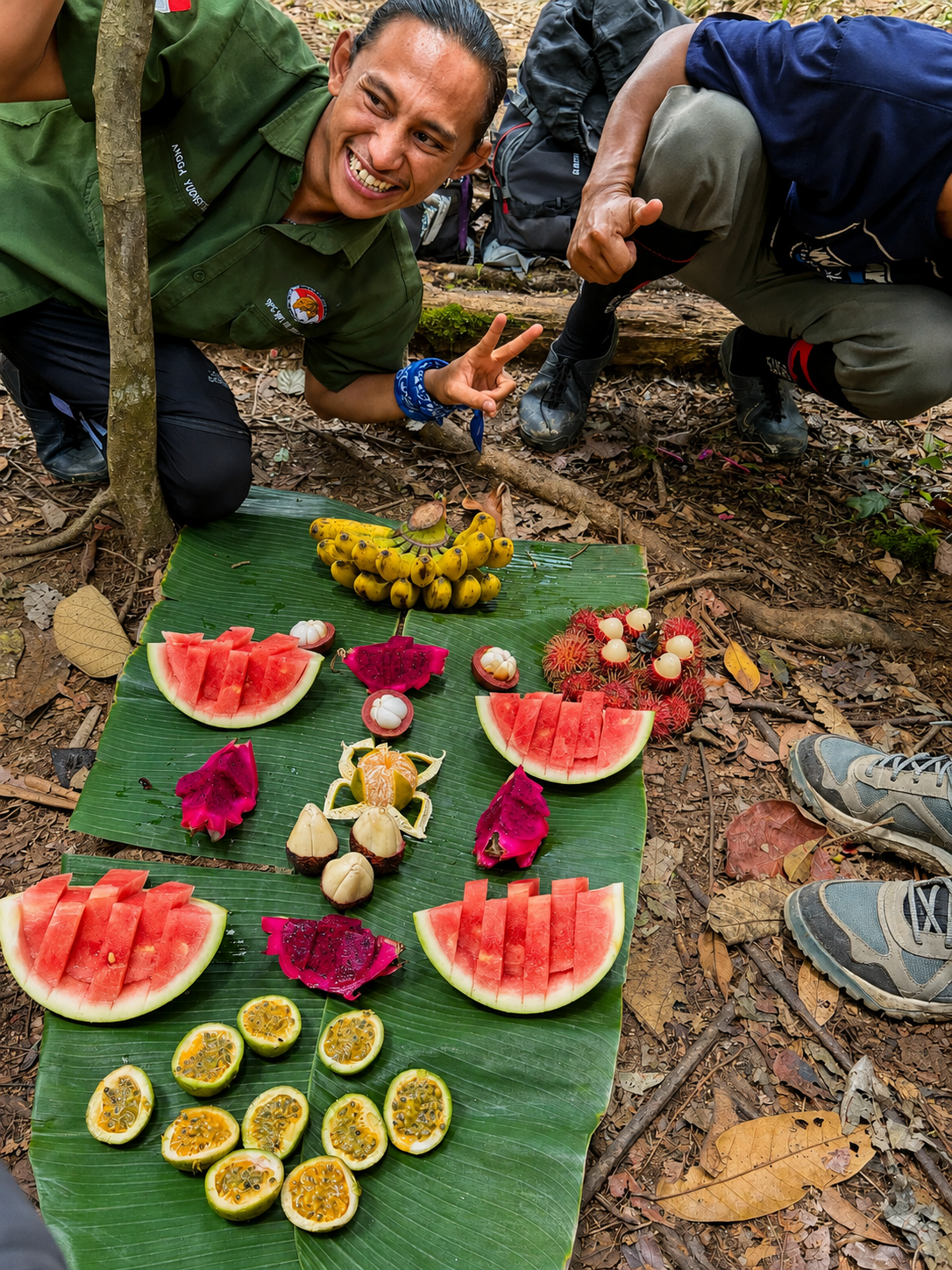
And sometimes your favorite memory will be something you never planned at all: sharing fruit at a village table, floating down a cool river after a hot trek, hearing the rainforest after dark, or listening to your guide describe a forest they have known since childhood.
The best journeys through Sumatra do not force nature to fit an itinerary. They leave enough space to experience the island as it really is.
[…] Learn more about responsible ecotourism in Sumatra . […]