Info@bukitlawangtravel.com

Is Sipiso-piso Indonesia’s Highest Waterfall?
The highest waterfall in Indonesia, Sipiso-piso, is a powerful Lake Toba stop. Plan the steep trail, timing, and a respectful visit with local context.

North Sumatra · Karo Highlands · Lake Toba
Sipiso-piso A waterfall carved into the caldera
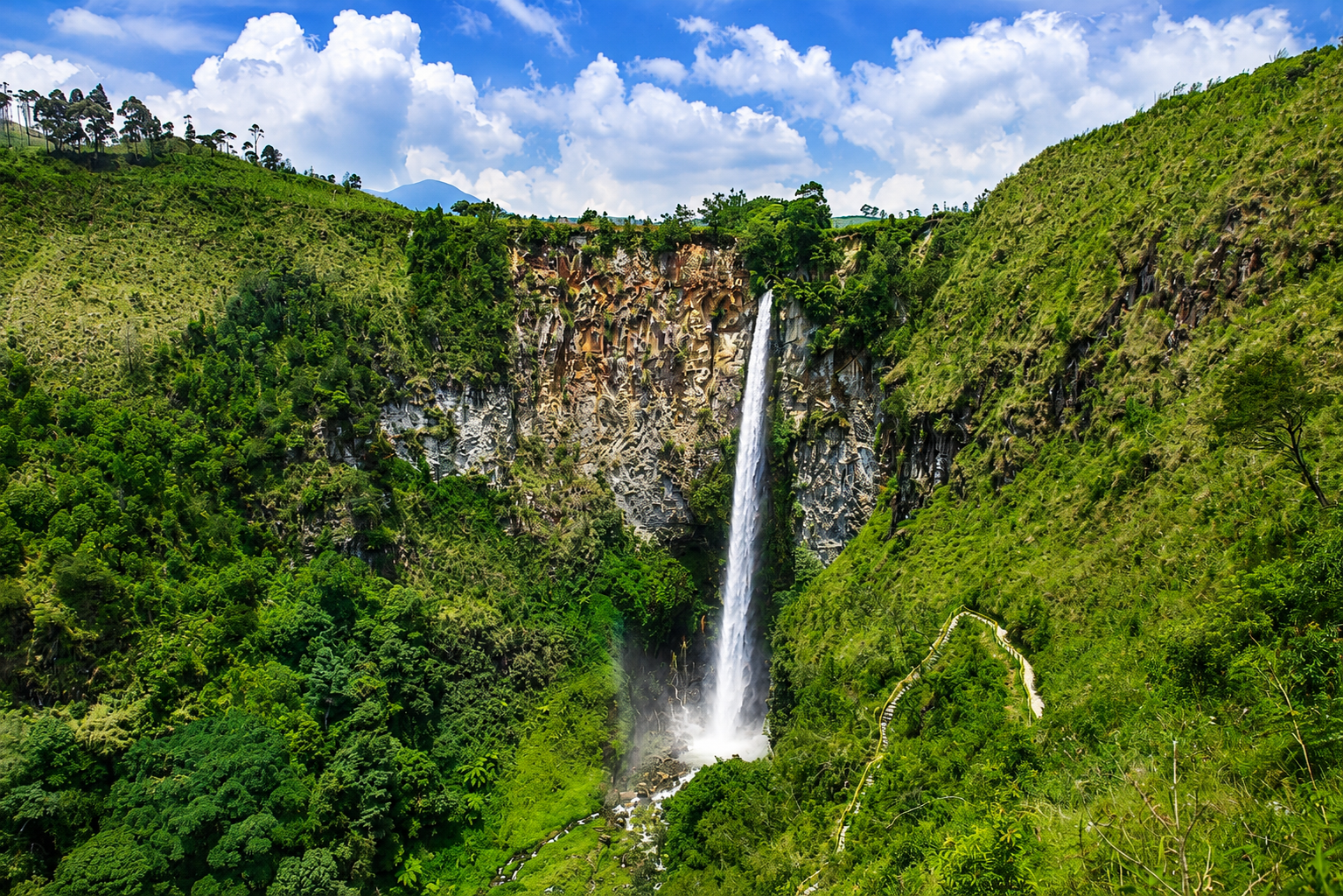
From the rim of the Lake Toba caldera, Sipiso-piso appears almost impossibly vertical: one slim ribbon of water dropping through green cliffs toward a vast volcanic landscape. Often described as the highest waterfall in Indonesia, it is one of North Sumatra’s most dramatic natural sights.
Waterfall drop
About 120 m
Roughly 394 feet
Location
Near Tongging
Northern Lake Toba
Best first stop
Upper viewpoint
Wide caldera panorama
Base hike
Steep stairs
Return climb is strenuous
More than a photo stop
A dramatic piece of the Lake Toba landscape
Near Tongging village on Lake Toba’s northern side, Sipiso-piso is an excellent addition to a wider North Sumatra journey that includes Berastagi, Bukit Lawang, or a longer stay around the lake.
Come for the view, but allow enough time to understand the landscape beneath it and to visit with care. A quick stop can easily become a demanding hike, so a little planning makes the experience far more rewarding.
Approximate vertical drop
120metres
A narrow white flow falling from a cave-like opening in the Karo Highlands into a steep gorge.
Why it feels extraordinary
One narrow waterfall. An enormous volcanic setting.
Sipiso-piso Waterfall falls about 120 meters, or roughly 394 feet, from a cave-like opening in the Karo Highlands into a steep gorge. Its name comes from the local Batak language and is commonly translated as “like a knife.” From a distance, the comparison makes sense. The narrow white flow cuts sharply down the dark-green wall of the caldera.
The source is a small underground river flowing from the Karo Plateau. Rather than beginning as a wide river above the falls, the water seems to emerge suddenly from the cliff itself. Below, it continues toward the Lake Toba caldera, a landscape formed by one of Earth’s largest known volcanic eruptions.
That setting is what separates Sipiso-piso from a waterfall viewed only from its base. From the upper viewpoints, visitors can often see the falls, the layered gorge, Lake Toba, and the surrounding highlands in one sweeping scene. Clouds can roll across the lake quickly, changing the colors from bright blue to deep silver within minutes.
The famous claim
Is it really the highest waterfall in Indonesia?
Sipiso-piso is widely promoted as Indonesia’s highest waterfall, and it is unquestionably among the country’s most famous tall single-drop waterfalls. However, “highest” is not a simple category. Waterfall measurements can vary depending on whether a source counts the main vertical drop, the full cascade, or a series of separate tiers. Indonesia also has several very tall falls, and published figures are not always consistent.
For travelers, the distinction does not reduce Sipiso-piso’s appeal. What matters most is its remarkable 120-meter plunge and its location above Lake Toba, which gives it a scale and viewpoint few waterfalls can match.
A better way to think about the title
Think of the “highest waterfall” label as a popular introduction, not the only reason to go.
The combination of height, gorge, highland scenery and Lake Toba is what makes Sipiso-piso memorable.
Choose your experience
The viewpoint and the walk to the base
You do not have to hike all the way down to appreciate Sipiso-piso. The upper viewpoint and the base offer two very different experiences.
01
Stay at the upper viewpoint
This is the right place to pause, take in the waterfall’s full height, and look out across Lake Toba. It is a worthwhile choice for families with young children, travelers with limited mobility, or anyone fitting Sipiso-piso into a full day of driving.
02
Descend toward the base
The trail begins near the viewpoint and follows a long series of steep, winding steps. The lower you go, the louder the water becomes. At the base, expect wet rocks, heavy spray, and a cooler temperature than at the top.
!
The return climb is the demanding part.
Wear shoes with dependable grip, use railings where available, take your time on wet sections, and ask locally about trail conditions after heavy rain. The decision to descend should depend on your energy, timing, weather, and comfort with steep stairs.
Plan the visit
When to visit Sipiso-piso Waterfall
Early morning is usually the best time for clearer views and gentler temperatures. It is also a more peaceful period before day-trip traffic increases. If photography is a priority, arrive with patience. Lake Toba weather is changeable, and a short wait can reveal a clearer view as cloud cover shifts.
North Sumatra can receive rain throughout the year, even outside the wetter months. The waterfall may look especially powerful after rain, but the trail can become slick and visibility from the rim may be limited.
✓
Bring drinking water for the climb.
✓
Use shoes with reliable grip for wet steps and rocks.
✓
Carry sun protection and a light rain layer.
✓
Protect electronics from waterfall mist and sudden rain.
✓
Keep your schedule flexible if you are combining several Lake Toba stops.
Getting there
From Berastagi and Lake Toba
Sipiso-piso lies near Tongging in North Sumatra’s Karo region. Many visitors include it while traveling between Berastagi and Lake Toba, or as part of a private North Sumatra itinerary.
Easiest option
Private car & driver
A car and driver offer the simplest option for travelers who want to combine viewpoints, villages, and stops along the route without navigating several local connections. This can be especially helpful when traveling with luggage or children.
Independent travel
Local transport
A traditional route involves traveling from Berastagi to Kabanjahe, continuing by bus in the direction of Siantar, and asking to be dropped near the Sipiso-piso turnoff. The waterfall complex is roughly 2.5 kilometers from the main road, where local becak drivers may be available for the final stretch.
Schedules, drop-off points, and availability can change, so confirm details locally on the day. The roads through the highlands are scenic but winding, and allowing extra time helps keep the journey enjoyable.
Travel with respect
A Batak landscape, not just a backdrop
Sipiso-piso sits within a living cultural landscape shaped by Batak communities, Karo highland traditions, farming, and the spiritual significance of Lake Toba. The waterfall is not an isolated attraction.
The villages, mountain views, roadside stalls, and lake below all form part of the experience.
Meet people respectfully
Greet local people politely and ask before photographing individuals.
Keep spending local
Buy snacks or handicrafts directly from local vendors when something genuinely interests you.
Leave the viewpoint clean
Carry out any trash you bring in and avoid leaving food packaging on the trail.
Expect simple facilities
Rest areas, food stalls and souvenir sellers may be more basic than at heavily commercialized attractions.
Continue the journey
Pair Sipiso-piso with a responsible Sumatra adventure
Sipiso-piso works best as one meaningful stop within a slower North Sumatra route. After the dramatic open views of the Karo Highlands and Lake Toba, many travelers continue toward the rainforest landscapes around Bukit Lawang.
The contrast is part of Sumatra’s magic: volcanic cliffs and cool lake air one day, then humid forest and the calls of gibbons the next.
If orangutans are part of your trip, choose certified local guides and keep wildlife welfare ahead of a close photograph. Ethical jungle trekking means observing animals at a respectful distance, never feeding them, and following guide instructions in Gunung Leuser National Park.