Info@bukitlawangtravel.com

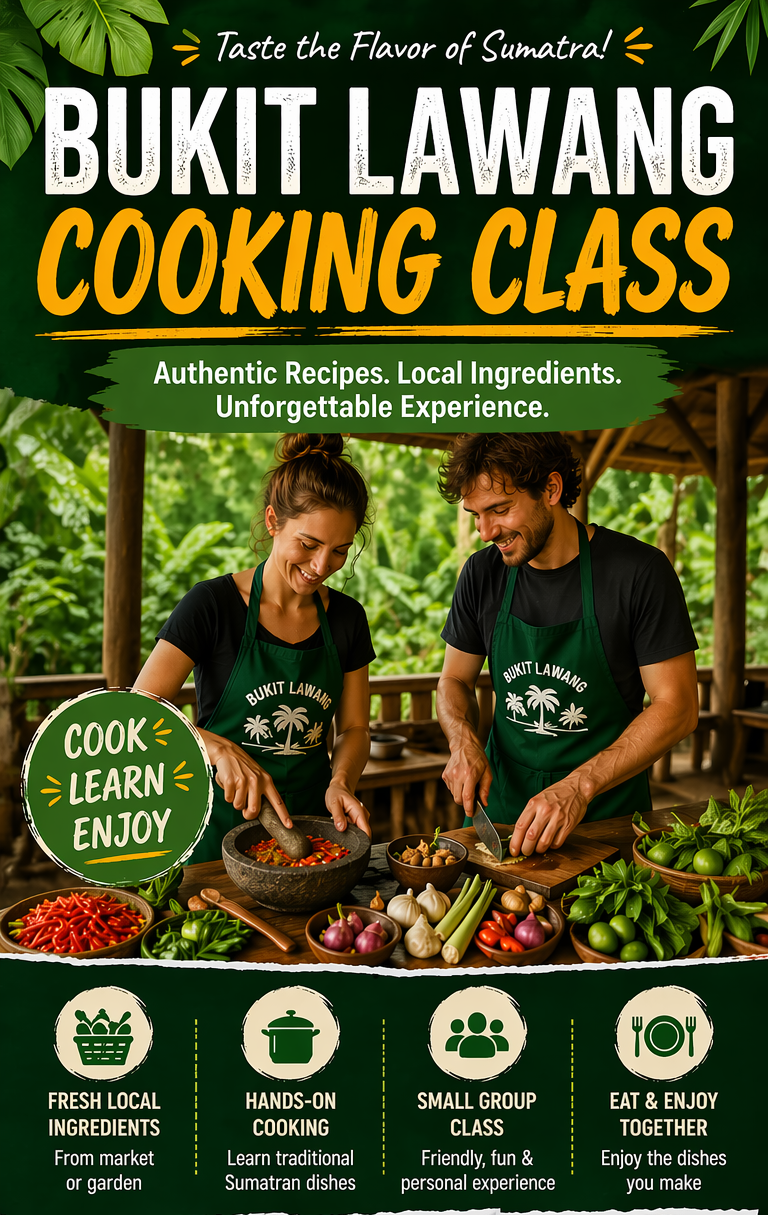
Local Food, Local Family, Bukit Lawang Cooking
Local food, local family, Bukit Lawang cooking: shop the market, prepare Indonesian dishes, and share a meal in a welcoming family home in Sumatra today.

A market basket of leafy greens, chilies, ginger, coconut, and fragrant herbs can tell you more about a place than a restaurant menu ever could. Local food, local family, Bukit Lawang: cook, taste, and connect through an experience that brings travelers into a welcoming home, where the meal is made slowly, shared generously, and shaped by everyday Sumatran life.
This is not a cooking class designed around perfect plating or complicated restaurant techniques. It is a chance to shop as local families shop, learn why certain ingredients belong together, prepare a complete Indonesian meal with practical guidance, and sit down at the same table to enjoy it. For travelers who want their time in Bukit Lawang to support the community beyond the trail, it is a personal and meaningful way to spend a few hours.
More Than a Bukit Lawang Cooking Class
The best food memories often include more than flavor. They include the sound of a busy market, the question you asked about an unfamiliar leaf, the heat of the kitchen, and the conversation that continues after everyone has sat down to eat.
In this approximately three-hour experience, a local host introduces the dishes you will prepare and guides you from market to table. The atmosphere is relaxed and friendly, so you do not need previous cooking experience or a detailed knowledge of Indonesian ingredients. Come curious, ready to participate, and hungry.
Cooking together creates a different kind of connection than simply ordering a meal. You see the work behind the food, from choosing fresh produce to grinding spices and balancing flavors. You also get a closer look at village life in Bukit Lawang, where cooking is often a daily family activity rather than a performance for visitors.
From the Local Market to the Family Table
The class follows the natural rhythm of preparing a meal. Each part matters because Indonesian cooking begins well before the stove is turned on.
Meet Your Local Host
Your session starts with a welcome and introduction. Your host will explain what you are making and how the day will unfold. This is a good time to mention food preferences, allergies, or dietary needs. Many Indonesian dishes can be adjusted, but advance notice gives your hosts the best chance to plan suitable ingredients.
Discover the Ingredients That Shape Everyday Cooking
Next comes a visit to the local market, where ingredients are selected fresh for the meal. This is where the flavors of the class begin to make sense. You may see aromatic roots, fresh herbs, vegetables, chilies, coconut, and spices that are familiar in name but very different in their freshest form.
Rather than treating the market as a quick photo stop, take time to notice how people shop. Vendors and shoppers know what is in season, what looks best that day, and which ingredients are needed for the dishes being prepared at home. On Fridays, the visit may include the larger traditional village market, which can offer an even fuller view of local trade and daily routines.
Markets are busy, informal places, and that is part of their appeal. The selection can change with the season and availability, so the exact menu may vary. That is not a compromise. It is how good home cooking works: local ingredients lead, and recipes adapt.
Cook Together, Step by Step
Back at the home kitchen, you will prepare the meal alongside your hosts. Expect hands-on tasks such as washing and cutting vegetables, preparing herbs, mixing seasonings, and learning the order in which ingredients are cooked. The goal is not to rush through a recipe card. It is to understand the building blocks of a dish and the small decisions that create its character.
Indonesian food is often described as spicy, but heat is only one part of the picture. Fresh chilies may add intensity, while ginger, turmeric, lemongrass, garlic, shallots, coconut, and leafy herbs bring fragrance, sweetness, depth, and balance. Your host can help you understand which flavors are essential to a dish and where personal preference can guide the final result.
Home kitchens also teach an important lesson about food culture: there is rarely only one correct version of a recipe. Families adjust ingredients based on what is fresh, affordable, available, or preferred by the people at the table. The recipes you learn will give you a useful foundation to recreate at home, but the deeper skill is learning to taste, adapt, and cook with confidence.
Enjoy What You Have Prepared
Once the cooking is finished, the most rewarding part begins. You sit down together for the lunch or dinner you have made. Sharing the meal gives you time to ask questions, talk about the ingredients, and enjoy the difference between food that has been prepared for you and food you helped create.
It is also a reminder that a meal does not need to be elaborate to be memorable. Fresh ingredients, patient preparation, and good company are often enough.
Choose a Morning or Afternoon Session
The cooking experience is offered in two convenient formats. The morning class runs from 9:00 a.m. to 12:00 p.m. and includes the market visit followed by lunch. The afternoon class runs from 3:00 p.m. to 6:00 p.m. and ends with dinner.
The best choice depends on your Bukit Lawang plans. A morning class works well if you have an afternoon free to rest, explore the village, or prepare for a jungle trek the following day. An afternoon session can be a relaxed way to finish a day after travel, a village walk, or a shorter outdoor activity. If you are arriving from Medan or continuing to another destination, allow enough time for transport, since schedules in Sumatra can be affected by road conditions and weather.
The group price is €25 per person for bookings of two or more participants. Solo travelers can join for €27, subject to availability. This small difference reflects the preparation required to organize a private, ingredient-led experience while keeping it accessible for independent travelers.
What Is Included in the Experience
The class is arranged as one complete activity, so you can focus on cooking and conversation rather than organizing details. It includes a local guide and host, transport connected with the activity, fresh ingredients, herbs and spices, drinking water, and the lunch or dinner you prepare together.
Because ingredients are bought fresh, menus may change. This is especially true during periods of heavy rain, when some produce may be harder to source. The experience remains centered on authentic everyday flavors, not a fixed tourist menu. If you have a strict allergy, vegan diet, or other essential requirement, share it when requesting your date so the team can confirm what is possible.
Why Local Food and Local Family Matter
Responsible travel is not limited to how you behave around wildlife. It also means thinking about where your spending goes and who has a chance to benefit from your visit. A family-hosted cooking experience creates direct income for local hosts while giving travelers a respectful introduction to food traditions and family life.
That matters in a destination known worldwide for orangutans and the rainforest of Gunung Leuser National Park. A well-rounded visit can support conservation-minded guiding, locally owned services, and community-based activities that help tourism benefit the people who call this area home. The cooking class does not replace a responsible jungle trek, but it adds another layer to the journey: a human connection rooted in the everyday work of shopping, cooking, and sharing food.
There is a balance to keep in mind. You are entering a family setting, not a staged attraction. Ask before photographing people, follow your host’s guidance in the kitchen, and approach unfamiliar customs with respect. A little patience goes a long way, especially when language, ingredients, and routines are different from your own.
Come Prepared to Cook, Taste, and Connect
Wear comfortable clothing that you do not mind cooking in, and bring mosquito repellent, sun protection, and a camera or phone if you would like photos. The market can be warm and lively, and the kitchen may be hotter than you expect. Closed shoes or comfortable sandals are usually practical, depending on the weather.
Bring questions, too. Ask how families use a certain spice, whether a dish is made for celebrations or ordinary days, and what local people like to cook when they have guests. These conversations are often what turn a good meal into a travel memory that stays with you.
To reserve your place, send your preferred date, whether you would like the morning or afternoon session, and the number of participants. Then arrive with an appetite, leave with new recipes, and carry a little more of Bukit Lawang with you than a photograph alone can hold.