Info@bukitlawangtravel.com

Travel Guide for Belitung Island: 2026 Tips
Travel Guide for Belitung Island with practical 2026 tips on beaches, island hopping, food, transport, seasons, and low-impact local travel planning now.

Belitung Island · Indonesia · Updated August 4, 2026
Travel Guide for Belitung Island
White-sand beaches, giant granite boulders, turquoise water and relaxed island life — discover a quieter coastal side of Indonesia.
Granite Beaches
Belitung's signature coastline
Island Hopping
Small islands & clear water
Local Culture
Fishing, food & island history
Slow Travel
Best enjoyed without rushing
A different Indonesian island escape
Where Granite Meets Turquoise Water
Beautiful beaches exist all over Indonesia. Belitung stands apart because giant granite boulders transform its coastline into something unmistakable.
Shallow turquoise water winds between pale sandy coves, while fishing communities and small offshore islands give the destination a quieter atmosphere than many of Indonesia's busiest beach regions.
Historically shaped by tin mining, Belitung today attracts travelers looking for beaches, snorkeling, local food and a slower nature-focused escape.
That quieter rhythm is part of its appeal — and also why thoughtful planning makes the experience better.
Jungle to island
Why Add Belitung to a Sumatra Trip?
A coastal contrast after rainforest trekking and adventurous days in North Sumatra.
Belitung is not a replacement for Sumatra's rainforest. It offers a completely different experience.
After early mornings on an ethical orangutan trek near Bukit Lawang, several days on Belitung can bring salt air, easy swimming and a gentler pace.
Around Tanjung Kelayang and Tanjung Tinggi, enormous granite formations meet bright water. At low tide, shallow channels and tide pools form around the rocks.
Belitung suits travelers who enjoy active but unhurried days built around beaches, boats, snorkeling, sunsets and local meals rather than nightlife or large resorts.
Plan around the sea
When to Visit Belitung
Weather, wind and sea conditions can shape your island experience as much as the calendar.
Generally Drier Conditions
These months are generally better suited to beach days, snorkeling and boat trips. July and August can be busier, particularly during holiday periods.
Wetter & More Flexible
Rainfall and sea conditions can affect island hopping. Leave room in the itinerary so boat trips can be moved when local conditions are better.
Arrival & accommodation
Getting There & Choosing Your Base
Most visitors arrive through H.A.S. Hanandjoeddin International Airport near Tanjung Pandan, with domestic flight connections through Indonesian hubs.
Avoid building a tight non-refundable connection or boat trip immediately after your flight, as domestic schedules can change.
Tanjung Pandan
Practical for restaurants, markets and local history.
Tanjung Kelayang
Convenient for northern beaches and island hopping.
Tanjung Tinggi
Ideal for striking granite coastal scenery.
Drive
A Car & Local Driver Is Often the Easiest Option
Public transport is limited for most visitors. A car with a local driver provides flexibility and comfort, especially for families or travelers carrying beach equipment. Motorbikes are better suited to confident, properly licensed riders familiar with changing road conditions.
Belitung's coastline
Beaches & Island-Hopping Highlights
Each area offers something different — from giant granite formations to quiet sunset walks and offshore adventures.
Tanjung Tinggi
Smooth granite boulders, pale sand and sheltered water create Belitung's classic coastal scenery. Morning visits offer cooler temperatures and can be quieter.
Tanjung Kelayang
A popular starting point for private and shared boat journeys to small islands, snorkeling spots and Lengkuas Island.
Tanjung Pendam
Better suited to a relaxed sunset, local snacks and watching daily island life than to a full snorkeling day.
Offshore Belitung
Island Hopping & Lengkuas Island
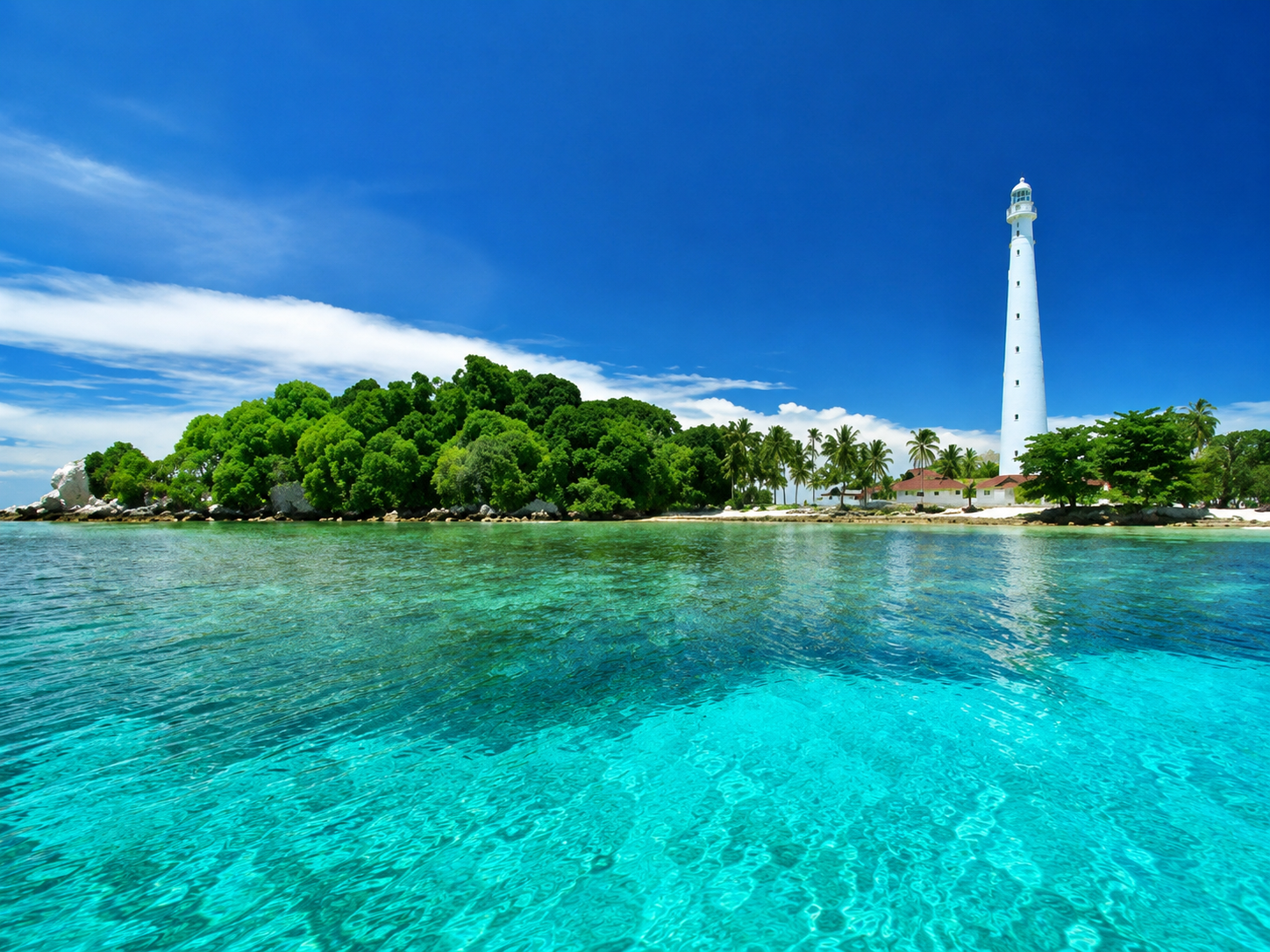
Boat trips from Tanjung Kelayang can include Lengkuas Island with its historic lighthouse, smaller sandy islands and snorkeling locations selected according to sea conditions.
The journey itself is part of the experience as water shifts from deep blue to clear aqua around the islands.
Do not feel pressured to visit every available stop. Asking your captain where currents are calmer and where conditions are best can create a more enjoyable day.
Better travel:
A shorter route with more time swimming or snorkeling
can be more rewarding than rushing through many islands
simply to collect photographs.
Protect what you came to see
Snorkel With Care
Clear water does not make coral indestructible. Responsible choices help protect Belitung's marine environment for local communities and future visitors.
Coral grows slowly and can be damaged by a single careless step in shallow water.
Never chase fish, handle marine animals or pick up starfish simply for photographs.
A rash guard can provide useful sun protection while reducing dependence on sunscreen in the water.
A responsible crew may change or skip a snorkeling location because of currents, weather or crowds.
Safety
Not a Confident Swimmer? Tell the Crew.
A reputable boat team can provide a life jacket and choose calmer entry points. There is no reason to push beyond your swimming ability around currents, boats or uneven rock shelves.
Beyond the beach
Eat Locally & Meet the Island
Belitung's identity is shaped by fishing communities, migration, Chinese-Indonesian influences and a long history connected to tin mining.
Gangan, a fragrant fish soup commonly prepared with turmeric and pineapple, is one local specialty worth trying.
A morning market in Tanjung Pandan can also provide coffee, snacks, produce and a glimpse of island life before many visitors leave for the beaches.
Gangan
A distinctive local fish soup with turmeric
and pineapple.
Family-Run Restaurants
An easy way to keep more visitor spending
within the local community.
Island stories
Look Beyond the Postcard
Beaches make Belitung beautiful, but local history and communities give the island its identity.
Tanjung Pandan Market
Visit in the morning for local food, coffee, produce and a more everyday side of island life.
Kampung Ahok
A traditional village stop in Gantung that can add a cultural dimension to a beach-focused itinerary.
Mining Heritage
Local museums and community stories help explain how tin mining shaped Belitung's economy and history.
Travel better in 2026
Practical Belitung Travel Tips
Useful for small eateries, markets, local drivers and tips. ATMs are easier to find around Tanjung Pandan.
Bring a dry bag, refillable bottle, sun shirt, hat, secure sandals and lightweight rain protection.
Indonesia's visa and entry requirements depend on nationality, passport and travel circumstances.
Wind, tides and rain can affect island routes. Flexibility is part of responsible island travel.
Check current Indonesia entry and visa information close to departure rather than relying on older travel posts.
Before booking a boat
Know What Your Island Trip Includes
Book island hopping through appropriate local operators and clarify what is included before departure.
Fuel
Entrance Fees
Lunch
Snorkeling Equipment
Insurance
Maximum Group Size
Private trips generally cost more but can offer greater flexibility. Shared boats can be more affordable when group sizes remain reasonable.
Travel at island pace
Belitung Rewards Travelers Who Don't Rush
Leave room for tides, changing weather and good local advice. Swim early, take the boat when the sea is kind, eat where residents eat and spend enough time in each place to notice more than the view.
Most importantly, leave every beach and reef as you found it. That is how an extraordinary island remains beautiful for the communities who live there and for the travelers who will arrive after you.
Rainforest to tropical island
Add a Different Side of Indonesia to Your Journey
Combine the rainforest landscapes of North Sumatra with Belitung's granite beaches, turquoise water, island communities and slower coastal rhythm.
Explore Bukit Lawang Travel →