Info@bukitlawangtravel.com

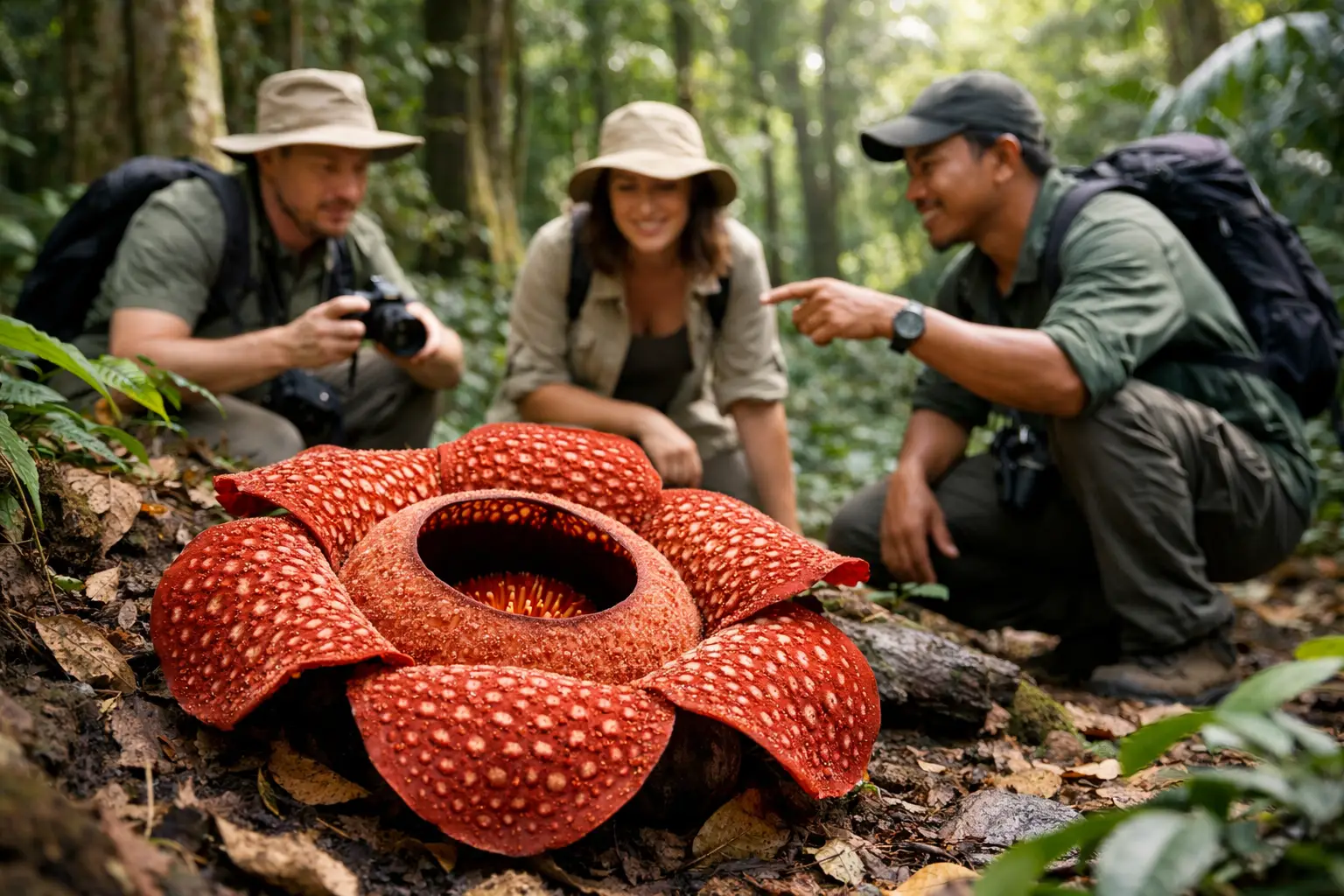
Rafflesia Tour Sumatra for a Rare Giant Bloom
Plan a responsible Rafflesia tour Sumatra travelers will remember, with seasonal guidance, local insight, practical preparation, and rainforest respect.
A Rafflesia flower can be wider than a suitcase, weigh more than many house cats, and disappear almost as quickly as it arrives. A Rafflesia tour Sumatra is not a guaranteed sightseeing stop with a flower waiting on schedule. It is a guided rainforest experience shaped by weather, trail conditions, and the remarkable timing of one of the world’s rarest blooms.
For travelers who enjoy nature for what it truly is – unpredictable, living, and worth protecting – that is exactly the appeal. Seeing a Rafflesia in bloom is a privilege. The journey to look for one also offers a closer understanding of Sumatra’s forests, the local communities that know them best, and the care required to keep these places wild.
Why a Rafflesia Sighting Is Never a Promise
Rafflesia arnoldii is famous as the world’s largest individual flower. Its deep red petals, pale spots, and broad central chamber make it look almost unreal against the dark forest floor. It is also known for its strong odor, often compared to rotting meat. That scent attracts carrion flies, which help pollinate the flower.
Despite its size, Rafflesia is surprisingly difficult to find. It has no leaves, stems, or roots of its own. Instead, it lives as a parasite inside the vines of the Tetrastigma genus. For much of its life, there is little or nothing to see. A bud develops slowly, then the flower may open for only a few days before beginning to collapse.
This is why responsible guides never promise a bloom. Local guides may know where buds have been reported or where Rafflesia has flowered in previous years, but the forest does not work to a visitor timetable. A tour is most rewarding when you come ready to learn about the habitat and enjoy the walk, whether or not a fully open flower appears.
What to Expect on a Rafflesia Tour in Sumatra
A Rafflesia excursion is usually a focused nature walk rather than a demanding multi-day expedition. The route, duration, and driving time depend on the most recent local reports and the location of known host vines. Some sightings may be relatively accessible; others require a muddy walk on uneven forest trails.
Your guide will explain what makes a possible sighting significant. You may see a mature flower, a developing bud, a flower that has just started to fade, or the Tetrastigma vine that supports the plant. Each stage tells part of the story. A closed bud can be exciting because it signals that a bloom may be close, although nature still makes no promises.
Expect a slower pace than on a destination-driven hike. The guide may pause to look at plants, insects, fungi, bird calls, or tracks along the way. This is not wasted time. A Rafflesia thrives only in a functioning forest, so the surrounding ecosystem is part of the experience.
For visitors staying in Bukit Lawang, a Rafflesia outing can make a thoughtful addition to an orangutan trek or a wider North Sumatra itinerary. The experiences are different but connected: one introduces you to a single extraordinary plant, while the other reveals the larger rainforest landscape that supports orangutans, birds, reptiles, and countless smaller forms of life.
When Is the Best Time to Look for Rafflesia?
Rainfall, humidity, local conditions, and the flowering cycle all affect the chances of seeing Rafflesia. There is no single calendar date that guarantees a bloom across Sumatra. A good local operator follows current reports from guides and communities near known locations, then helps guests plan with realistic expectations.
If Rafflesia is a high priority for your trip, build flexibility into your itinerary. Staying an extra day in the region can be more useful than trying to schedule the excursion between tightly timed flights. Ask about recent sightings close to your travel dates, but treat that information as a snapshot rather than a promise.
The best conditions for the flower are not always the most comfortable conditions for visitors. Forest trails can be wet, humid, slippery, and buggy. That is part of a genuine rainforest walk. Light rain gear, patience, and a willingness to get muddy will serve you better than expecting a polished attraction.
What to Bring for the Forest Walk
Preparation is simple, but it matters. Wear breathable clothing that you do not mind getting dirty, along with sturdy closed-toe shoes that can handle mud. Long pants are useful for protecting your legs from insects and vegetation. Bring drinking water, insect repellent, sunscreen for exposed areas, and a small rain jacket or poncho.
A phone or camera is welcome, but keep it secure and dry. The flower is visually striking, yet photography should never interfere with the habitat. Your guide will show you where to stand and how close you can safely get. A small daypack is generally easier to manage than carrying loose items by hand.
Travelers with limited mobility, very young children, or concerns about uneven ground should discuss this before booking. Routes can sometimes be adapted, but that depends on where a bloom or bud has been found. Clear planning helps your guide recommend the right activity rather than pushing you onto a trail that does not suit you.
Respecting a Flower That Cannot Protect Itself
The very thing that makes Rafflesia special also makes it vulnerable. A bloom can be damaged by a careless footstep, a hand placed on its petals, or visitors stepping off trail to get a closer photo. Buds are especially fragile and may be crushed before they ever open.
A responsible Rafflesia visit means following the guide’s instructions, staying on the safest available path, and keeping a respectful distance. Do not touch the flower, poke inside it, move leaves for a photograph, or place bags and tripods near the host vine. Avoid leaving food wrappers, tissues, or other waste in the forest.
Respect also extends to people. Local knowledge is often what makes a Rafflesia excursion possible. Guides, drivers, farmers, and nearby communities may be the first to notice a new bud or flowering site. Choosing a locally guided experience keeps visitor spending closer to the communities that help protect these landscapes and creates a stronger reason to value the forest over short-term exploitation.
At Bukit Lawang Travel, that local connection is central to how we approach nature experiences. Certified local guides bring practical trail knowledge, safety awareness, and a deep respect for wildlife and plants. The goal is not to collect a quick photo, but to give guests a meaningful encounter without placing extra pressure on a rare species.
Pairing Rafflesia With a Larger Sumatra Adventure
Rafflesia makes the most sense as part of a nature-rich journey rather than the only reason to visit Sumatra. A short jungle trek near Bukit Lawang can introduce you to the rainforest’s layers, from towering trees to tiny invertebrates. Longer treks offer more time to notice the rhythms of the forest, while village activities, rafting, caves, and Lake Toba extensions bring a different side of North Sumatra into view.
There is a trade-off to consider. A tightly packed itinerary may let you see more destinations, but it leaves little flexibility for weather, road delays, or a reported Rafflesia bloom. Slowing down for even one extra night can make the whole trip feel less rushed and gives local guides more room to adapt plans responsibly.
Bring curiosity rather than a checklist. You may come hoping for a giant flower and leave remembering a guide’s story, the sound of rain in the canopy, or the small details that show how much life a healthy forest holds. That is the right frame of mind for Sumatra: make space for the rare sighting, and let the living landscape surprise you.