Info@bukitlawangtravel.com
Bukit Lawang to Lake Toba Transfer Options
Plan your Bukit Lawang to Lake Toba transfer with practical route choices, travel times, packing tips, and local advice for a relaxed Sumatra journey.
After days of rainforest trails, river swims, and the unforgettable sight of orangutans moving through the canopy, Lake Toba offers a completely different kind of Sumatra experience. A Bukit Lawang to Lake Toba transfer connects two of North Sumatra’s most memorable places, but it is a full travel day, not a quick hop. Planning the right route, pickup time, and Lake Toba drop-off makes a real difference to how relaxed that day feels.
For most visitors, a private car with a local driver is the most comfortable and practical choice. It gives you room for luggage, flexibility for breaks, and a direct connection from your Bukit Lawang accommodation to the right ferry point or hotel around Lake Toba. It also means you can leave the jungle behind without spending the day trying to coordinate several buses in unfamiliar places.
Bukit Lawang to Lake Toba Transfer: What to Expect
The road journey from Bukit Lawang to the Lake Toba area generally takes around six to eight hours, depending on traffic, road conditions, weather, and your final destination. Travel times in Sumatra should always be treated as estimates. A slow truck, a village celebration, heavy rain, or roadwork can change the rhythm of the day.
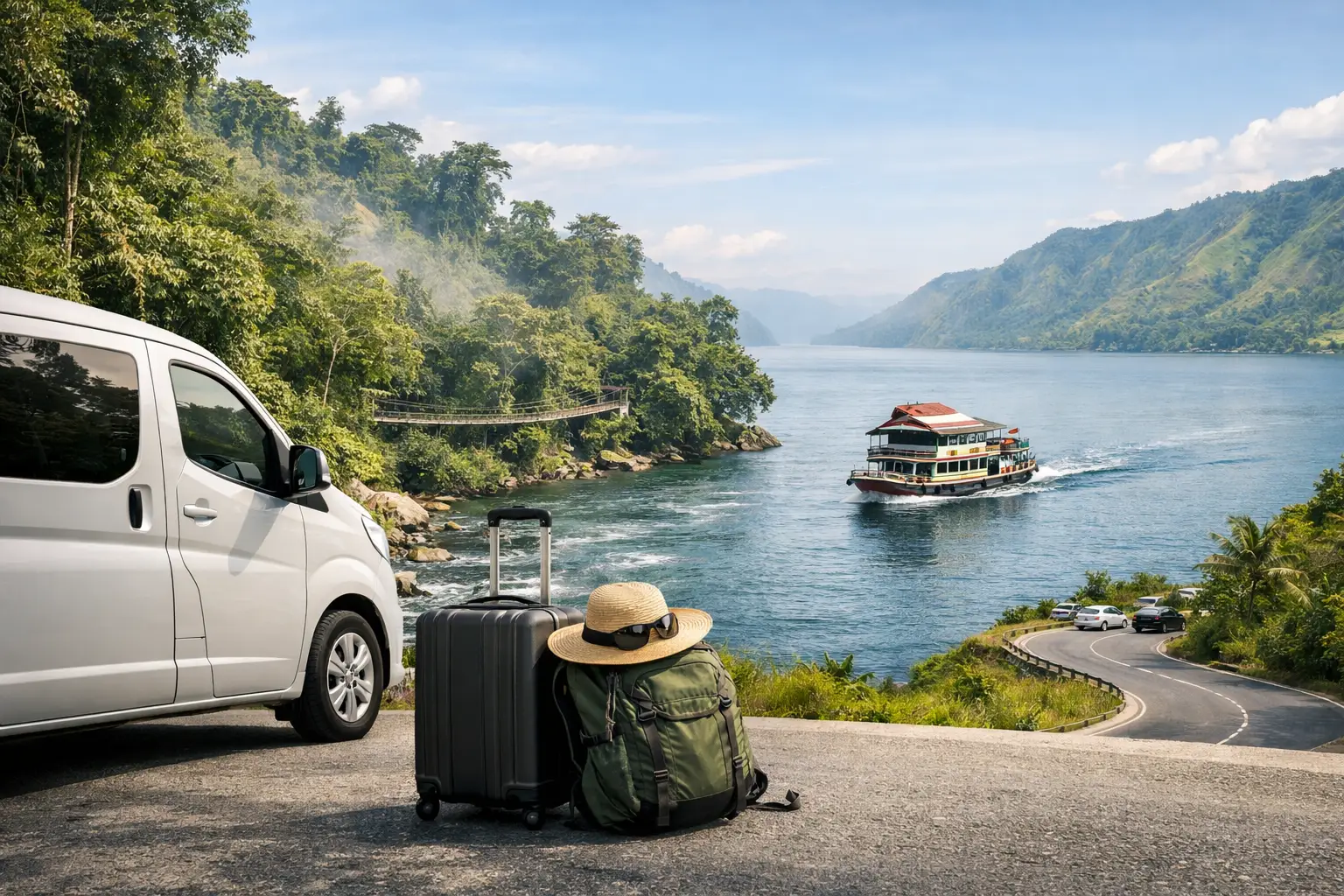
Most travelers heading to Samosir Island will travel by road to Parapat, then take a ferry across the lake to Tuktuk or another agreed arrival point. The boat ride is part of the experience: after hours of plantations, small towns, and mountain roads, the water opens up in front of you, framed by the high walls of an ancient volcanic caldera.
If you are staying on the mainland, such as in Parapat, there is no ferry crossing required. If your accommodation is elsewhere on Samosir Island, confirm the exact drop-off point before departure. Lake Toba is vast, and “Lake Toba” can mean very different endpoints when a driver is arranging a route.
Why a private car is usually the best choice
A private transfer is especially valuable after a multi-day jungle trek. You can depart from your guesthouse, stop for coffee or lunch when needed, and keep your bags secure in the vehicle. Families, couples, and groups traveling together often find that the added comfort is worth it, particularly when divided among several passengers.
A local driver also understands the practical details that do not always appear on map apps: where to stop for a clean restroom, which roads are more reliable after rain, and how much time to allow for the ferry. This is not about rushing through Sumatra. It is about traveling with enough breathing room to enjoy it.
Shared tourist cars may be available on some dates and can lower the cost, but they are less flexible. Pickup times, luggage space, stops, and arrival schedules depend on the whole group. They work well for budget-minded independent travelers with flexible plans, but a private transfer is the stronger choice if you have a ferry connection, a family, or a fixed hotel check-in.
Choosing Your Lake Toba Arrival Point
Before booking transport, check your accommodation confirmation carefully. The most common overnight base for international visitors is Tuktuk, a relaxed peninsula on Samosir Island known for lakeside guesthouses, restaurants, and easy access to Batak cultural sites. Reaching Tuktuk usually involves driving to Parapat and taking the ferry.
Parapat is convenient for travelers who are continuing quickly to another destination or prefer to stay on the mainland. It is also the practical road-and-ferry gateway to Samosir. Staying there can make sense for one night, though many visitors prefer the quieter atmosphere and lakeside views on Samosir itself.
Some accommodations on Samosir are reached through other ports or road access around the island. Tell your transport provider the hotel name, not just “Lake Toba.” A clear destination avoids confusion and helps your driver plan the correct route from the beginning.
Ferry planning for Samosir Island
Ferry schedules can vary by day, weather, and operational conditions. The crossing from Parapat is usually straightforward, but it is wise to arrive with time to spare rather than treating the last boat as your plan. If you are traveling during an Indonesian holiday period, weekends, or peak season, allow extra time.
Keep a small day bag with water, a light jacket, your phone, cash, and any medication you need. Larger luggage can stay in the car until the ferry point, but having essentials close at hand makes the transition easier. The lake can feel cool and breezy after the heat and humidity of Bukit Lawang, especially later in the afternoon.
A Comfortable Travel-Day Plan
An early to mid-morning departure from Bukit Lawang is usually the most sensible approach. You do not need to leave before sunrise unless you have a particular connection to make, but waiting until midday can create unnecessary pressure around ferry timing and hotel arrival.
Have breakfast, settle any accommodation payments, and pack the night before. Jungle trekking often leaves boots, wet clothes, and gear needing a little organization. Put damp items in separate bags, keep your passport and valuables with you, and make sure your phone is charged before departure. Signal can be inconsistent in some rural stretches, so download maps, hotel details, and important booking messages in advance.
Ask for a sensible lunch stop along the way. North Sumatra travel is part of the adventure, and a proper meal can turn a long drive into a much more enjoyable day. Your driver may suggest a local restaurant based on the route and timing. This is also a chance to try regional food beyond the traveler hubs, while supporting small businesses in the communities you pass through.
Public Transportation: Possible, but Less Simple
Traveling from Bukit Lawang to Lake Toba by public transportation is possible, but it requires patience and a flexible schedule. There is generally no single direct public bus that makes this journey easy for visitors. You may need to travel via Medan or connect through regional transport hubs, then arrange onward travel to Parapat.
This can be a good option for experienced backpackers who enjoy working out local connections and are not tied to a ferry, hotel, or flight schedule. For first-time visitors to Sumatra, travelers carrying large backpacks or suitcases, and anyone traveling after a jungle expedition, it can become more tiring than it first appears.
The trade-off is clear: public transport may cost less, while a direct car transfer costs more but saves time, uncertainty, and energy. There is no wrong choice, as long as the choice fits your travel style.
Travel Responsibly Between Two Special Places
Bukit Lawang and Lake Toba are more than stops on an itinerary. Bukit Lawang sits beside the globally important Gunung Leuser rainforest, home to critically endangered Sumatran orangutans and countless other species. Lake Toba is a living cultural landscape shaped by Batak traditions, farming communities, fishing, and one of the world’s largest volcanic lakes.
Treat the transfer day as part of the journey, not a blank space between activities. Carry a refillable water bottle, avoid leaving trash at roadside stops, and choose locally owned accommodations and restaurants where possible. Small decisions help ensure that tourism spending reaches the people who care for these places every day.
If you are arranging a trek and onward transportation together, Bukit Lawang Travel can help coordinate a route that matches your trek finish time, Lake Toba accommodation, and broader Sumatra plans. Local coordination is particularly helpful when you want to combine Bukit Lawang, Berastagi, Lake Toba, or a return journey to Medan without turning your vacation into a transport puzzle.
Leave Bukit Lawang with enough time to say goodbye to the river and the rainforest. By evening, you may be watching the light change across Lake Toba, ready for slower mornings, Batak hospitality, and another side of Sumatra that stays with you long after the journey home.