Info@bukitlawangtravel.com

2 Days 1 Night Leuser Trek in Bukit Lawang
Plan a responsible 2 days 1 night jungle trek in Leuser National Park from Bukit Lawang, with orangutans, camp life, safety, and packing tips for you.

The rainforest changes the moment you step beyond Bukit Lawang. Village sounds fade, the air turns cooler beneath towering trees, and every rustle overhead becomes a reason to look up. A 2 days 1 night jungle trekking at Leuser National Park, Bukit Lawang-Sumatra experience gives you time to move beyond a short wildlife walk and feel what it is like to sleep in one of the world’s most important rainforest landscapes.
This is not a luxury camping trip or a race through the jungle. It is a guided, active adventure for travelers who want to see orangutans responsibly, learn from local guides, share a simple riverside camp, and return with a deeper connection to Sumatra.
Why choose a 2-day, 1-night trek?
A half-day trek can be a wonderful introduction to Gunung Leuser National Park, especially for families or travelers on a tight schedule. But an overnight trek offers something different: time. You are not watching the clock for your return to town. You can walk farther into the forest, slow down when wildlife appears, enjoy a cooked meal in the jungle, and wake to the sounds of gibbons, cicadas, and the river.
For many guests, two days and one night is the sweet spot. It feels like a true expedition without requiring extensive wilderness experience or a week-long commitment. The terrain can still be demanding, with humid conditions, muddy slopes, roots, and steep sections, so a reasonable level of fitness matters more than technical hiking skills.
The route is never identical from one day to the next. Rain, trail conditions, wildlife movement, and the group’s pace all shape the experience. Certified local guides make decisions based on safety, park rules, and the least disruptive way to travel through the forest.
What your Leuser jungle trekking experience may look like
Your guide will usually begin with a briefing in Bukit Lawang. This is the right time to ask questions, adjust your pack, and talk honestly about injuries, medications, swimming confidence, or concerns about the terrain. Good preparation makes the trek more enjoyable for everyone.
Day one: Into the rainforest
The first day normally begins in the morning, entering the forest near Bukit Lawang and hiking beneath dense tropical canopy. Your guide will point out signs that are easy to miss on your own: fig trees that feed primates, giant ant trails, hornbill calls, fresh tracks, unusual fungi, and medicinal plants known locally.
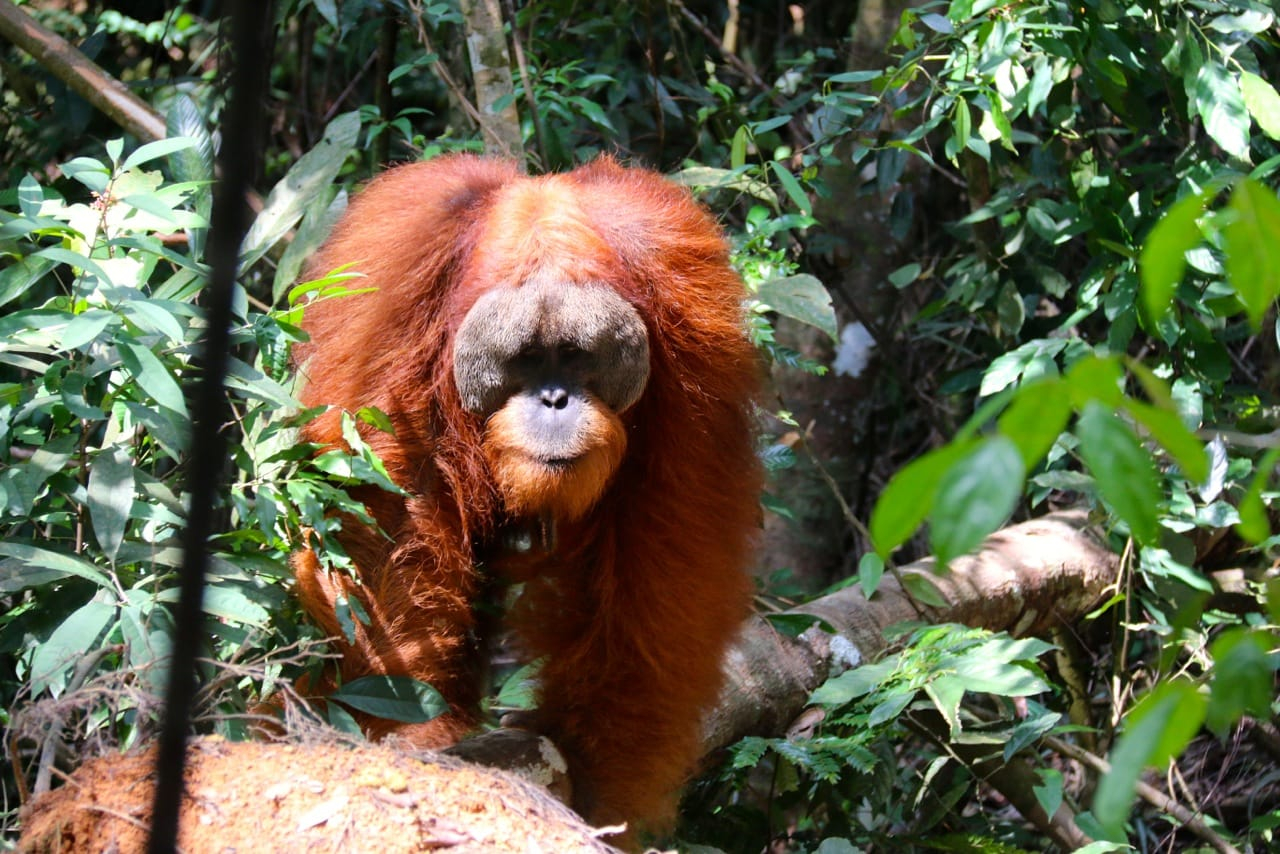
Orangutans are the wildlife encounter many visitors hope for, and this area is known for opportunities to see them in the forest. Still, wild animals do not work to a schedule. Sightings can never be guaranteed. You may see an orangutan moving calmly through the canopy, a mother traveling with her young, Thomas’s leaf monkeys leaping between branches, or long-tailed macaques watching the trail from a distance.
The best encounters are quiet and unforced. Your guide will keep the group at a respectful distance, avoid blocking an animal’s path, and make sure no one feeds, touches, or calls to wildlife. This protects both visitors and animals. Human food can make wildlife sick and change natural behavior, while close contact can spread disease to orangutans.
By afternoon, you will arrive at a simple camp near the river. The exact setting depends on the route and conditions, but the essentials are refreshingly straightforward: a sheltered sleeping area, sleeping mats or bedding arranged by the crew, fresh water nearby, and a hearty dinner prepared in camp. Expect local flavors, fruit, tea or coffee, and the kind of meal that tastes especially good after a day on the trail.
There is no need to fill every quiet moment. Swim if conditions allow and your guide confirms it is safe, sit by the river, trade stories with your group, or listen to the jungle settle after dark. A night in the forest is one of the strongest reminders that this place belongs to wildlife first.
Day two: A slow morning and the river journey home
Morning comes early in the rainforest. After breakfast, you will pack up and continue trekking, often taking a different route through the forest before heading toward the river. The second day may include more wildlife searching, botanical discoveries, and a few challenging climbs or descents.
Many 2-day treks finish with a traditional river-tubing journey back toward Bukit Lawang. Joined inner tubes form a raft, while experienced local guides steer through the current. It is fun, scenic, and a welcome change after hiking, but it depends on river levels and weather. When conditions are not safe, the group returns on foot instead. Flexibility is part of responsible adventure travel.
Ethical orangutan trekking is not optional
Gunung Leuser National Park is not a zoo, and that is exactly what makes time here meaningful. The rainforest is home to critically endangered Sumatran orangutans, along with countless other species and the communities whose livelihoods are connected to this landscape.
Responsible trekking means choosing a locally based operator that uses certified guides, follows national park rules, limits disturbance, and treats wildlife sightings as a privilege rather than a performance. It also means accepting that the guide may ask the group to move on quickly, remain quiet, or skip an area if an animal needs space.
A few simple guest choices matter greatly. Do not bring snacks out near primates. Never leave wrappers, tissues, or plastic behind. Avoid strong perfume, and tell your guide if you are sick before trekking. If you have a contagious illness, postponing your trek is the responsible decision, particularly because orangutans are vulnerable to human respiratory diseases.
When you travel with a community-based team, your trip supports more than a day in the forest. Local guides, porters, cooks, drivers, accommodations, and small businesses all benefit when visitor spending stays connected to Bukit Lawang. That is the kind of tourism worth choosing.
What to pack for one night in the jungle
Pack light, but do not underestimate the heat and rain. You will carry your personal essentials, while the trekking team handles shared camp equipment and food according to your booking. A small backpack is easier to manage on steep or slippery trails.
Bring a reusable water bottle, lightweight long pants, a breathable shirt, a rain jacket or poncho, swimwear, sandals for camp, and hiking shoes or trail shoes with dependable grip. Quick-dry clothing is far more useful than cotton. Also pack insect repellent, sunscreen for time outside the canopy, personal medication, hand sanitizer, a headlamp, a dry bag for electronics, and a spare set of clothes for the return.
Leeches can be present in wet conditions. They are an ordinary part of a rainforest trek, not a reason to panic. Long socks, long pants, and leech socks if you prefer them can help. Your guide can show you what to do if one finds its way onto your shoe or clothing.
Leave unnecessary valuables at your accommodation. Bring a camera if you wish, but remember that wildlife photography should never change how close you stand or how long the group stays with an animal.
Is this trek right for you?
This trip suits first-time trekkers who are comfortable being active for several hours, as well as experienced hikers looking for a compact rainforest adventure. You do not need mountaineering experience, but you should be ready for uneven ground, sweat, rain, insects, and a night without hotel comforts.
It may not be the best choice for travelers with serious mobility limitations, severe balance concerns, or medical conditions that make heat and exertion risky. Families with younger children may prefer a shorter private trek tailored to their pace. If you are unsure, ask before booking. A responsible operator would rather help you choose the right adventure than push you into the wrong one.
Bukit Lawang Travel plans its treks with certified local guides, practical safety support, and respect for the forest at the center of every decision. Come ready to get muddy, stay curious, and leave the rainforest exactly as you found it – except with a much better understanding of why it needs protecting.
[…] a Bukit Lawang jungle trek, your guide will never expect you to tip simply because you booked a tour. A sincere thank you is […]