Info@bukitlawangtravel.com

2 Days 1 Night Jungle Trekking Tour at Leuser National Park
Plan a 2 Days 1 Night Jungle Trekking Tour at Leuser National Park with ethical guides, camp by the river, and prepare for a meaningful adventure safely.

A rainforest can feel very different after the village path disappears. The air grows cooler under giant trees, the ground becomes uneven, and every sound seems closer: cicadas, gibbons, dripping leaves, and perhaps branches moving high above. A 2 Days 1 Night Jungle Trekking Tour at Leuser National Park gives you enough time to move beyond a short walk, sleep in the forest, and experience Bukit Lawang’s wild surroundings at a more natural pace.
This is not a luxury camping trip or a race through the jungle. It is an active, guided adventure for travelers who want to see orangutans responsibly, learn from local guides, and spend one memorable night beside a rainforest river. You will get muddy, sweat a little, and likely sleep more simply than you do at home. In return, you get a deeper connection with one of Sumatra’s most important natural landscapes.
What a 2-Day, 1-Night Leuser Jungle Trek Feels Like
Two days is an excellent middle ground for first-time jungle trekkers, couples, friends, and active families with older children. A half-day trek can offer a wonderful introduction, but an overnight route allows time for the forest to slow you down. There is less pressure to keep moving, more opportunity to watch wildlife quietly, and the special experience of waking up inside the rainforest rather than returning to town before sunset.
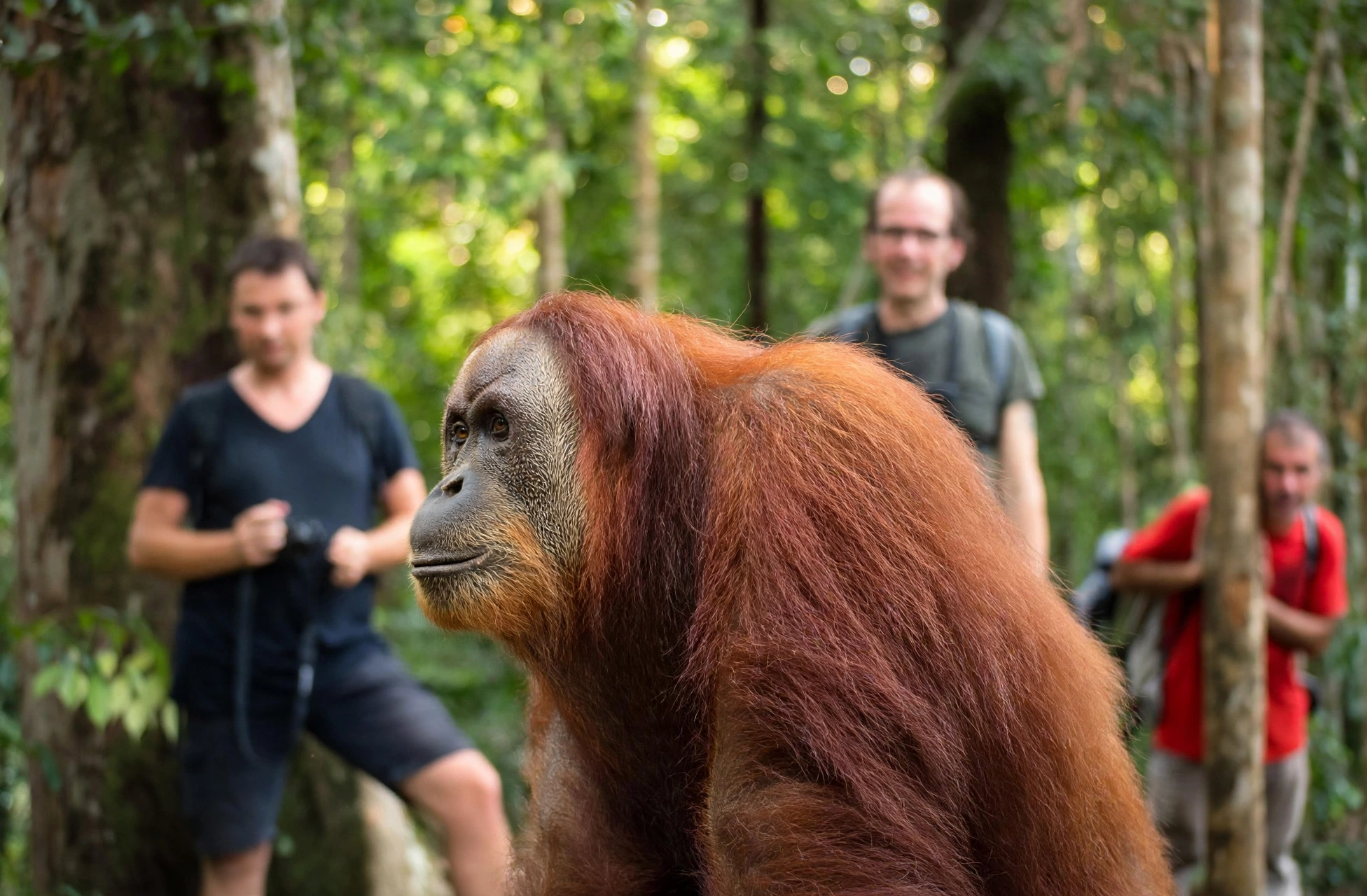
Your trek begins from Bukit Lawang with a certified local guide. Routes are chosen according to weather, group fitness, trail conditions, and wildlife activity. There is no fixed script in a living forest. One group may spend time watching a mother orangutan and her young feeding in the canopy, while another may encounter Thomas’s leaf monkeys, long-tailed macaques, hornbills, monitor lizards, or colorful forest insects.
Wild orangutan sightings are possible in this part of the Gunung Leuser ecosystem, but they can never be guaranteed. That uncertainty is part of ethical wildlife travel. The goal is not to chase an animal for a photo. It is to move carefully through its habitat with guides who know when to stop, when to give more space, and when to continue on.
Day One: Into the Rainforest and Down to Camp
The first day is usually the more active hiking day. After a briefing, your guide leads the group along forest trails that may include gradual climbs, steep sections, roots, and slippery ground after rain. The pace should be manageable, with breaks for water, fruit, wildlife observation, and questions about the plants and animals around you.
Local guides bring more than route knowledge. They can read small changes in the forest, recognize animal calls, explain traditional uses of certain plants, and help guests travel with care in conditions that may be unfamiliar. Their experience matters most when the trail is muddy or visibility changes after a tropical shower.
Lunch is normally enjoyed in the jungle, often as a simple picnic with fresh fruit. It is a good moment to rest, refill your energy, and appreciate how much life exists above eye level. Orangutans and monkeys spend much of their time in the canopy, so looking up patiently is often more rewarding than walking quickly.
By afternoon, the group reaches a riverside camp. Camps are intentionally simple and designed around the environment rather than built as permanent luxury structures. You can wash in the river, relax on a bamboo platform, and enjoy a freshly prepared dinner as the light fades through the trees. The sound of flowing water becomes the soundtrack for the night.
A campfire may be possible when conditions allow and when it can be managed safely. Otherwise, the evening is still its own kind of magic: conversation with your guides, a sky briefly visible through the canopy, and the distant calls of the forest after dark. Your guides prepare sleeping arrangements with mats, blankets, and mosquito nets or protected sleeping areas as needed.
Responsible Orangutan Encounters Come First
An orangutan encounter should feel like a privilege, not a performance. Gunung Leuser National Park protects critical habitat for the critically endangered Sumatran orangutan, and every visitor has a role in minimizing disturbance.
Ethical trekking means keeping a respectful distance, never touching wildlife, and never feeding animals. Feeding can change an animal’s natural behavior, increase disease risk, and create dangerous dependence on people. Your guides may ask the group to remain quiet, step back, or change position. Please follow their direction even if it means the perfect photo is not possible.
The same care applies to all wildlife. Macaques can be curious around food, so snacks should stay packed away. Do not leave trash behind, pick plants, or use loud music in camp. A good trek leaves the forest as wild as possible for the animals that live there and for the local community that depends on this landscape.
What to Pack for One Night in the Jungle
Pack light, but do not treat the jungle as a casual day walk. You will be more comfortable with quick-drying clothing and items that stay useful when wet. Your main luggage can remain at your accommodation while you carry only what you need for the trek.
Bring these essentials:
- Lightweight long pants and a breathable shirt for hiking
- A change of dry clothes and underwear for camp
- Trail shoes with grip or sturdy sneakers that can get muddy
- A reusable water bottle, personal snacks, and any necessary medication
- A small flashlight or headlamp, plus a power bank if you need one
- Rain protection, insect repellent, sunscreen, and a small personal first-aid kit
Avoid carrying unnecessary valuables. Humidity, rain, river crossings, and muddy trails are normal parts of the experience. Use a dry bag or waterproof liner for your phone, camera, and spare clothes. A camera is welcome, but keep it secure and be ready to put it away when the trail requires both hands.
Day Two: A Different Route and a River Finish
Morning in the jungle starts early. After breakfast, you will pack up and continue hiking through a new section of forest or begin descending toward the river, depending on the route and conditions. Early hours can be especially peaceful, with cooler temperatures and more active birdlife.
The second day is not necessarily easier. Downhill trails can be demanding when wet, and jungle terrain requires attention even on short distances. Your guides will set a sensible pace and help where needed. Tell them if you feel unwell, need a longer rest, or have concerns about the terrain. Good guiding is not about pushing people beyond their limits.
Many 2-day treks finish with a traditional river journey back toward Bukit Lawang. Sitting in a large inner tube or raft arrangement, you float downstream with the forest on both sides. It is refreshing after a day of hiking and often becomes one of the trip’s favorite memories. Water levels and weather determine whether rafting is suitable, so the final plan may change for safety reasons.
If conditions do not allow a river finish, the group returns on foot by a safe route. Flexibility is part of responsible adventure travel. The rainforest does not follow an itinerary, and your guides will always put weather, river conditions, and group safety ahead of a planned activity.
Is This Trek Right for You?
You do not need to be an expert hiker, but you should be comfortable walking for several hours on uneven ground in heat and humidity. The trek is best for travelers with a reasonable level of fitness and a positive attitude toward mud, insects, simple camping, and changing conditions.
If you are traveling with young children, have a knee injury, are pregnant, or have a medical condition that affects balance, stamina, or heat tolerance, ask about a shorter or customized option first. A three-hour family-friendly trek may be a better fit than an overnight route. Experienced hikers who want more distance and deeper immersion may prefer a three-day or longer expedition.
Before booking, share your dietary needs, health considerations, and experience level honestly. That helps your local team recommend a route that feels adventurous without becoming overwhelming. Bukit Lawang Travel believes the best jungle trek is not the longest or toughest one. It is the one that allows you to enjoy the forest safely, respect its wildlife, and return with stories that matter.
One night under the canopy will not make you an expert on Sumatra, but it can change the way you see a rainforest. Walk gently, listen closely, and let the jungle set the pace.
[…] and around Gunung Leuser National Park, the safest approach is simple: trek with a certified local guide, tell them about relevant medical […]
[…] your onward plan includes a jungle trek, tell the provider. They can help ensure you arrive with enough time to settle in, meet your guide, […]
[…] visitors with limited time. It gives guests an introduction to the rainforest without requiring an overnight camp or a more demanding […]
[…] most visitors, especially those joining an overnight trek near Bukit Lawang, less gear is usually better. Certified local guides arrange the route, camp […]
[…] a guided trek, tracking is not separate from conservation. Staying on appropriate routes limits erosion and […]
[…] for first-time visitors who want to experience the forest without committing to a full day. Overnight and multi-day trips require more stamina, comfort with basic jungle conditions, and willingness to sleep away from […]
[…] just inside the national park boundary can be enough for a lucky sighting. Longer treks, including full-day and overnight routes, generally provide more time in suitable habitat and more opportunities to notice the forest’s […]
[…] a jungle trek, choose operators that treat the forest as a living home, not an outdoor attraction. Certified […]
[…] the price, especially transport, meals, permits where applicable, equipment, and accommodation on overnight routes. Clear answers are a sign of good […]
[…] travelers who want a deeper rainforest experience, overnight and multi-day treks offer something different from simply adding more walking hours. You sleep in a simple jungle camp, […]
[…] jungle trek is not separate from local life. The forests around Gunung Leuser National Park are a living landscape tied to livelihoods, knowledge, and long-term conservation. Your choices on […]
[…] hear the river below, and prepare for the next day’s trek. The village is known for responsible orangutan trekking, but its appeal is broader than a single wildlife sighting. You can swim in the river, join a […]