Info@bukitlawangtravel.com
Food and Drink Prices in Bukit Lawang Today
Food and drink prices in Bukit Lawang: plan a realistic daily budget with local meal costs, café tips, trek food, and responsible refill choices now.

A plate of nasi goreng can cost less than a coffee in many other cities, but the Price for the Food and Drink in Bukit Lawang depends on where you eat, what you order, and whether you are heading into the jungle the next day. For most travelers, eating well here is pleasantly affordable. The better question is how to budget wisely while choosing meals that support local families and keep you comfortable for an active rainforest adventure.
Bukit Lawang is a small riverside village, not a big city with fixed chain-restaurant pricing. Menus, ingredients, seasonal supply, and the location of your guesthouse can all affect the final bill. Use the figures below as sensible planning ranges, then check the menu and ask if taxes or service are included before ordering.
Food and Drink Prices in Bukit Lawang at a Glance
Prices are normally listed in Indonesian rupiah, written as Rp or IDR. As a quick planning reference, Rp100,000 is roughly US$6 to $7, although exchange rates change. Carry enough rupiah for everyday purchases, since small family-run cafés and village stalls may not accept cards.
A simple Indonesian breakfast, such as fried rice, fried noodles, eggs, or banana pancakes, commonly costs around Rp20,000 to Rp45,000. A local lunch or dinner of rice with vegetables, tofu, tempeh, chicken, fish, or a curry-style dish often falls between Rp25,000 and Rp55,000.
Western-style options tend to cost more because cheese, specialty ingredients, and some packaged goods travel farther to reach the village. Expect approximately Rp45,000 to Rp85,000 for pasta, a burger, a sandwich, or a larger café meal. Portions vary considerably, so a higher price does not automatically mean better value. A busy local place with a short, freshly cooked menu can be one of the most satisfying meals of the trip.
For drinks, tea is often Rp8,000 to Rp15,000, while Indonesian coffee may be around Rp10,000 to Rp25,000. Fresh fruit juice usually costs Rp15,000 to Rp30,000, depending on the fruit and season. Bottled water is generally Rp5,000 to Rp15,000. Soft drinks, imported snacks, and alcoholic beverages sit at the higher end of the scale. Beer can be available at some accommodations and restaurants, but selection is limited and prices are much higher than local tea or juice.
What a Realistic Daily Food Budget Looks Like
A traveler who eats mostly Indonesian meals, drinks water, tea, and juice, and skips alcohol can usually budget Rp150,000 to Rp250,000 per day for food and drinks. That covers three straightforward meals with a few drinks or snacks.
Plan closer to Rp250,000 to Rp400,000 per day if you prefer Western dishes, specialty coffee, frequent juices, desserts, or beer. Families can often save by sharing larger dishes, but it is still wise to allow extra for children’s snacks, cold drinks after a river walk, and dietary substitutions.
These are meal budgets only. They do not include accommodation, transport, guided trekking, tips, or souvenirs. If you are arriving from Medan after a long journey, keeping a little extra cash available for a first-night dinner and breakfast removes unnecessary stress.
Local Meals Worth Trying
Bukit Lawang is a good place to eat familiar Indonesian favorites alongside North Sumatran flavors. Nasi goreng and mie goreng are easy, filling choices before or after a trek. Gado-gado, tempeh, tofu, vegetable curries, and rice dishes can work well for vegetarian travelers, though it is always worth confirming whether shrimp paste, fish sauce, or meat stock is used.
Ask for sambal on the side if you are unsure about heat. Indonesian chili can be wonderfully flavorful, but a small spoonful may be plenty if you are not used to spicy food. You can often request less spicy food, but saying so before the dish is cooked is more effective than trying to remove chili afterward.
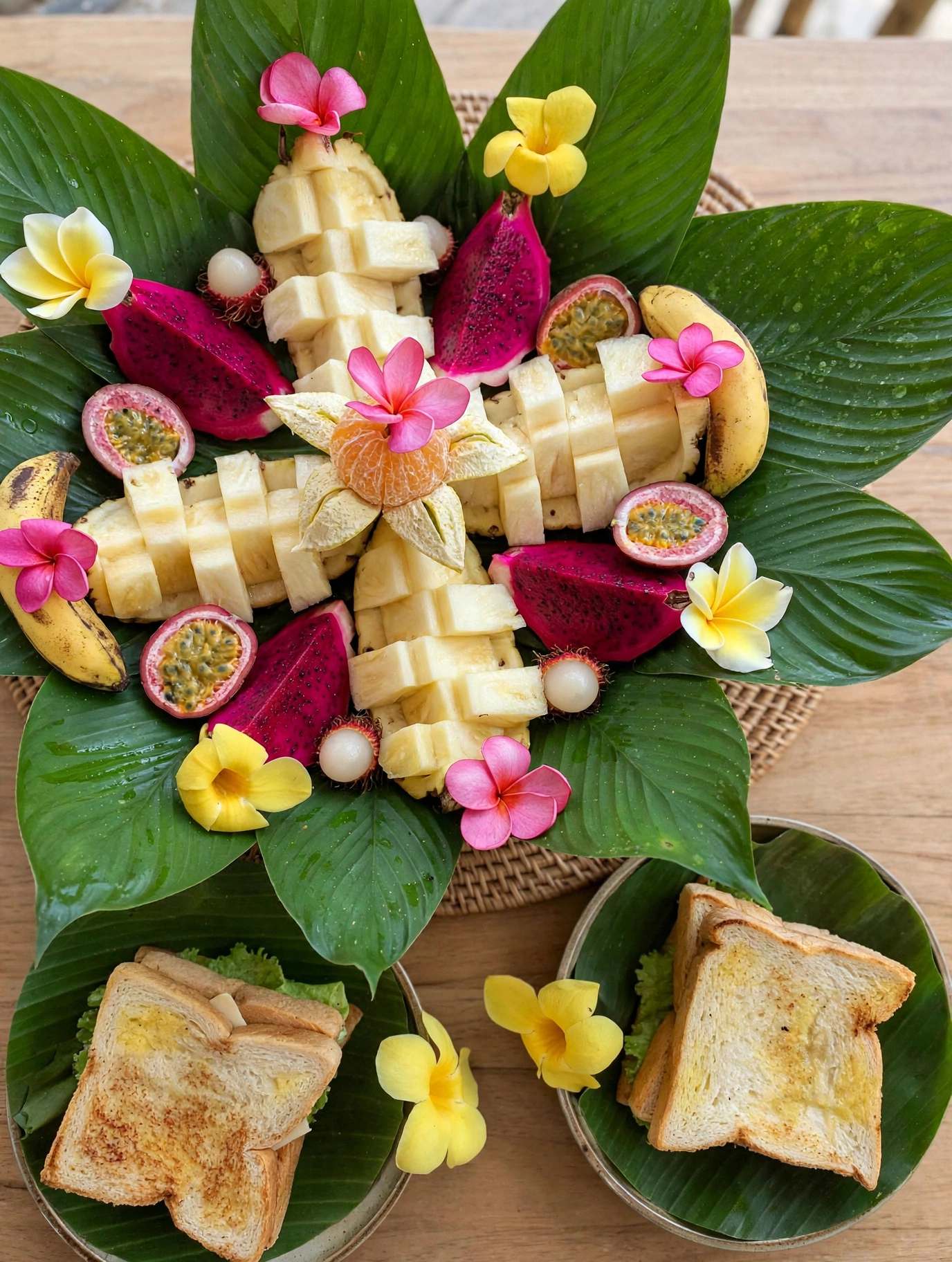
Fresh fruit is another strong choice in this tropical part of Sumatra. Banana, papaya, pineapple, mango, and passion fruit may appear in breakfasts, juices, or desserts when in season. Availability shifts with weather and harvests, which is part of eating locally rather than expecting the same menu year-round.
Food for Your Jungle Trek: What Is Usually Included
A guided jungle trek is different from ordering dinner at your guesthouse. Many overnight and multi-day trekking packages include meals prepared by the guide team, along with drinking water arrangements. The exact inclusions depend on the trek duration and operator, so confirm them before booking rather than assuming every snack or beverage is covered.
Trek meals are designed to be practical, nourishing, and possible to prepare responsibly in a forest setting. Rice, noodles, vegetables, fruit, eggs, chicken, and simple sauces are common. Certified local guides know the terrain, food planning needs, and the importance of leaving no waste behind.
Tell your guide in advance about vegetarian, vegan, halal, allergy, gluten-free, or medical dietary requirements. This is especially important for multi-day expeditions, where supplies must be planned before the group enters the national park. Some requirements can be accommodated well with notice; highly specialized imported foods may be difficult or may add cost. Honest communication creates a safer and more enjoyable experience for everyone.
Bring a few personal snacks only if they suit your needs, such as electrolyte tablets, a familiar energy bar, or medication-friendly crackers. Choose packaging carefully and carry every wrapper back out. A jungle trek should leave guests with memories, not litter.
Drinking Water Without Creating More Plastic Waste
In hot, humid rainforest conditions, hydration matters more than finding the cheapest drink. Bring a reusable bottle and ask your accommodation or guide about safe refill options. Many responsible lodgings and tour teams can help travelers reduce their dependence on single-use plastic bottles.
Do not drink untreated tap or river water. Safe water practices protect your trip from a preventable stomach problem, particularly before a trek or a long transfer. If you buy bottled water, keep the bottle until you can dispose of it properly instead of leaving it in the village or carrying it into the forest.
Fresh juice is a refreshing treat, but ask whether ice is made from safe water if you have a sensitive stomach. The same sensible caution applies to uncooked salads and cut fruit from places where food handling looks uncertain. This is not a reason to avoid local food. It is simply smart travel judgment.
Small Costs That Can Surprise Travelers
Menu prices are usually straightforward, but a few details can change your total. Some restaurants add a small service charge or tax, while others do not. Ask politely if the posted price is the final price, especially when ordering several dishes for a group.
Remote location also affects supply. Imported coffee, wine, packaged sweets, and Western comfort foods cost more than rice, seasonal fruit, and locally sourced meals. Rather than treating this as a drawback, consider it a useful reason to try the food the region does best.
Tipping is appreciated for good service but is not required in the same way it may be in the United States. Rounding up a bill or leaving a modest amount is kind when someone has looked after your group, accommodated dietary needs, or prepared a special meal. For guides and trekking teams, follow the guidance provided with your trip and give only what feels appropriate to your budget.
Eating in Ways That Benefit the Village
Your meal choices have a direct local impact in a small tourism community. Eating at independently owned warungs, cafés, and guesthouses keeps more visitor spending with village families. Ordering seasonal dishes also reduces reliance on ingredients transported from far away.
Choose restaurants that keep food preparation clean, treat staff respectfully, and avoid wildlife-themed practices that put animals under pressure. Responsible travel is not only about how you see orangutans. It is also about the everyday decisions that respect the people and landscape around the national park.
A simple daily budget, a reusable bottle, and an appetite for local food will take you far in Bukit Lawang. Save room for a post-trek meal by the river, ask what is fresh that day, and let your spending become part of an adventure that benefits the community hosting you.