Info@bukitlawangtravel.com

Choose the Right Sumatra Orang Utan Tour
Plan a responsible Sumatra orang utan tour from Bukit Lawang, with ethical wildlife viewing, certified guides, trek options, and practical tips for all.
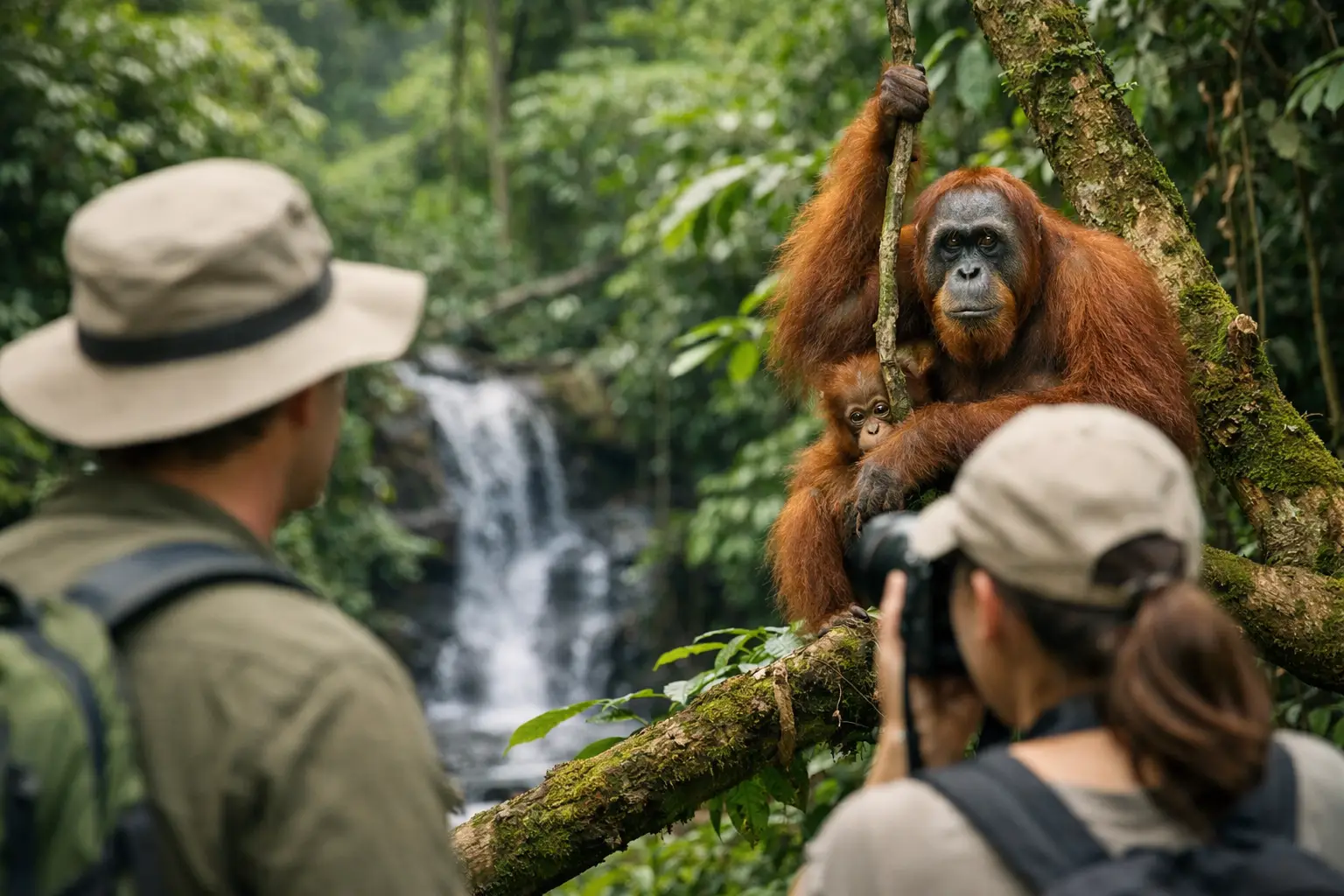
The first sound many guests remember is not an orangutan at all. It is the rainforest waking up: gibbons calling through the canopy, cicadas buzzing, and the soft crunch of leaves beneath your boots. A Sumatra orang utan tour is not a zoo visit or a guaranteed photo stop. It is a chance to walk respectfully through one of Earth’s most important rainforests, guided by people who know its trails, wildlife, and communities.
Bukit Lawang sits on the edge of Gunung Leuser National Park in North Sumatra, one of the last places where critically endangered Sumatran orangutans still live in the wild. Choosing the right trek matters. It shapes your comfort, what you may see, and the positive impact your visit can have on local conservation and livelihoods.
What Makes a Sumatra Orang Utan Tour Meaningful?
A responsible orangutan trek puts the animals first. Orangutans are wild, intelligent, and vulnerable to human disease. They should never be touched, fed, called toward visitors, or crowded for a better photograph. A good guide keeps a respectful distance, reads the animals’ behavior, and changes the route when needed.
That approach can require patience. Wildlife is never a performance, and nobody can honestly promise an orangutan sighting on a particular day. Yet Bukit Lawang’s surrounding forest offers excellent chances to encounter orangutans, along with Thomas’s leaf monkeys, long-tailed macaques, gibbons, hornbills, giant squirrels, and remarkable insects.
The experience is richer when it is not rushed. You are learning to notice the forest rather than simply passing through it. A broken branch high above, fruit skins on the ground, or a guide’s quiet signal can become the beginning of a memorable wildlife encounter.
Choose Your Sumatra Orang Utan Tour Duration
The best trek depends on your fitness, available time, travel style, and interest in sleeping in the jungle. There is no single “right” option. A short walk can be ideal for families and first-time trekkers, while a longer expedition offers a deeper connection to the rainforest.
Short treks: a gentle introduction
A three-hour or half-day jungle walk is a practical choice if you are traveling with children, arriving from Medan the same day, or prefer a lighter activity. The terrain can still include roots, slopes, humidity, and muddy sections after rain, but the pace is more manageable. It gives you time to look for wildlife while returning to your accommodation in Bukit Lawang for a warm shower and a relaxed evening.
A full-day trek provides more time inside the forest without the commitment of camping. It suits active travelers who want a fuller jungle experience but have limited time in Sumatra. Expect a picnic-style lunch, several hours on uneven trails, and a rewarding sense of being far from the village even though you return before nightfall.
Overnight treks: sleep beneath the rainforest canopy
For many travelers, a two-day, one-night expedition is the sweet spot. You hike deeper into the national park, camp near a river, share a freshly prepared jungle meal, and fall asleep to the sounds of the forest. The next morning begins early, often with cool air, birdsong, and strong coffee before the trail continues.
Multi-day treks of three days or more are best for guests who enjoy physical challenge and want a more remote wilderness experience. Trails may be steeper, river crossings can be part of the route, and conditions change with the weather. You do not need to be an elite athlete, but you should be comfortable walking for several hours and willing to trade some comfort for immersion.
Longer is not automatically better. If you are new to tropical trekking, a one-night trip can be plenty adventurous. If you regularly hike and have time to slow down, a longer expedition can reveal more of the forest’s rhythm.
What Ethical Wildlife Trekking Looks Like
Responsible travel is built from small decisions. Certified local guides help visitors move safely through the park while following wildlife-respectful practices. They understand animal behavior, weather patterns, trail conditions, and the cultural context of Bukit Lawang.
On an ethical trek, your group should stay small, avoid flash photography, keep voices low around wildlife, and carry out all waste. If an orangutan is on the trail, the guide may ask everyone to wait, step back, or take another route. That is not a disappointment. It is exactly what responsible wildlife tourism should look like.
You also have a role. Do not bring food close to wildlife, and do not trek if you have a cough, fever, or other contagious illness. Orangutans are closely related to humans and can be exposed to our respiratory illnesses. Respecting that boundary protects the very animals you came to see.
Local guiding also means your travel spending stays connected to Bukit Lawang. Guides, drivers, cooks, small accommodations, and village businesses all contribute to the visitor experience. When tourism is managed responsibly, it creates meaningful reasons to protect the rainforest and supports families who call this place home.
How to Prepare for the Jungle
Sumatra’s rainforest is hot, humid, and unpredictable. Rain can arrive quickly, trails can become slippery, and even a short trek feels more demanding than a walk on a paved path. Preparation makes a major difference.
Wear lightweight clothing that dries quickly and covers your shoulders and legs. Sturdy hiking shoes or trail sandals with good grip are far more useful than fashionable sneakers. Bring a refillable water bottle, sunscreen, insect repellent, a small rain jacket, and a dry bag or waterproof pouch for your phone and camera. A change of clothes is especially welcome after a long trek or river activity.
Pack lightly. Your guide can advise what is needed for overnight camping, including sleeping arrangements and meals. Avoid disposable plastic where possible. The less waste carried into the forest, the less risk there is of it remaining there.
Fitness is worth considering honestly. Jungle trekking involves heat, humidity, uneven ground, and occasional climbs. Tell your operator about injuries, medical needs, dietary requirements, or concerns before booking. A reputable local team can recommend a suitable route instead of pushing you into a trek that does not fit.
Plan the Rest of Your Sumatra Adventure
Most international visitors begin their journey in Medan, then travel by private car or shared transport to Bukit Lawang. The road journey commonly takes several hours depending on traffic and weather, so arriving the day before your trek is usually the more relaxed plan. It gives you time to settle in, meet your guide, and start early the next morning.
Bukit Lawang also works well as part of a longer North Sumatra route. After the jungle, some travelers head to Berastagi for volcanic landscapes and cooler mountain air, continue to Lake Toba for quiet lakeside days, or add village walks, rafting, cave exploration, cooking classes, and other locally led activities.
If your time is short, do not try to fit everything into a few days. A well-paced trip with a meaningful trek and time to enjoy Bukit Lawang is often more rewarding than a rushed itinerary. Bukit Lawang Travel can help match transportation, trek length, and accommodation choices to the kind of adventure you want.
A Better Way to Meet the Rainforest
The most powerful moments on a jungle trek are often the quiet ones: watching an orangutan build a nest high in the trees, hearing gibbons move through the canopy, or sitting beside a river after a day on the trail. Come prepared to observe rather than control the experience. With a respectful guide, a realistic plan, and curiosity for the whole forest, your visit can become part of a future where Bukit Lawang’s wildlife and community continue to thrive.