Info@bukitlawangtravel.com

Sumatra Tour and Travel for a Meaningful Adventure
Plan a responsible Sumatra tour and travel adventure with ethical orangutan trekking, local culture, Lake Toba, and practical tips for a better trip.
A Sumatran sunrise can begin with gibbons calling from the forest canopy, mist lifting over a volcanic lake, or coffee brewing in a village kitchen. This is not an island for rushing between photo stops. A thoughtful Sumatra tour and travel plan gives you time to meet the people, understand the landscapes, and experience wildlife with the care it deserves.
For many visitors, Bukit Lawang and its orangutans are the reason to come. They should be. But the best trips connect the rainforest with the highlands, local food, village life, and the long roads that reveal just how large and varied North Sumatra really is.
What Makes Sumatra Worth the Journey
Sumatra is one of Indonesia’s wildest major islands. Its forests shelter critically endangered Sumatran orangutans, elephants, tigers, and rhinoceroses, although seeing the last three in the wild is rare and should never be promised. The island also holds volcanic peaks, crater lakes, rivers, farming communities, and cultures with distinct languages, traditions, and cuisines.
That variety is its greatest strength and its main planning challenge. Distances on a map can look manageable, but mountain roads, traffic, weather, and ferry schedules can turn a short-looking transfer into a full day. A good itinerary leaves room to travel at a human pace rather than treating every destination as a checkbox.
North Sumatra is a natural first choice for travelers with one to two weeks. You can arrive through Medan, travel to Bukit Lawang for the rainforest, continue to Berastagi for cool highland scenery, and finish at Lake Toba. Each place offers a different side of the island without requiring constant airport transfers.
Choose Your Sumatra Tour and Travel Style
The right trip depends less on fitness labels than on how you want to spend your time. A first-time visitor who wants an ethical wildlife experience may be happiest with a short guided trek and a few comfortable nights in Bukit Lawang. An experienced hiker may prefer a multi-day expedition, sleeping in the jungle and following forest trails farther from the village.
Short treks are a strong option for families, travelers with limited time, or anyone unsure how they will handle tropical heat and uneven ground. A three-hour walk can still be a memorable introduction to Gunung Leuser National Park. You may spot orangutans, Thomas leaf monkeys, macaques, hornbills, monitor lizards, and extraordinary insects, but wildlife is never a performance. Some days the forest is generous; other days it asks you to listen more closely.
A full-day trek allows more time on the trail and often reaches quieter sections of forest. Multi-day treks offer the deeper reset many adventure travelers seek: simple jungle camps, river bathing, shared meals, and the rhythm of walking beneath the canopy. They also require realistic preparation. Humidity is high, trails can be muddy, and a little rain is part of the experience.
For guests who want a locally led route with responsible standards from the start, Bukit Lawang Travel can combine certified-guided trekking with transport and extensions across North Sumatra. A planned route is especially useful when you want to spend your energy on the journey, not on negotiating every transfer after arrival.
Ethical Orangutan Trekking Is Non-Negotiable
Seeing an orangutan in its forest home is powerful precisely because it is not a staged encounter. Wild orangutans need distance, quiet, and freedom to move where they choose. Responsible trekking protects that experience for both animals and visitors.
Choose guides who follow national park rules, maintain a respectful viewing distance, and do not feed, touch, call to, or block orangutans. Feeding alters natural behavior and can spread human illness to these closely related animals. Never ask a guide to bring wildlife closer for a photo. The right photo is the one taken without changing the animal’s day.
Ethical practice also means keeping group sizes sensible, staying on appropriate routes, carrying out all waste, and avoiding loud music or shouting in the forest. If you see an animal near the trail, your guide should explain how to wait, move back, or take another path safely.
The same care applies beyond orangutans. Avoid activities that encourage handling wild animals, buying products made from protected species, or supporting captive wildlife encounters with unclear welfare standards. Responsible travel can feel less convenient in the moment, but it keeps your visit aligned with the reason you came: respect for a living rainforest.
Build an Itinerary That Has Breathing Room
A well-paced North Sumatra trip can be shaped around the time you have available. Rather than cramming every destination into one route, choose the experiences that matter most.
With four to five days, focus on Bukit Lawang. Allow time for your journey from Medan, one short or full-day jungle trek, a village walk or cooking experience, and a relaxed final morning by the Bohorok River. This route works well if orangutan trekking is your priority.
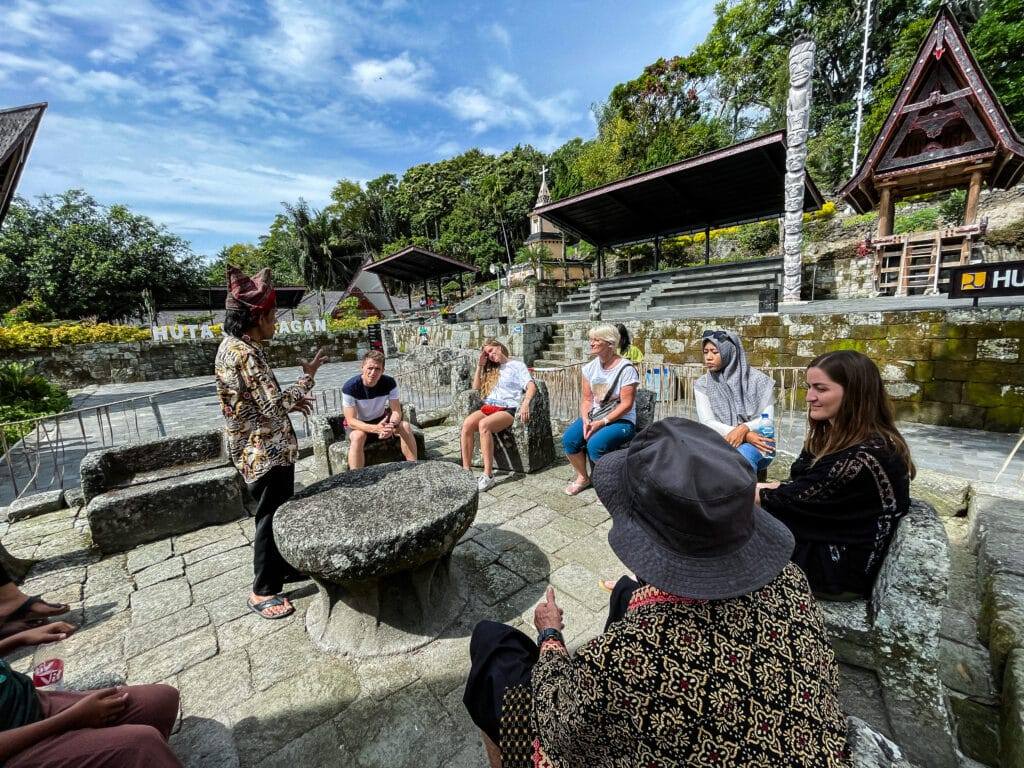
With seven to nine days, add Berastagi and Lake Toba. Berastagi brings cooler air, mountain views, fruit markets, and access to highland walks. Lake Toba, formed by a massive volcanic eruption, offers a slower finish. On Samosir Island, you can visit Batak villages, learn about local traditions, cycle quiet roads, or simply rest after the jungle.
With 10 to 14 days, you can slow down rather than add unnecessary miles. Consider a longer trek, rafting, cave exploration, a Rafflesia-focused excursion when conditions and flowering timing allow, or more time with community-led activities. Rafflesia sightings cannot be guaranteed because the flower blooms briefly and unpredictably. That uncertainty is part of nature travel, not a flaw in the itinerary.
Plan the Practical Details Before You Fly
Most international travelers reach North Sumatra through Kualanamu International Airport near Medan. From there, private transport to Bukit Lawang is often the simplest option after a long flight. The journey generally takes several hours, and travel time varies with traffic and road conditions. Booking transport in advance means you arrive at your guesthouse without the extra stress of working out logistics on the day.
Check Indonesia’s current visa and passport requirements before departure, as rules can change. Your passport should have adequate validity, and it is wise to keep digital and paper copies of key documents. Travel insurance that covers medical care and outdoor activities is a sensible safeguard for any jungle itinerary.
A local SIM or eSIM can help with messages and maps, although coverage becomes patchy in rural areas and is not something to rely on inside the forest. Bring enough Indonesian rupiah for small purchases, tips, and village businesses. Larger hotels and some operators may accept cards, but cash remains useful well beyond Medan.
What to Pack for the Rainforest
You do not need expensive expedition gear for most Bukit Lawang treks. What matters is clothing that dries quickly, footwear with grip, and the willingness to get muddy. Avoid sandals for jungle walking, even on a short trek. Closed shoes protect your feet from roots, rocks, insects, and slippery ground.
Pack a lightweight rain jacket, reusable water bottle, sun protection, insect repellent, small daypack, personal medications, and a dry bag or waterproof pouch for electronics. Long socks and long, breathable pants are practical for vegetation and leeches, especially after rain. Leeches are common in a healthy rainforest and usually more annoying than dangerous, but your guide can show you how to remove one calmly.
Bring a modest change of clothes for village settings and remember that the jungle is not a place for strong fragrances or excess packaging. Refillable bottles, reusable toiletries, and packing out what you bring in all reduce pressure on local waste systems.
Travel With, Not Just Through, Local Communities
The most meaningful adventure leaves value behind in the places that host it. Staying at locally run accommodations, eating at family-owned restaurants, hiring certified local guides, and joining community-based activities help visitor spending reach Bukit Lawang residents directly.
Ask questions when you visit. Learn the names of foods, try a local cooking class, listen to your guide’s relationship with the forest, and be patient when plans shift with weather or community events. These are not interruptions to the trip. They are the trip.
Sumatra rewards travelers who arrive curious, prepared, and willing to slow down. Choose an itinerary that respects the rainforest, gives local people a fair place in tourism, and leaves enough space for an unexpected monkey call, a river swim, or a conversation that stays with you long after the trail ends.